This website contains affiliate links. As an Amazon affiliate, I earn from qualifying purchases (What’s This?).
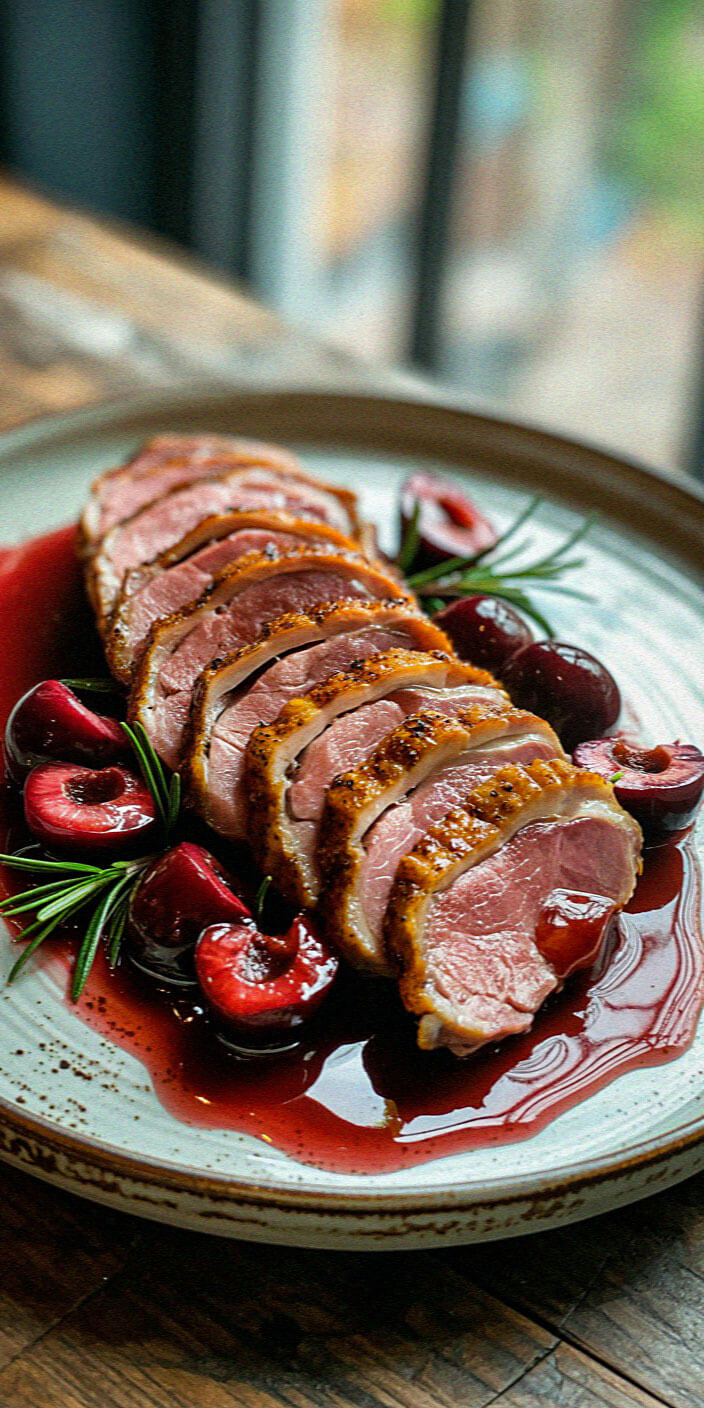
There are not many dishes that feel so swanky and yet seem this simple to make: duck breast with cherry port wine sauce. It is the sort of recipe that makes a plain old weeknight feel like a fancy dinner night, in your own home.
And if you’ve ever been tempted to cook the bird but have not known how to go about it, this guide will lead you through everything, from searing to sauce, so that you can feel confident serving the luxe meat.

Why cook duck breast at home?
Duck can seem a bit daunting, but it doesn’t have to be. If it’s possible to cook duck perfectly, here this is: the skin as crispy as a croissant and the meat medium-rare. And that kind of standard is available only in fine dining.
The same richness can be had at home for a fraction of the price. Some of that freedom with flavors is lost when you cook the duck breasts.
But cooking them also allows you to play around a bit more with various meats like lamb, and today’s cherry sauce is a perfect (and all-American) example of how fruit and wine can combine interestingly with those ducks.
Once you master the fundamentals of cooking duck breasts, such as how to score the skin, render the fat and sear confidently, you will find that it’s easy to make and an absolute pleasure to eat.
What Ingredients Do you Need To Cook Seared Duck Breast with Cherry Port Sauce

For the duck:
- 2 duck breasts (about 6–7 oz each)
- Salt and pepper, to season
- 1 sharp knife, for scoring the skin
For the cherry port sauce:
- 1 shallot, finely chopped
- 1 cup fresh or frozen cherries (pitted)
- ½ cup ruby port wine (red port also works)
- ¼ cup red wine (optional, for extra depth)
- 1 tsp sugar or honey (optional, to balance tart cherries)
- 1 tbsp rendered duck fat (from the pan)
- Pinch of salt and pepper, to taste
How do you prepare duck breasts for searing?
Prepare the duck
- Make sure the duck breasts are as dry as possible by using paper towards to pat on them. Duck breasts dry more evenly this way and the skin crisps beautifully.
- Make shallow cuts in the duck’s skin using a very sharp knife. Create a pattern that looks like a grid (crosshatch) or diamonds across the surface, but only cut through the skin and fat. Don’t cut too deep until you reach the actual meat underneath. This step is to allow the fat to render out evenly.
- Add pepper and salt on both sides. Let the duck rest at room temperature for about 15 minutes before cooking.
What’s the best way to sear duck breast?
- Place the duck breasts skin side down in a cold skillet. Starting cold helps render the fat slowly.
- Turn the heat to medium heat and let the duck cook for about 10 to 12 minutes until the skin is golden brown and crispy.
- Turn the duck breasts and continue cooking for about 3 minutes longer, or until the internal temperature reaches 135°F for medium-rare. Adjust time if you like it more done.
- Take the duck out of the skillet and have it rest on a cutting board for at least 5 minutes before slicing.
How do you make the cherry port wine sauce?
- Pour away most of the fat from the pan, leaving about a tablespoon of rendered duck fat.
- Add the shallot and cook over medium-low until softened.
- Add the cherries and stir gently until they begin to soften.
- Add the port wine (and red wine, if using). Turn your heat up from medium-low to medium-high heat, let the sauce bubble gently (not a rolling boil). Cook until about half the liquid has evaporated, concentrating the flavors. Get a spoon and dip it in the sauce and run your finger across the back. If the line stays clear without the sauce running back together immediately, it’s thick enough.
- Taste first, then adjust it with salt and pepper. If your cherries are very tart, stir in a teaspoon of sugar or honey.
Serve
- Going against the grain, slice the duck meat into neat slices.
- Arrange the sliced duck on a warm plate and spoon the cherry and port wine sauce generously over the top.
- Serve immediately with your favorite sides, wild rice, roasted root vegetables, or creamy potatoes all complement the duck beautifully.
Tips for Success
- Always let the duck rest before slicing to keep the juices in.
- If the sauce feels too thick after resting, add a splash of water or stock before serving.
- Scoring the fat in a diamond pattern is the key to a crispy skin.
What makes duck and cherry a perfect match?
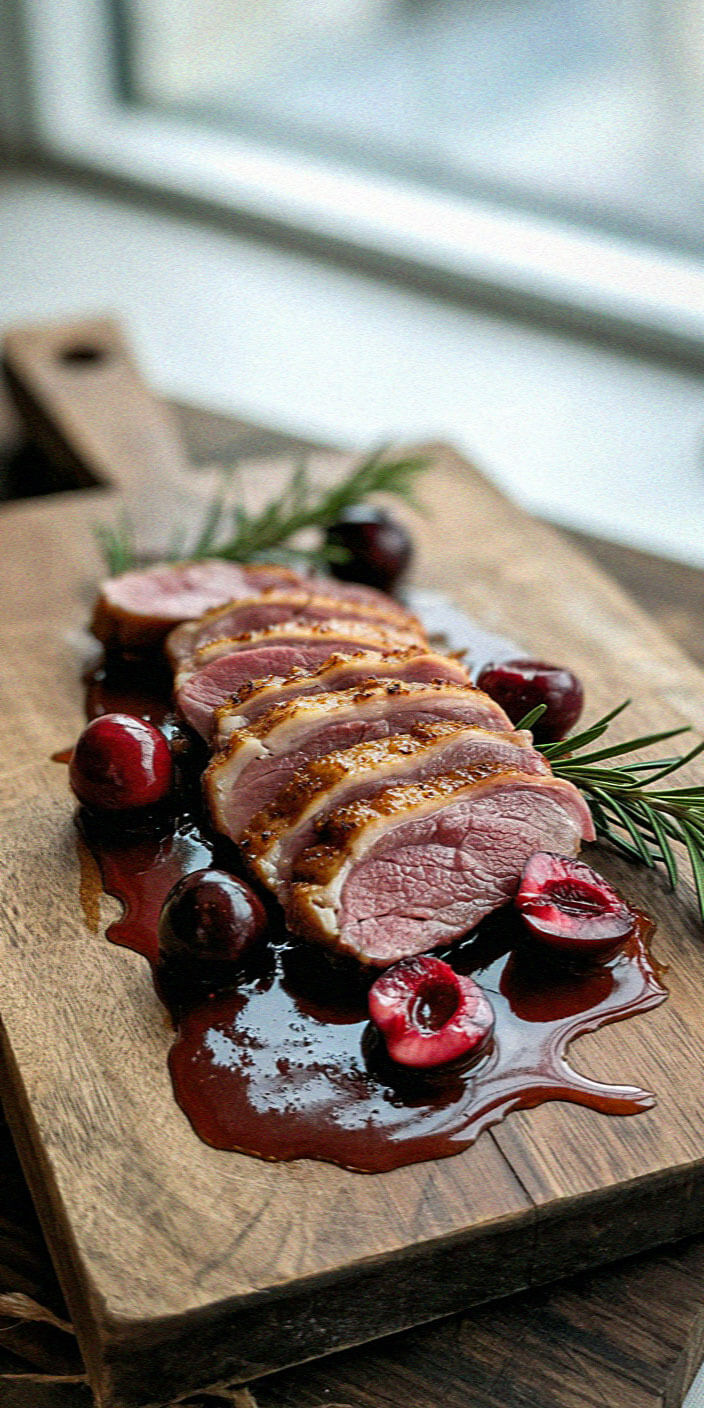
The rich duck flavor marries beautifully with fruit, and cherries are particularly well suited. Their tart sweetness helps to cut the richness of the meat, balancing what’s on your plate.
Duck breast and cherry also seems seasonally right to me in both summer and fall, when fresh or frozen cherries can star in a sauce.
When paired with port wine, cherries pick up a depth that makes the sauce both elegant and comforting.
The cherries and port create a sauce that is velvety, sweet and sour; it partners the duck in a way that few other things can.
Can I make the sauce ahead of time?
You can make the sauce first, ahead of time. This cherry sauce recipe reheats well and you can keep it in the fridge for a two days.
Simply rewarm in a saucepan over medium-low heat, adding a touch of water if it feels too thick. The flavors often deepen overnight, making the sauce even more delicious the next day.
Making the sauce ahead means you can focus on searing the duck breasts at the last minute, ensuring they come to the table with crispy skin and juicy interiors.
What wine works best in a port and cherry sauce?
Port wine is the classic choice. A ruby port gives a fruity richness, while a red port can add more body.
The sweetness of the port balances the tartness of the cherries and softens the savory edge of the duck.
Together, they create a cherry and port wine sauce that feels indulgent but not overwhelming.
If you don’t have port, you could experiment with another fortified wine, but for authenticity and depth, port remains the best option.
Port sauce works beautifully with duck, and once you’ve tried it, you’ll understand why duck breasts with port is such a classic pairing.
What’s the key to serving seared duck breast beautifully?

And presentation is as important as flavor. After the rest, slice your duck breast as thinly you can with a very sharp knife against the grain (which makes it more tender).
Arrange the duck on a platter or individual plates and generously drizzle with the port cherry sauce.
A sprinkle of fresh herbs or a couple of extra cherries make the presentation pretty. The sauce is what brings the plate alive, so don’t be afraid to let it collect a bit around your sliced duck. Serve it right away.
What sides pair best with duck breast and cherry port wine sauce?
Duck goes well with earthy or subtly sweet side dishes. Think roasted root vegetables, mashed potatoes, or an easy wild rice pilaf.
The nutty flavor comes from the wild rice, and the fruity tang comes from the sauce that goes along with it, which is what makes this dish a standout on special occasions, or down-home cozy dinners.
Offer a little contrast with green salad in a light vinaigrette that cuts the richness of the rich duck. You could also serve it with sautéed greens or some roasted Brussels sprouts for something seasonal and easy.
Can beginners cook duck breasts with cherry port sauce?
Absolutely. Though duck may sound like only a restaurant recipe, it’s quite simple to re-create this dish at home with your very own thickly sliced duck breast.
Scoring the skin, rendering the fat and making a fast wine reduction are all doable techniques.
Consider this a confidence-instilling recipe. Once you’ve had duck with a cherry port wine sauce, you’ll see how versatile and easy cooking duck at home can be. You may also play around with wild duck or perhaps other fruit sauces in future.
A few final tips for flawless duck at home
When you are preparing duck breasts, always bring the duck to room temperature for around 15 minutes before cooking. This ensures even searing.
Don’t forget to score the fat, and render that fat slowly over medium heat. Lay duck, skin side down, in the skillet and cook until skin is crispy; flip duck breasts for final couple of minutes.
You can stand the duck on a cutting board to rest and instead make the sauce in a small saucepan while it rests, letting the flavors mingle.
Or if you’re having the whole family over, there’s no shame in serving boneless breasts to hungry hordes who aren’t going to care that they’re slices.
Either way: Don’t forget, that five minutes of rest is everything.
Whether you’re making seared duck breast with cherry port wine for company or a quiet evening in, it’s one of those dishes that always seems to have a little bit of swanky cachet. And when you do, you’ll realize it’s so much simpler than you thought.
This website contains affiliate links. As an Amazon affiliate, I earn from qualifying purchases (What’s This?).