This website contains affiliate links. As an Amazon affiliate, I earn from qualifying purchases (What’s This?).
A minimalist office is not about stripping away all of your office supplies or taking up a trend from the internet.
It’s about creating an environment that is calm, intentional and supportive of your needs while working from home.
If your desk appears chaotic, your office space is unorganized or worst yet, your home office has become an unproductive space for focus and study then please continue reading.
These are lessons learned by years of working from home myself, and through experiences, not theories.
Through messy, cluttered desks and overflowing corners of offices, I eventually created a minimalist office that had a profound effect on my day-to-day productivity while working from home.
Take a look at whether you can be more efficient, or if you are spending too much time on things negatively impacting the rest of your tasks that you need to do instead. Focus has a way of producing inexplicable results.
The most surprising part of this process was the sense of clarity that I experienced when I decided to stop trying to make my home office look beautiful, and instead create a space that works for me.
All of a sudden, my ability to concentrate increased. My stress levels decreased. And, I started to love going to work more.
Below are a few examples of what it looks like to apply a minimalist approach to home office design, and to create a functional, and peaceful space.
In addition to providing some clear and simple home office design ideas, these examples also illustrate how to design your desk, choose furniture, manage clutter, and create a serene atmosphere, without sacrificing warmth and/or personality.
Why a minimalist home office changes how you work from home
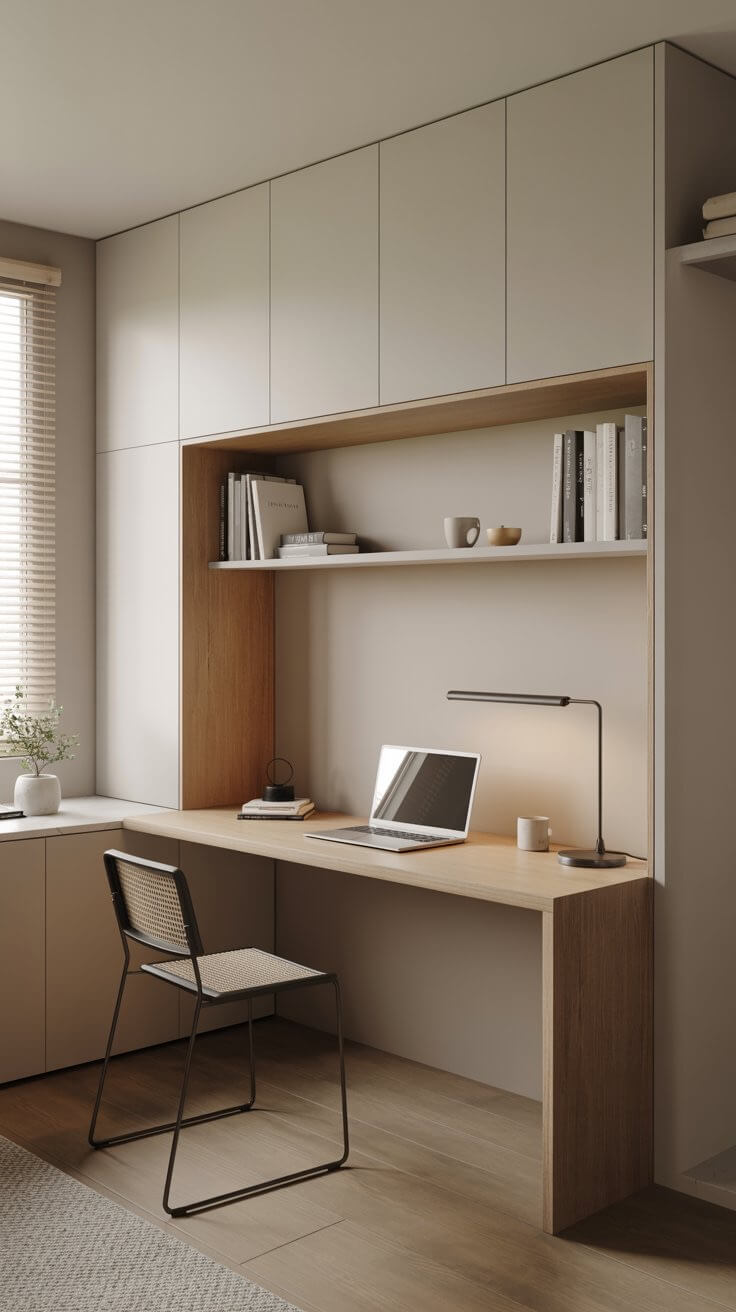
At the beginning of my work from home journey, my home office, as a whole, was a set of leftovers. Some were good enough, others barely subpar.
A desk was forced to fit into a space which went against its nature. An office chair looked fine, but painful for my back after an hour of sitting.
Random storage that only creates more mess than it is worth. I let myself believe this was okay, that the work was more important than how my surroundings looked.
How clutter affects focus more than you think
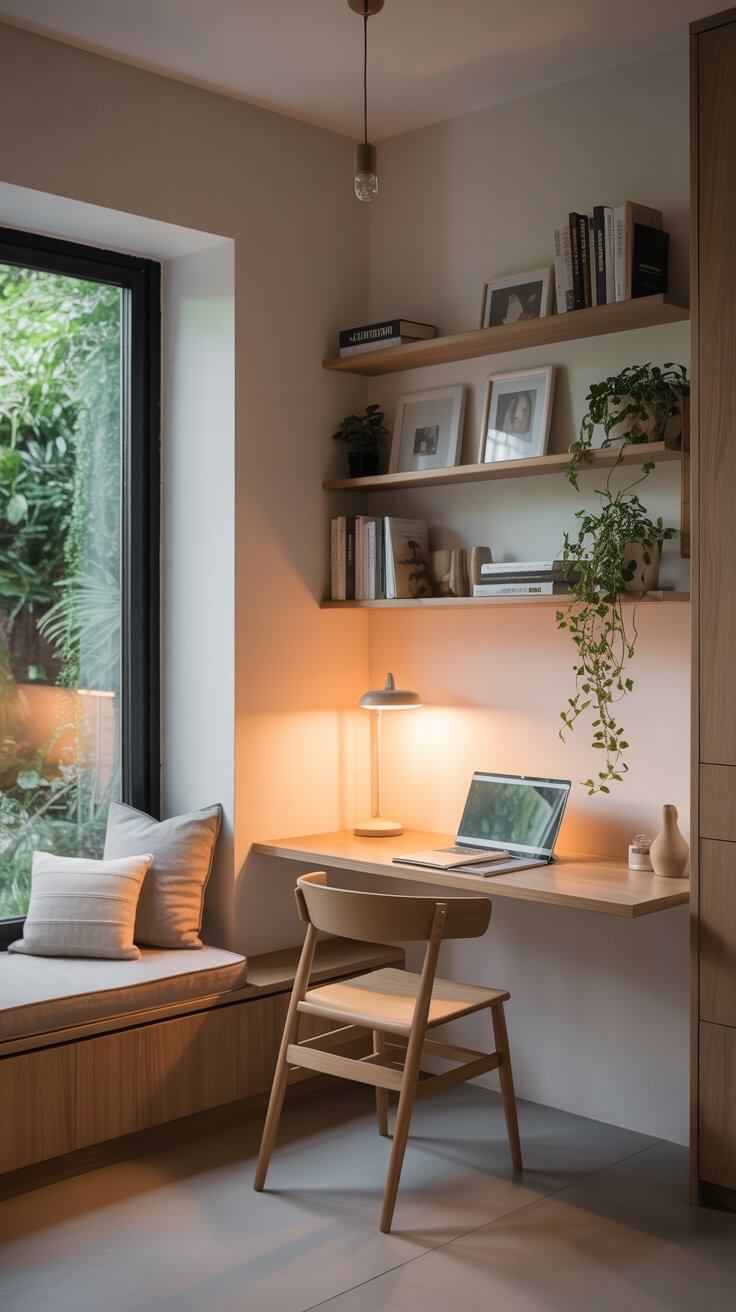
Eventually I figured out that the space I worked in was also a place of respectability in terms of being weary as well.
As each item on my desk became a distraction, taking my focus off what needed to be done; as each stack represented an ever-present low level of stress.
As soon as I adopted a minimalist approach to how I did things everything shifted rapidly.
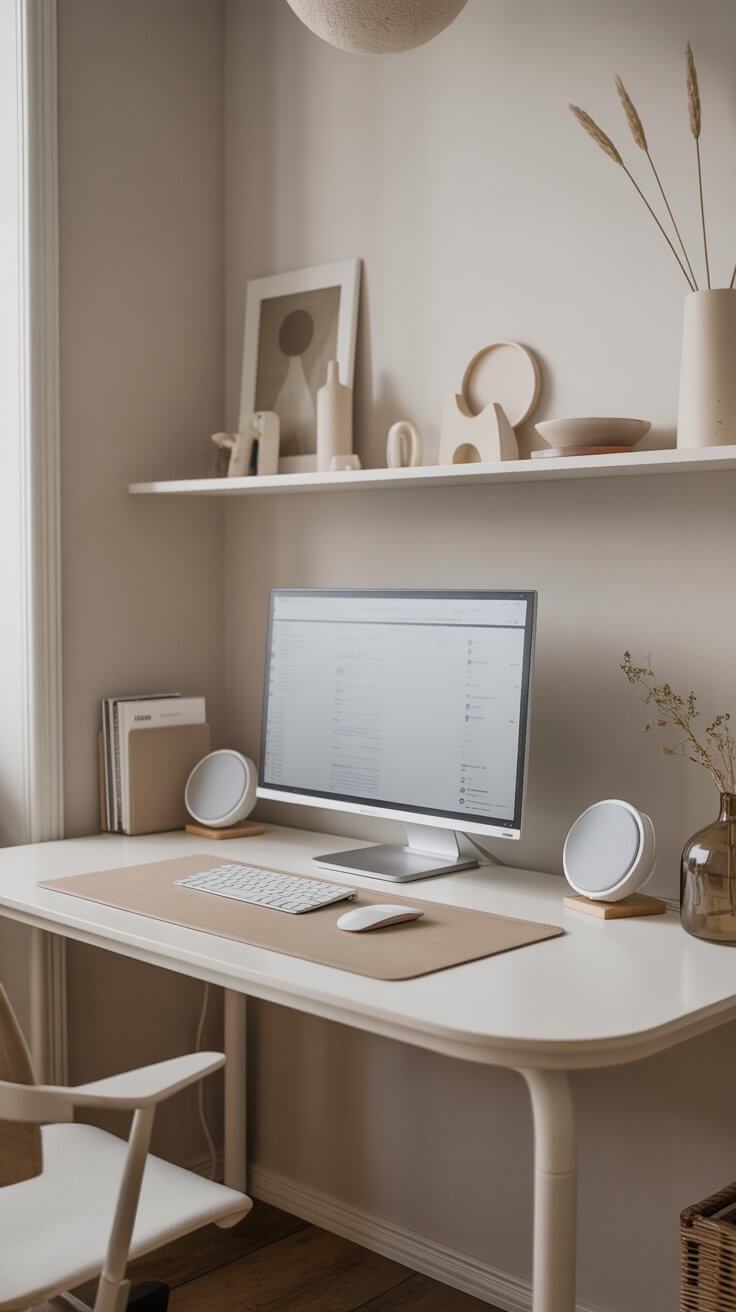
The reason a minimalist home office is effective at removing distractions, is because it removes visual clutter from your field of view and gives you a clear, clean slate for your mind to think clearly.
Clutter is not just dirt and grime, clutter represents all the incomplete decision making that lingers throughout your workspace.
Removing the clutter creates a feeling of calmness with you while you are working. That’s the reason that the minimalist office style is so successful for home offices.
The connection between environment and productivity
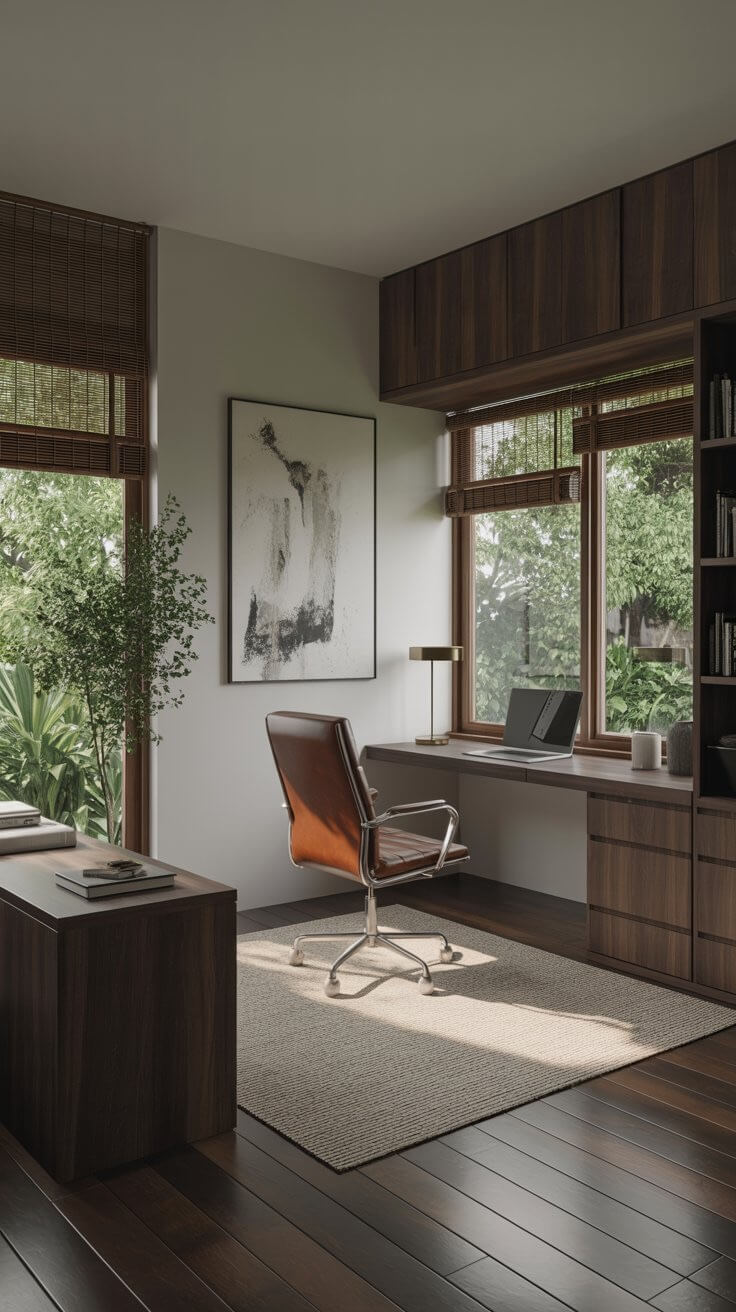
When a home office is well-designed, it can help to improve the energy flow inside your house or work space.
If you are in a space where your work seems like an itchy sweater on a hot day, then mornings are necessarily spent in a haze of resistance and discomfort.
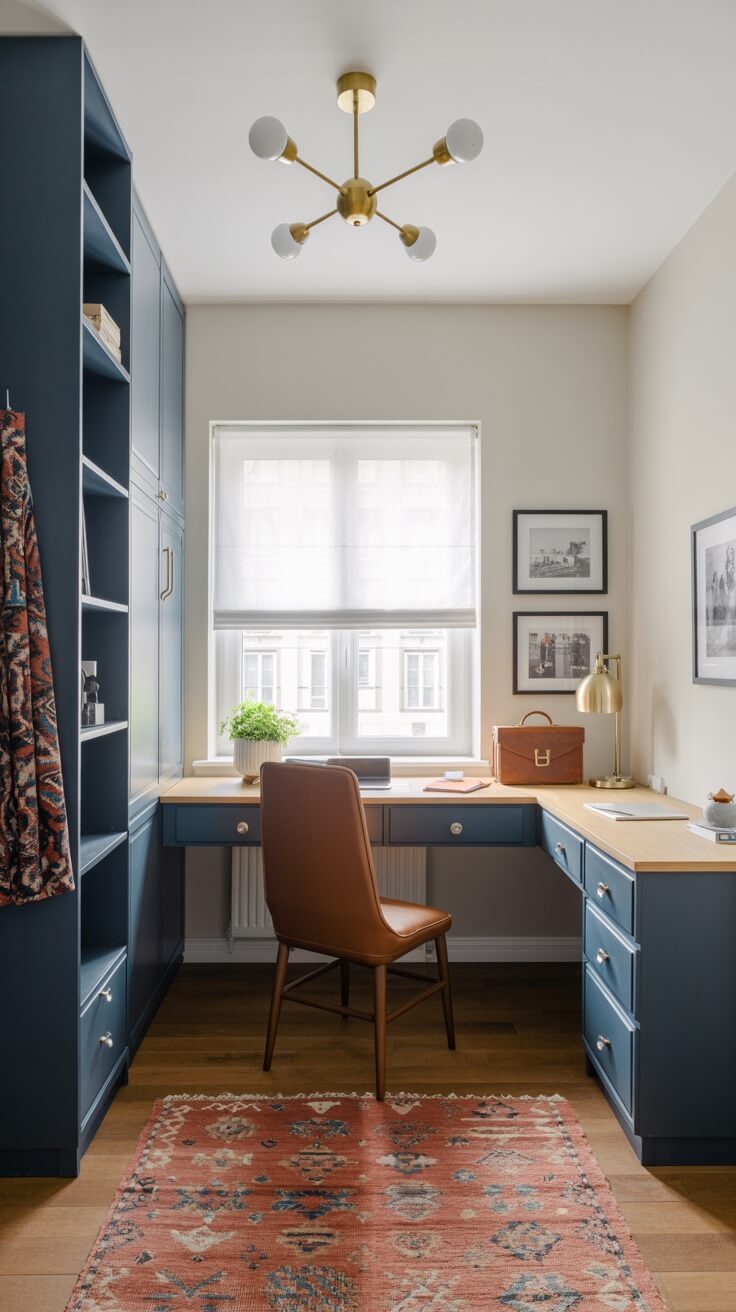
This is not about getting everything perfect. That is just one aspect of the larger equation. To make adjustments in one area is to bring benefits to another, completely different area.
Your office at home should be set up so that it complements the way you think, the things you believe are important and your action patterns.
How to create a minimalist home office without losing personality
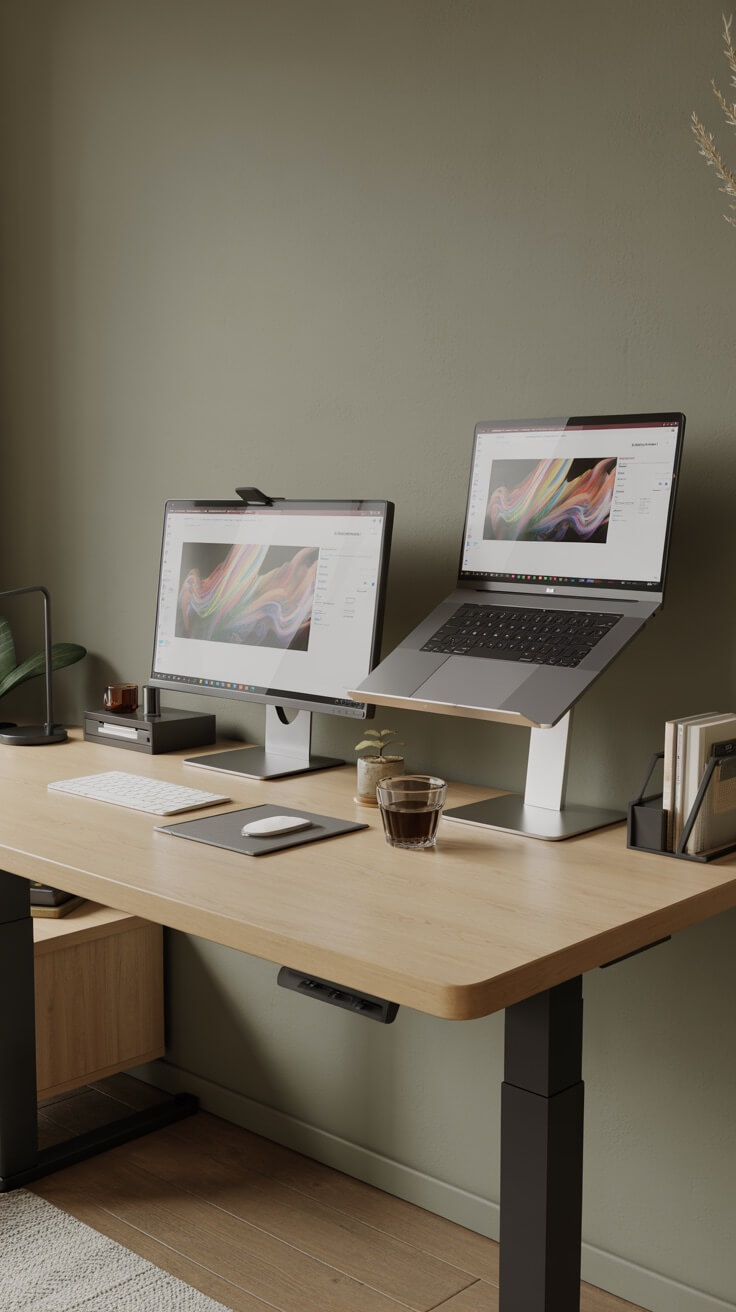
A big misunderstanding of minimalism is that it takes away a space’s character, or it means everything must be plain, dull, and half-done. I was also worried about this. It was really what I thought.
My home-office would unfairly feel empty, cold, or only briefly inhabited. I would never want to spend time here. Then I found myself surprised. Stripping out all that clutter made something else in the room possible for once.
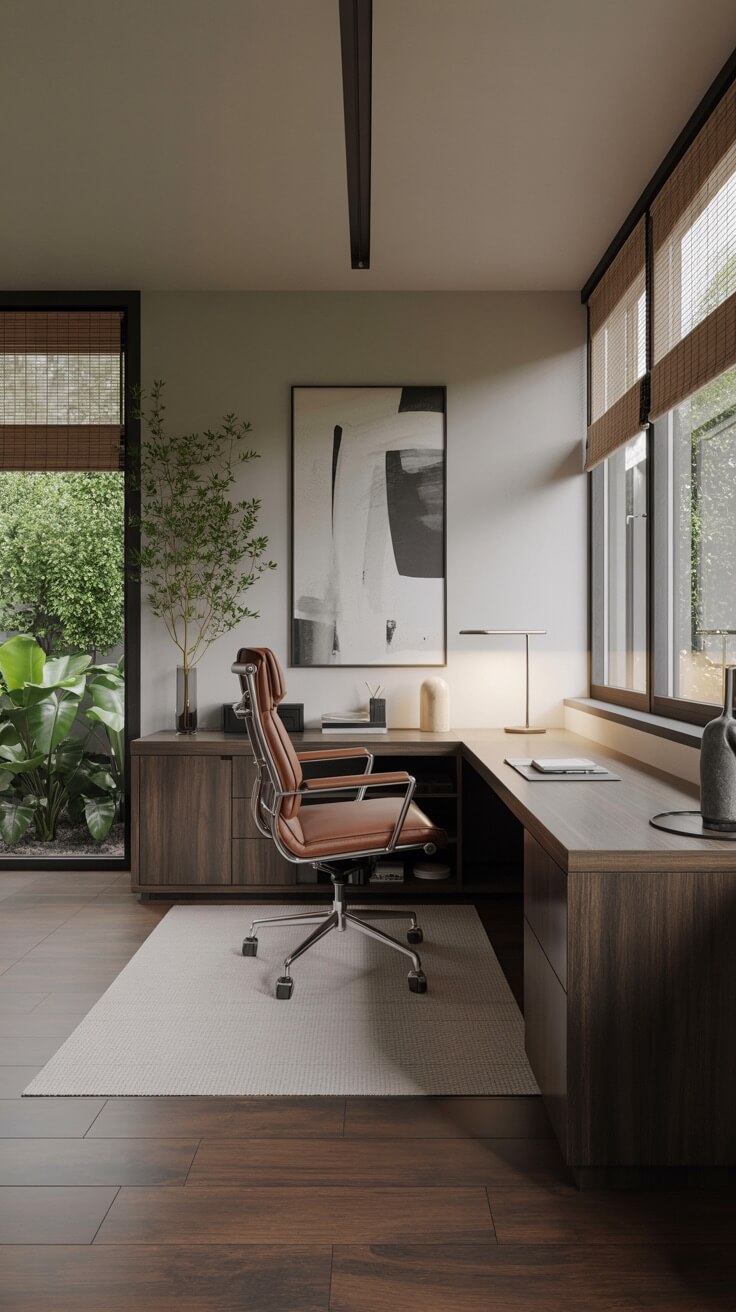
Reason is, there wasn’t any stuff to block up the corners, it still looked bare rather than an uninhabited space.
The important thing to remember is that the home office is primarily a place for work necessities and it is not necessary to buy fill pieces.
When you have no filler things to put in your home office, the stuff you keep becomes more important. One picture hanging alone on the wall suddenly assumes vital significance.
The texture of your desk table is something that can be appreciated. Light hitting the walls in just such a manner even seems like part of what has been designed.
After I simplified, I was pleasantly surprised to find that my work area felt more “me,” not less.
Editing instead of eliminating everything

A minimal space doesn’t have to be empty of all things you like or enjoy; it simply needs to include only those things you want in your space, for a reason. My home office is an example of this idea.
There are a couple of decorative items I chose to keep, because they were important to me. I have one favorite print that I really enjoy.
I have one favorite ceramic coffee mug that I find calming. I have one living plant that adds a bit of energy to the space.
Both of these items bring some feeling (warmth) to the space without contributing to the clutter in the space.
The best minimalist design comes from how well you can reflect who you are, as opposed to trying to match a catalog.
Letting materials add warmth

In interior design, texture has a major effect. To avoid a minimalistic workplace from appearing too sterile, using natural wood, linen or matte finishes and gentle neutral colors will help create warmth.
If you pick the pieces that suit your personal style and the flow of your home, then even in small spaces a mood can be created with things like wallpaper. This is called layered office design, a little bit fancy but not too busy.
Then, just like that, with some choice furniture (not too much), your design concept is multifaceted and rich.
What makes a minimalist desk setup actually functional
In your home office, your desk is a place for working. Used to be mine was simply a clutter-filled extension of the rest of the room.There are many benefits from changing the way your desk is set up.
Choosing the right desk for your space
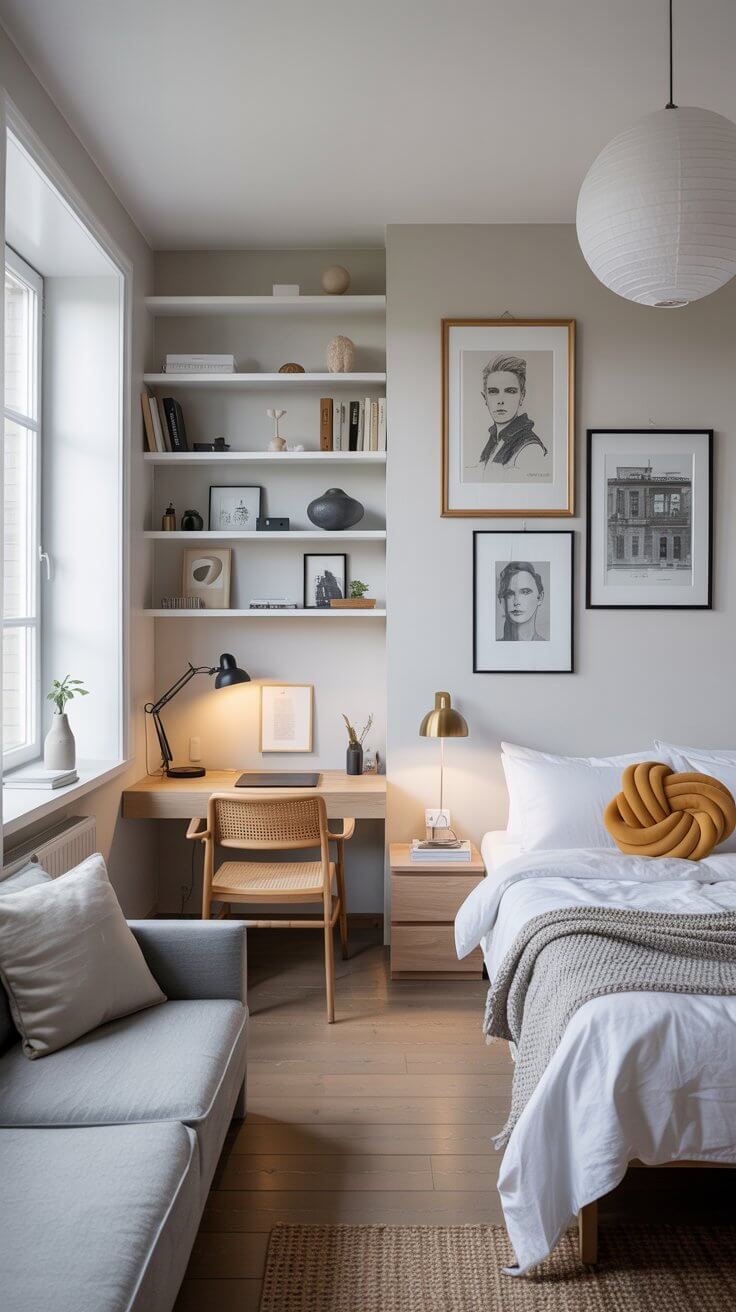
Select a minimal desk that is perfectly scaled to both the room and the way you work. If you decide to choose a standing desk, glass desk or wooden desk, scale also becomes a factor too.
Large desks dominate the space in a tiny home office or compact work space and make it feel even more cramped.
Who needs a desk that substantial? A desk needs to feel cozy, not overwhelming. Posture and motion throughout the day should be supported by the desk-chair relationship.
Positioning your desk for flow and light
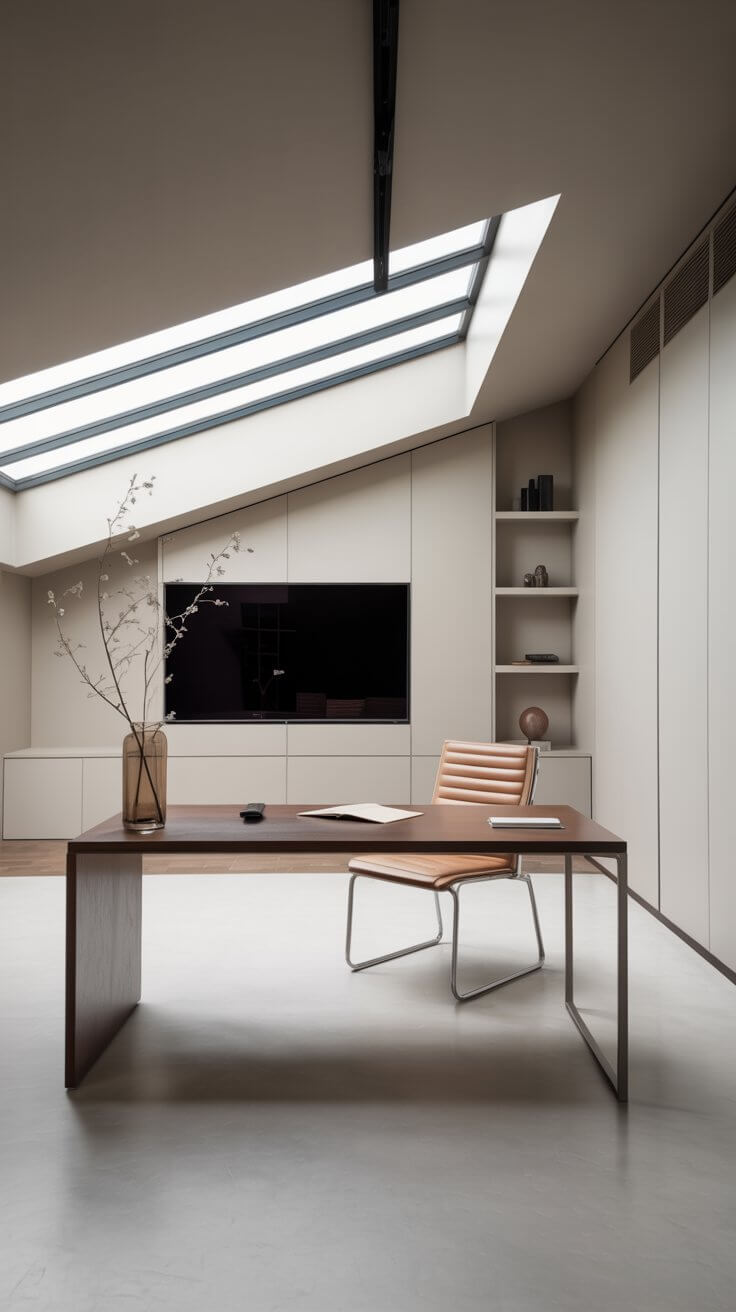
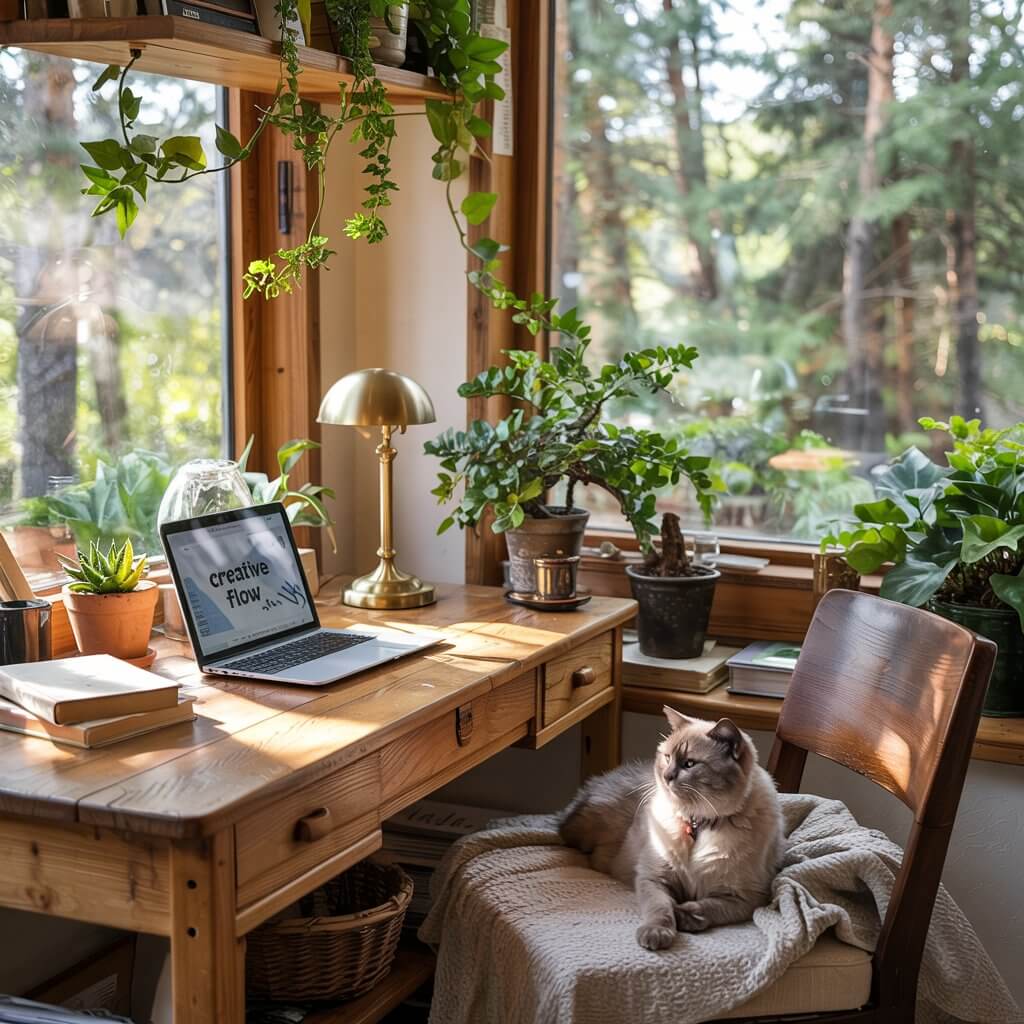
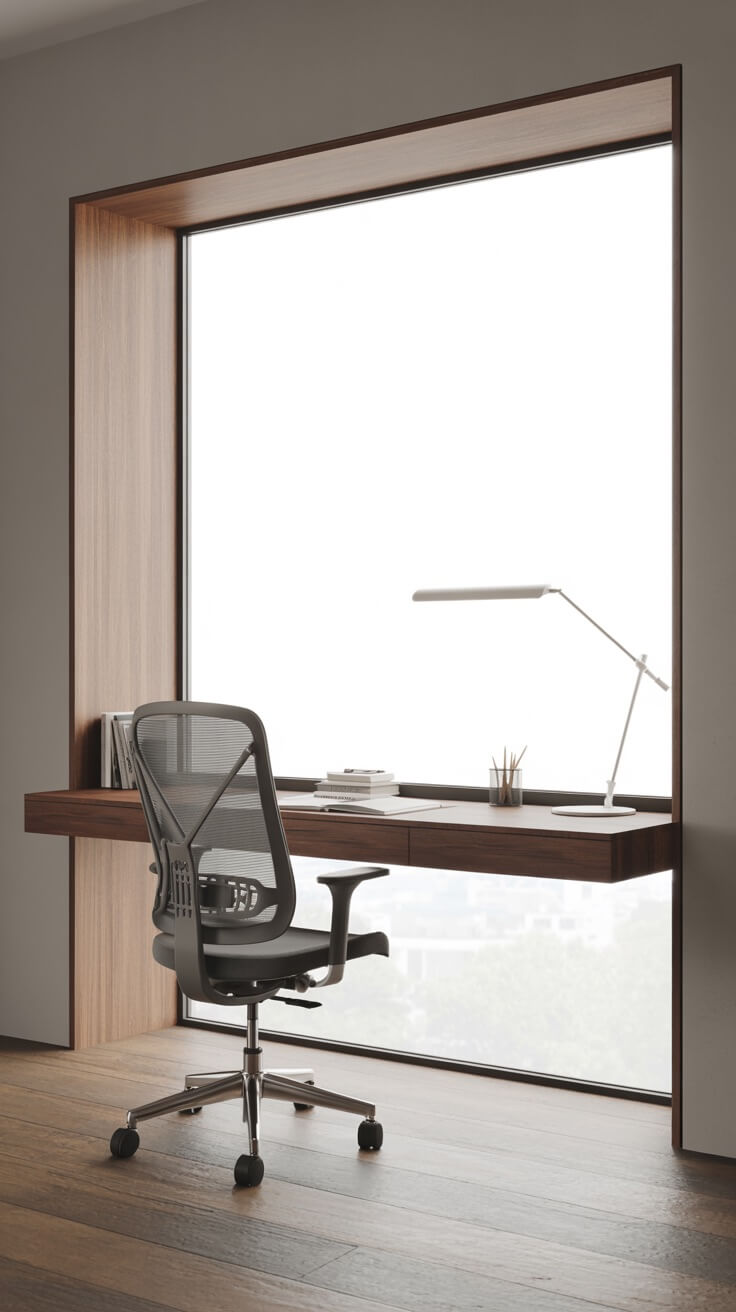
Working in an office that receives natural light will change your whole perspective of your home office space.
In addition to the natural beauty it provides, the amount of light received through a window can greatly increase the functionality of a home office.
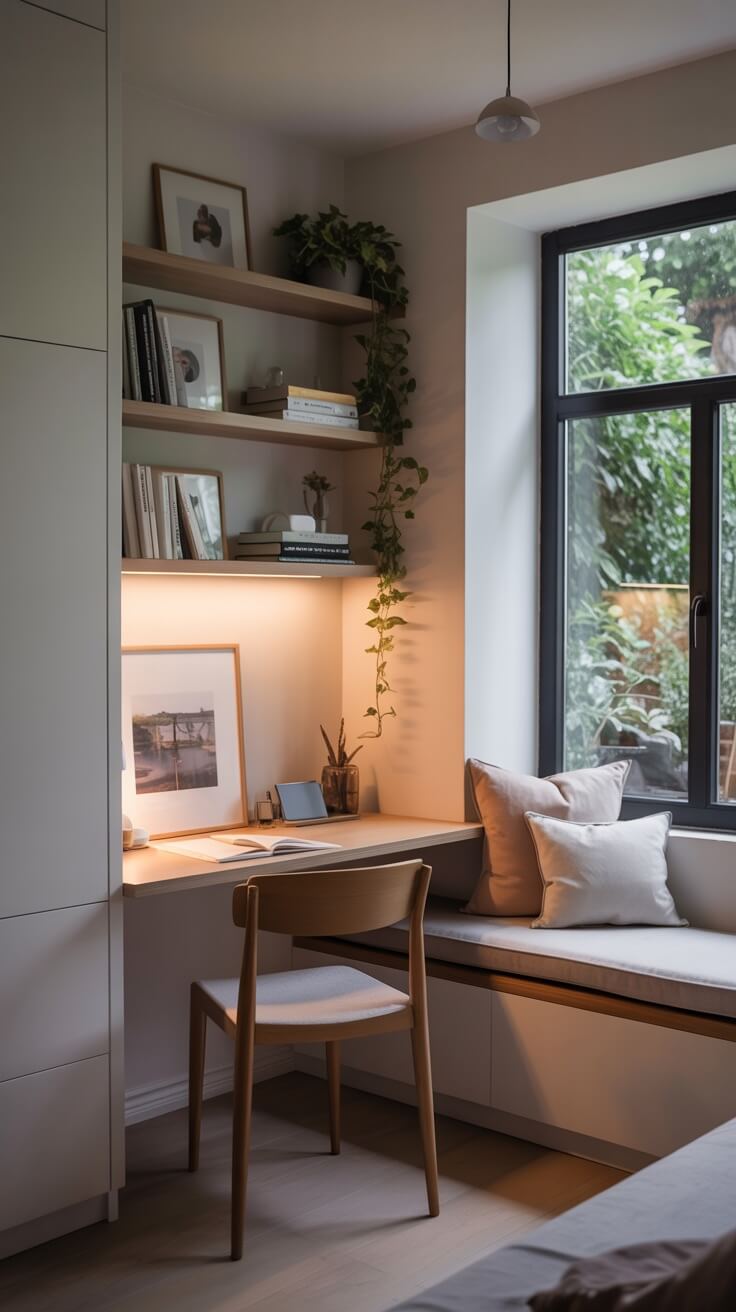
When you have the opportunity to do so, position your desk to receive direct sunlight through the window, or at an angle that allows sunlight to illuminate the desk space.
The orientation of your desk can enhance your ability to stay focused and energized, and contribute to your home office feeling larger and more intentional.
How office design minimalist principles reduce visual clutter
In order to achieve a minimalist feel, I would use the rule of deduction. Which means, if the item I have in my home office does not have a reason to be there, I will remove it.
Creating zones within your home office
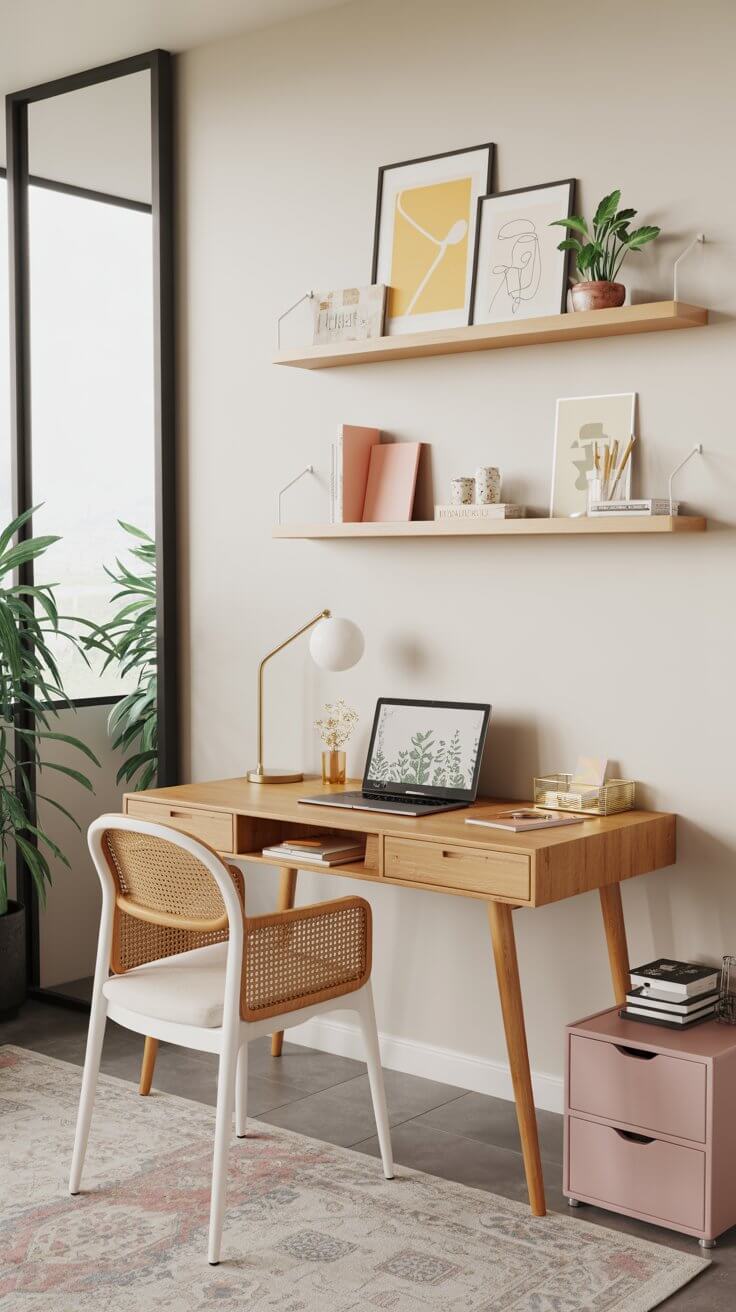
Defining zones in my home office was a huge help to establishing a functional space.
There are three primary zones in my home office: the area where I work (the desk area), where I store my supplies (storage), and where I put my personal items (a small shelf). This organization prevents clutter from spreading across the room.
Function and flow are the main considerations of an office design based on minimalism, not the aesthetic appeal.
Why hidden storage matters

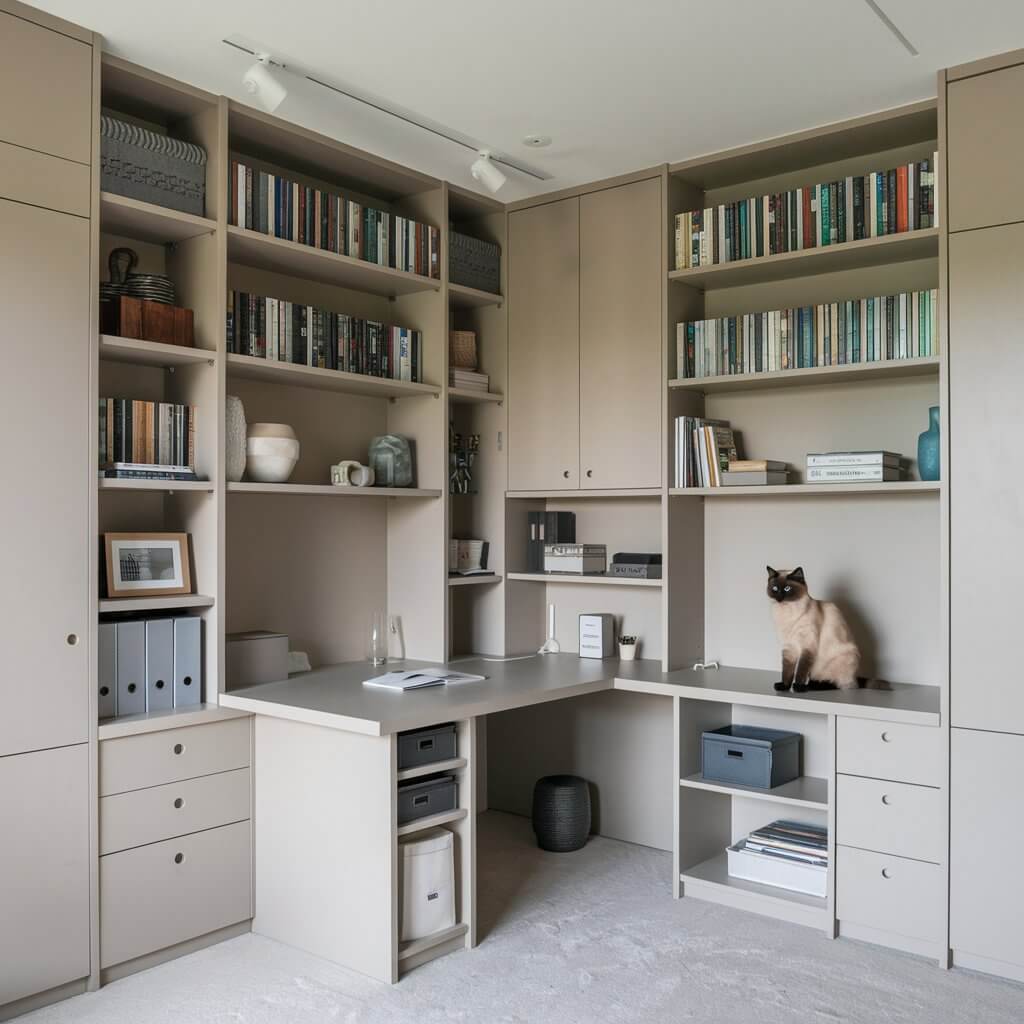
Hidden storage to keep all of your daily essentials out of sight is critical. Using built-in desk and storage units will provide a clear visual path. Closed storage reduces distractions and maintains a sense of calm in the workspace.
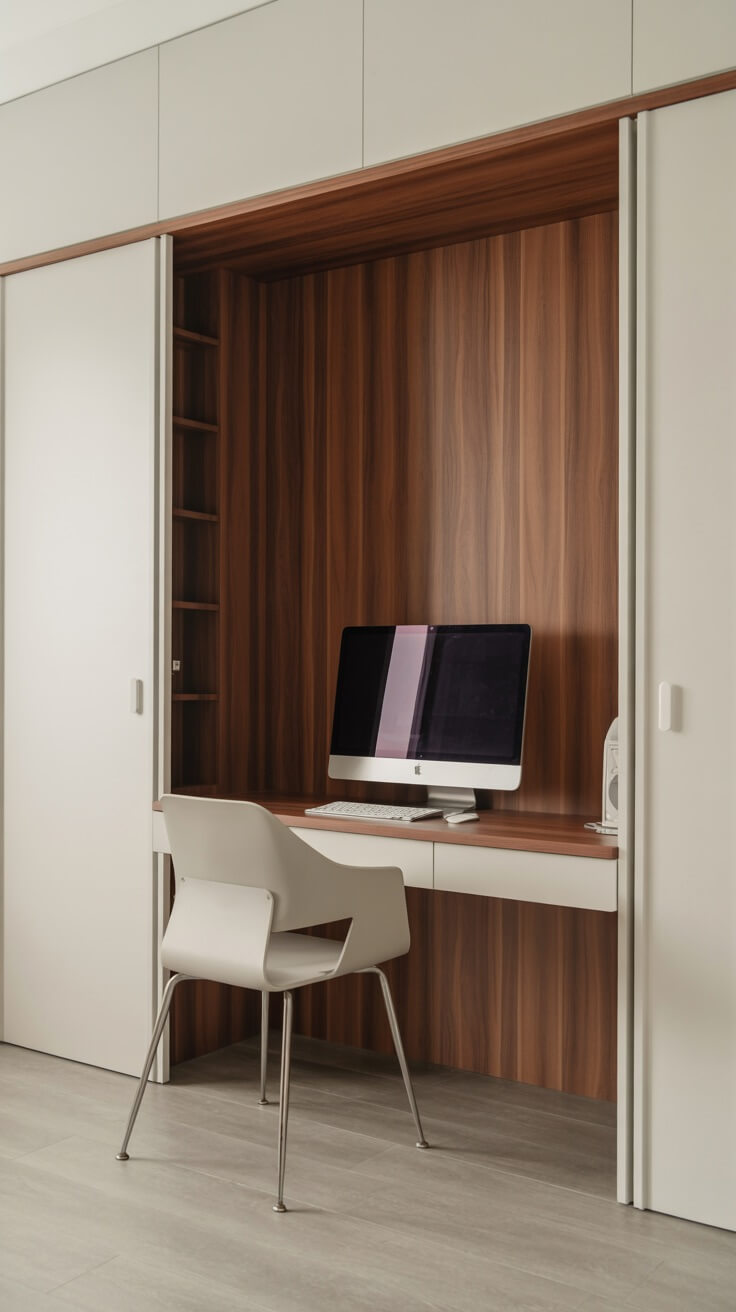
When working from a small office, it’s especially important to minimize the number of items that are visible. The fewer things that are visible, the larger the space will feel.
Can a small home office still feel spacious and serene
I’ve worked from a very small home office nook for years and yes, a small home office can feel large and serene.
Making a small space work harder
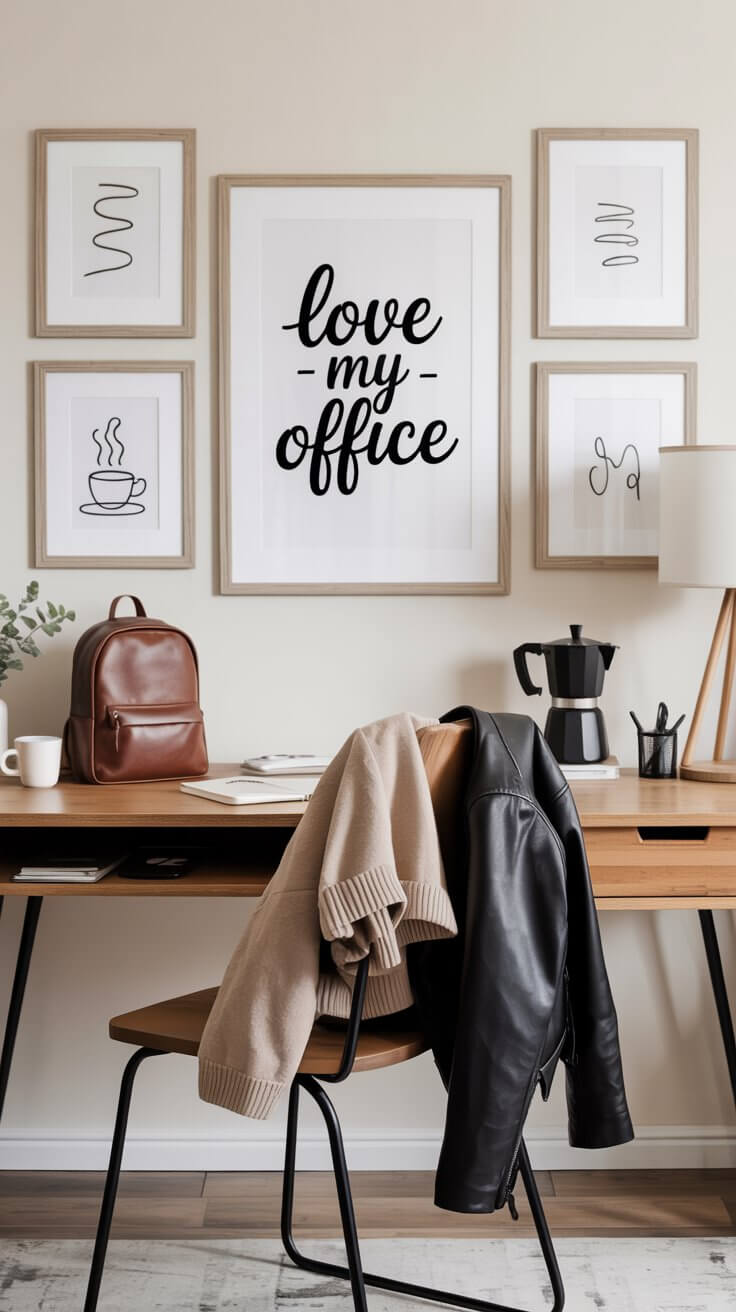
To make the most of a small space, utilize space-efficient furniture options. Use a slim desk, compact office furniture, and a desk chair that fits snugly underneath the desk. These types of selections allow the space to “breathe.”
Don’t overdo it with oversized furniture that overwhelms the space. By using furniture that is proportional to your space, you’re making your small space work.
Using color and light to expand the room
Paint the walls in a light neutral color palette. Soft whites, warm beiges, or pale greige tones reflect natural light and make the office space feel more open. This simple change can dramatically improve how a small office feels.
Achieving a minimalist vibe in a small space is about restraint, not sacrifice.
Choosing the right desk and office chair for a minimalist workspace
The type of furniture you choose for your home office determines the overall experience you’ll have while working from home.
Desk materials that support a minimalist look
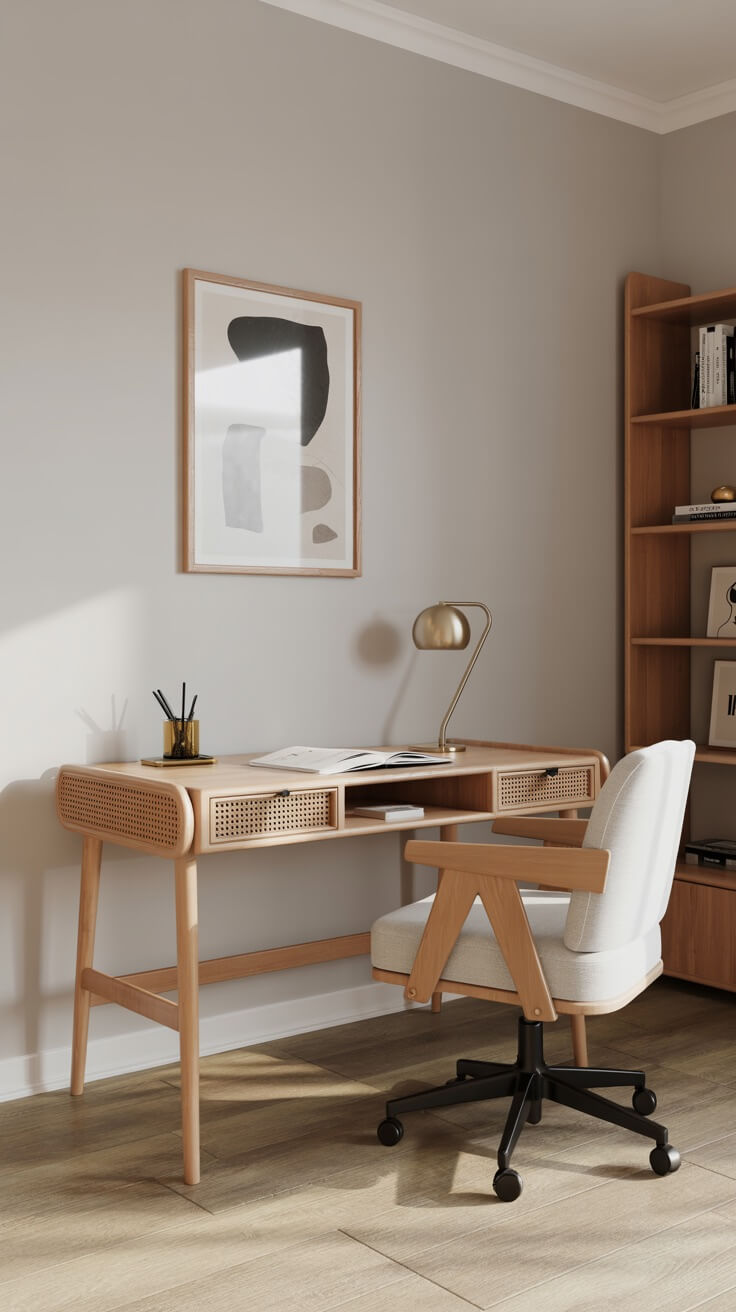
Glass desks provide a great option for a small space because they appear to fade into the background.
A wooden desk provides a warm, earthy feel to your home office and pairs well with minimalist designs. Both glass and wood work well when paired with a simple line and a clutter-free environment.
Choose furniture made with high-quality materials, not decorative details.
Comfort as a non negotiable design element
You want your office chair to be able to sustain you throughout long work periods without taking up too much space visually. Style is less important than comfort. Good ergonomic support helps prevent back pain and fatigue while providing a sustainable workspace.
Functional, yet aesthetically pleasing, furniture allows your home office to feel deliberate and intentional, not temporary.
How natural light transforms a minimalist home office design
Natural light is perhaps the most effective design element in any workspace.
Why light supports focus and calm

Once I made natural light and open layouts priorities in my home office, I began to notice that my space felt lighter and calmer. Natural light helps to decrease eye strain and increase your mood. It gives the sense that the space is alive.
If you don’t have any windows in your home office, consider adding a mirror to bounce around existing light and paint your walls and other surfaces a light, uncluttered color.
Minimalist office ideas for a bedroom office or shared space
Not everyone has a separate room for a home office. I worked from a bedroom office for a long time, which taught me a few valuable lessons.
Creating visual boundaries in shared spaces

In order for a bedroom office to be successful, it needs to blend in with the rest of the space. Choose a color scheme that complements the rest of the space, and it will become less noticeable when you’re not working.
Utilize a low wall or some shelving to create a separation between the office and the bedroom, but leave enough space for the room to remain open.
Making the workspace disappear after hours
A minimalist workspace in a shared space should be simple to reset. Clean your desk at the end of each workday. Store your supplies in their designated locations. This will help to keep your work and rest times balanced.
Solutions for storing clutter in a way that doesn’t compromise your minimalist style
How To Store Your Stuff Without Cluttering The Space
You may think about all the things that are important to you (and we don’t just mean items), but if you do not store your stuff properly, you will never truly have a space that has a minimalist aesthetic.
Closed storage over open shelving
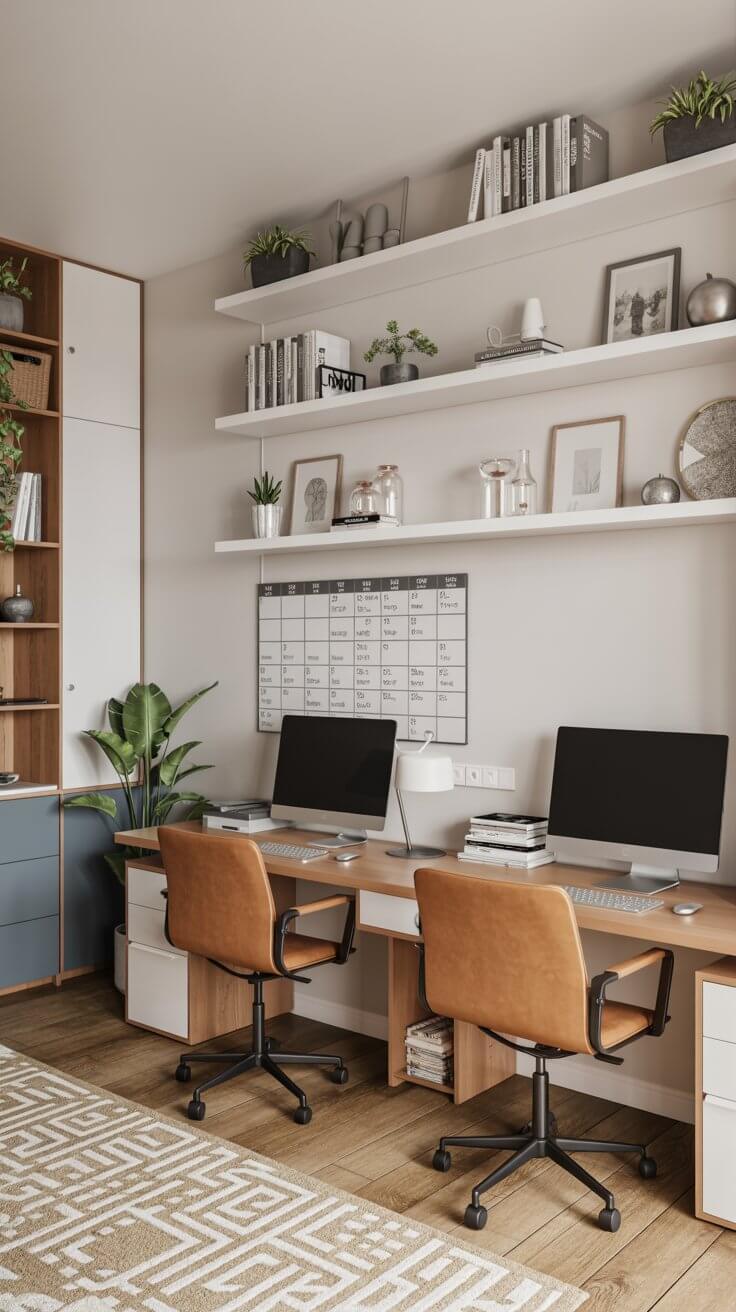
If you choose closed storage as opposed to open shelving, you will keep your stuff organized and out of site which will allow you to maintain a clean and minimalist appearance.
If you use an open shelving unit, you need to style it so that you can avoid having clutter accumulate on the shelves.
Having a specific location for everything helps to create a peaceful area for working.
Assigning a home to every item
Once you have created systems for organizing all of the things you own, you will find that it is easier to maintain them than you thought possible.
How to achieve a serene atmosphere with color palette and decor pieces
Your minimalist home office environment is finished by the atmosphere.
Using a neutral color palette to support calm
A neutral color palette creates a calming effect because it does not distract from anything. Use soft textures and gentle contrast to give the space some dimension without making it feel too busy.
Do not make the mistake of using strong contrasts or overly bold colors in your home office because they can break the calm atmosphere.
Choosing decor pieces with intention
You should only select a limited number of decorations to put in your home office and only those that carry significance to you.
That one plant, that one piece of art, that one tactile decoration. This way you create a sense of peace and calmness while avoiding clutter.
When your furniture and decor work together in harmony, the end result is a beautiful and functional workspace that makes you feel good.
Final thoughts on creating a minimalist home office that works
Creating a successful home office that embodies the principles of minimalism is not about the rules of what you can and cannot do, it’s about being aware of how your space affects you.
When your workspace is working for you, you feel less stressed. Your focus improves. Work feels lighter.
Don’t get overwhelmed and start off slow. Clean up your desk. Rearrange your workstation.
Get furniture that serves you. As time goes on, your home office will become a place that you want to come back to.
A successful design is not just how it looks in photographs. It is how it feels when you first sit down at your desk and begin.
This website contains affiliate links. As an Amazon affiliate, I earn from qualifying purchases (What’s This?).