This website contains affiliate links. As an Amazon affiliate, I earn from qualifying purchases (What’s This?).
This savory Dutch baby with caramelized onions, melty Gruyère, and a touch of thyme feels like brunch in Paris and breakfast in the countryside all at once.
If you’ve only ever had sweet Dutch babies dusted with powdered sugar and whipped cream, this version will completely change how you see the humble pancake.
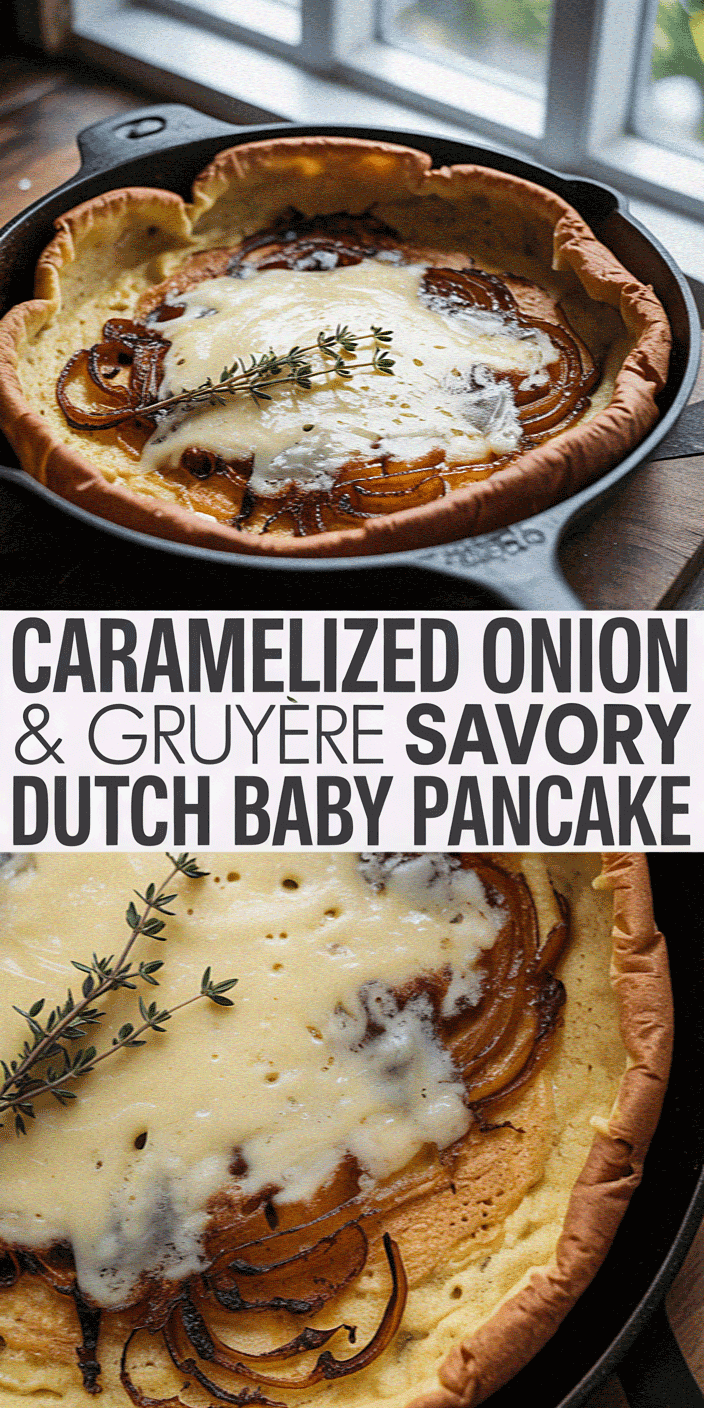
In this post, we’ll walk through how to make a perfectly golden brown, savory Dutch baby, crispy around the edges, soft in the center, and loaded with flavor.
What Ingredients Are Used In This Dish
(Serves up to 4 people)
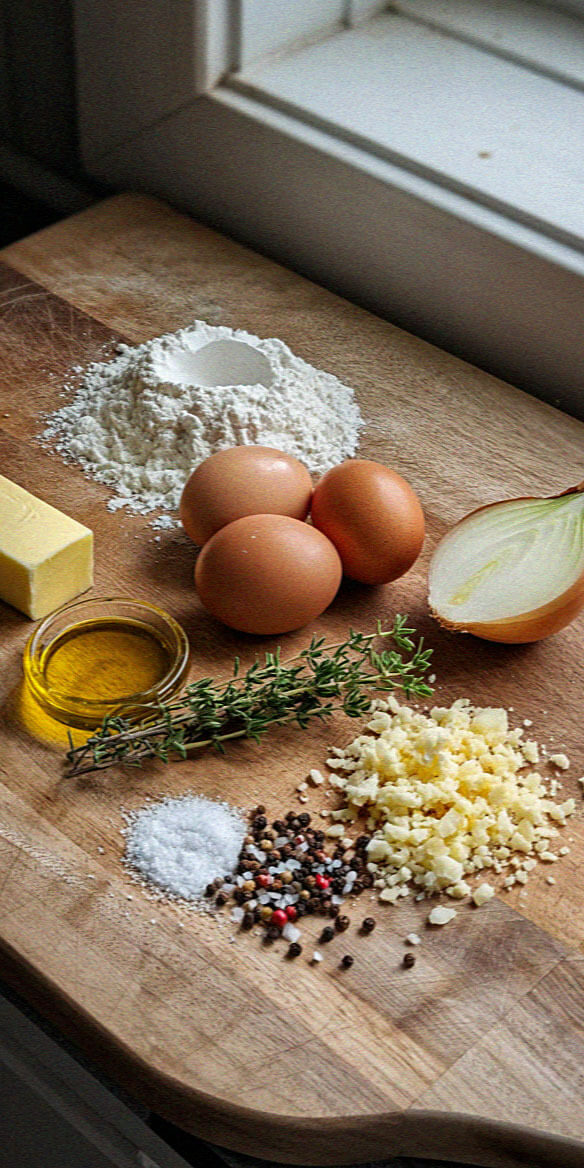
For the Dutch Baby Batter:
- 3 large eggs
- ½ cup all-purpose flour
- ½ cup whole milk (room temperature)
- ¼ teaspoon salt
- 1 tablespoon melted butter (plus more for the skillet)
For the Caramelized Onions:
- 2 medium yellow onions, thinly sliced
- 1 tablespoon butter
- 1 teaspoon avocado oil or olive oil
- Pinch of salt
- 1 teaspoon fresh thyme leaves (optional)
For the Toppings:
- ¾ cup grated Gruyère cheese (plus a little extra for garnish)
- Fresh thyme or chives for garnish
- Cracked black pepper, to taste
- Optional: fried egg, prosciutto, or roasted cherry tomatoes for serving
Instructions
1. Preheat the oven
Set your oven to 425°F (220°C). Place a 10-inch cast iron skillet in the oven while it preheats. This step is key — the hot skillet is what gives your Dutch baby its signature puff.
2. Caramelize the onions
While the oven heats, start the caramelized onions. Add butter and a drizzle of avocado oil to a skillet over medium heat.
Once melted, toss in the sliced onions with a pinch of salt. Stir occasionally and cook low and slow for 20–25 minutes. You’ll notice them soften, turn golden, and release a deep, sweet aroma.
If the onions start to stick to the bottom, lower the heat slightly and splash in a tiny bit of water to deglaze. When they’re deep amber and jammy, sprinkle in the thyme, then remove from heat and set aside to cool slightly.
3. Prepare the batter
In a mixing bowl, whisk together the eggs, milk, and salt until smooth and frothy. Gradually add the flour, whisking until the batter is completely smooth, thin and pourable, like heavy cream.
Stir in 1 tablespoon melted butter. Set aside to rest for a few minutes while your skillet heats.
4. Heat the skillet
Once your oven is preheated, carefully remove the hot skillet and add 1 tablespoon of butter, swirling it to coat the bottom and sides. Work quickly, the butter should sizzle but not burn.
5. Pour and bake
Immediately pour the batter into the hot skillet. Scatter the caramelized onions evenly across the surface, then sprinkle half the Gruyère cheese on top.
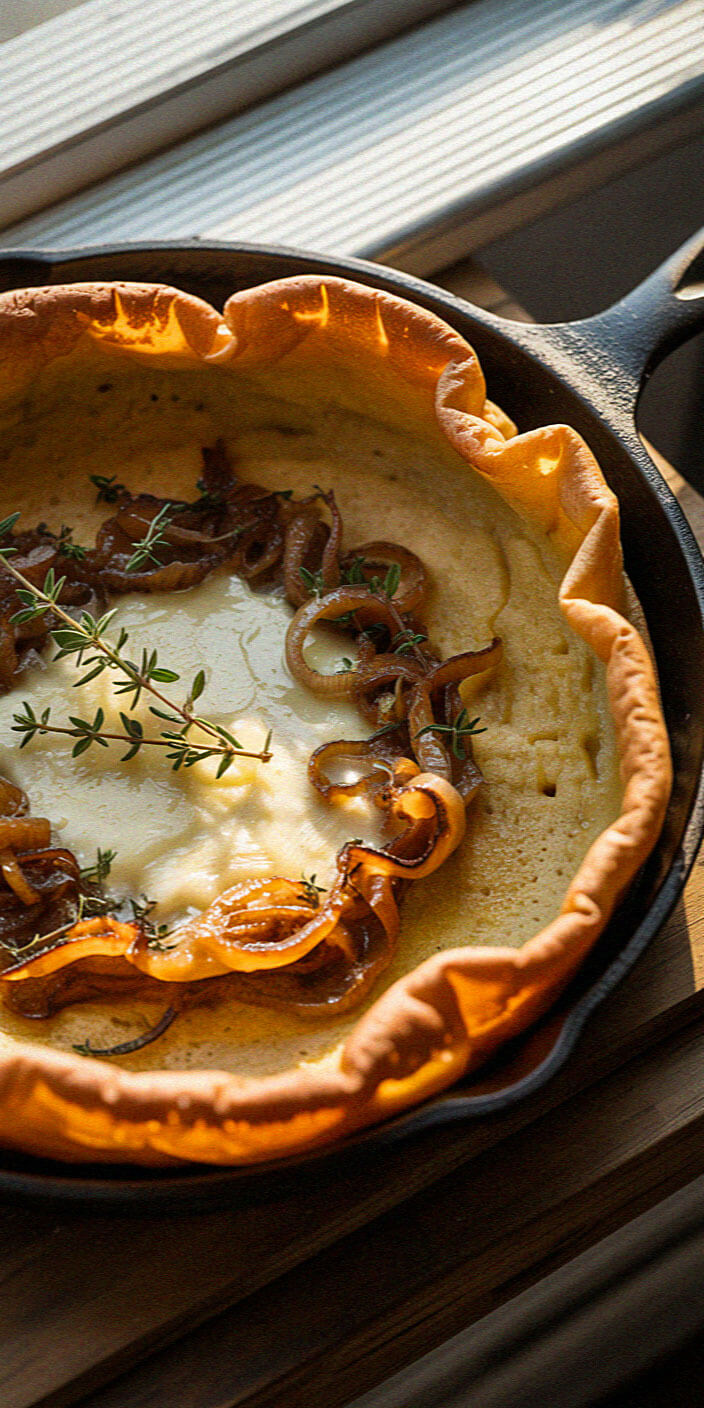
Return the skillet to the oven and bake for 18–20 minutes, until the Dutch baby is puffed, golden brown, and crispy around the edges.
6. Add the melty topping
Once baked, remove from the oven and sprinkle over the remaining Gruyère cheese. The residual heat will melt the cheese into a gorgeous, silky layer.
If you want extra melt, slide the skillet under the broiler for 30 seconds, just until the cheese starts to bubble.
7. Garnish and serve
Top with fresh thyme or chives, a crack of black pepper, and optional savory toppings like a fried egg, prosciutto, or roasted cherry tomatoes.
Slice into wedges and serve warm. The center will be soft and custardy, the edges crisp and buttery, and every bite layered with that sweet caramelized onion flavor and rich Gruyère melt.
Tips for success
• Always preheat the oven to 425°F and preheat your skillet before adding the batter.
• Use a well-seasoned cast iron skillet or oven-safe pan to get that puff and crisp.
• Cook your onions low and slow to caramelize fully.
• Don’t open the oven door while baking, the steam helps the pancake rise.
• Garnish with herbs or add toppings just before serving for freshness.
What exactly are Dutch babies (and how are they different from pancakes)?
Dutch babies, sometimes called German pancakes, are not your average breakfast stack. Instead of cooking them in batches on a griddle, you make one large, oven-baked pancake that puffs up dramatically while it bakes.
The batter is thin, more like a crepe mix than your usual fluffy pancake batter, and it relies on the steam created in a hot skillet to rise.
While pancakes are cooked slowly on the stovetop, Dutch babies love heat and thrive in a preheated oven. You pour your batter into a hot skillet coated with melted butter, then watch as the sides climb high and turn beautifully golden brown.
When it emerges, it’s slightly crispy on the edges, soft in the center, and has that irresistible, melt-in-your-mouth texture that makes you want to dig in immediately.
This version, the savory Dutch baby, is the grown-up cousin of the sweet Dutch babies you may know. Instead of berries and powdered sugar, we go for caramelized onions, Gruyère cheese, and herbs. It’s cozy, elegant, and endlessly adaptable.
Why make a savory Dutch baby instead of a sweet one?
Sweet Dutch babies are lovely, but savory versions open a whole new world of possibilities. Think brunch, lunch, or even a light dinner with a green salad on the side. The savory version can be layered with vegetables, cheese, or even thinly sliced prosciutto for a rich and balanced meal.
The best part? It feels indulgent yet effortless. You whisk together the eggs and milk, prepare the batter in minutes, and the oven does the rest. No flipping pancakes. No standing at the stove. Just pour the batter into the hot skillet from the oven and wait for it to puff dramatically as it bakes.
When you remove the Dutch baby from the oven, it’s golden brown, slightly deflated (in the most charming way), and ready to be topped with melty cheese and savory toppings. It’s the kind of dish that looks like you spent hours on it but takes under 30 minutes.
What makes caramelized onions such a game-changer?
Caramelized onions add an earthy sweetness and depth that balances perfectly with the nutty flavor of Gruyère cheese. They turn a simple egg-and-flour base into something you’d expect to find in a French café.
To caramelize, cook the onions low and slow in a skillet over medium heat. Add the onions to the pan with a drizzle of avocado oil or a tablespoon of butter.
Sauté until caramelized, lowering the heat if they start to brown too quickly. The key is patience, let the onions soften, release their sugars, and turn a deep amber color. That’s when their flavor truly shines.
Once they’re caramelized, set aside to cool slightly. You can even make them ahead of time; they’ll keep in the fridge for several days and only get sweeter.
When you layer them into your savory Dutch baby, they melt right into the cheese and batter, giving every bite a warm, jammy sweetness.
How to make the perfect pancake batter for a Dutch baby
The batter for a Dutch baby pancake is simple yet specific. You’ll need eggs, milk, and flour, plus a touch of salt to balance the flavors.
Whisk together the eggs and milk until light and frothy. Then add flour gradually, whisking until smooth. The consistency should be thinner than regular pancake batter, almost like cream.
To make the pancake puff properly, rest the batter for 10 minutes while you preheat your skillet.
This allows the gluten to relax and creates a smoother texture. You can also prepare the batter in advance; just store it in the fridge and bring it to room temperature before baking.
When your oven reaches 425°F, and your skillet is hot, immediately pour the batter into the hot skillet. The sudden temperature change helps it puff beautifully in the oven.
The secret to getting that puff just right
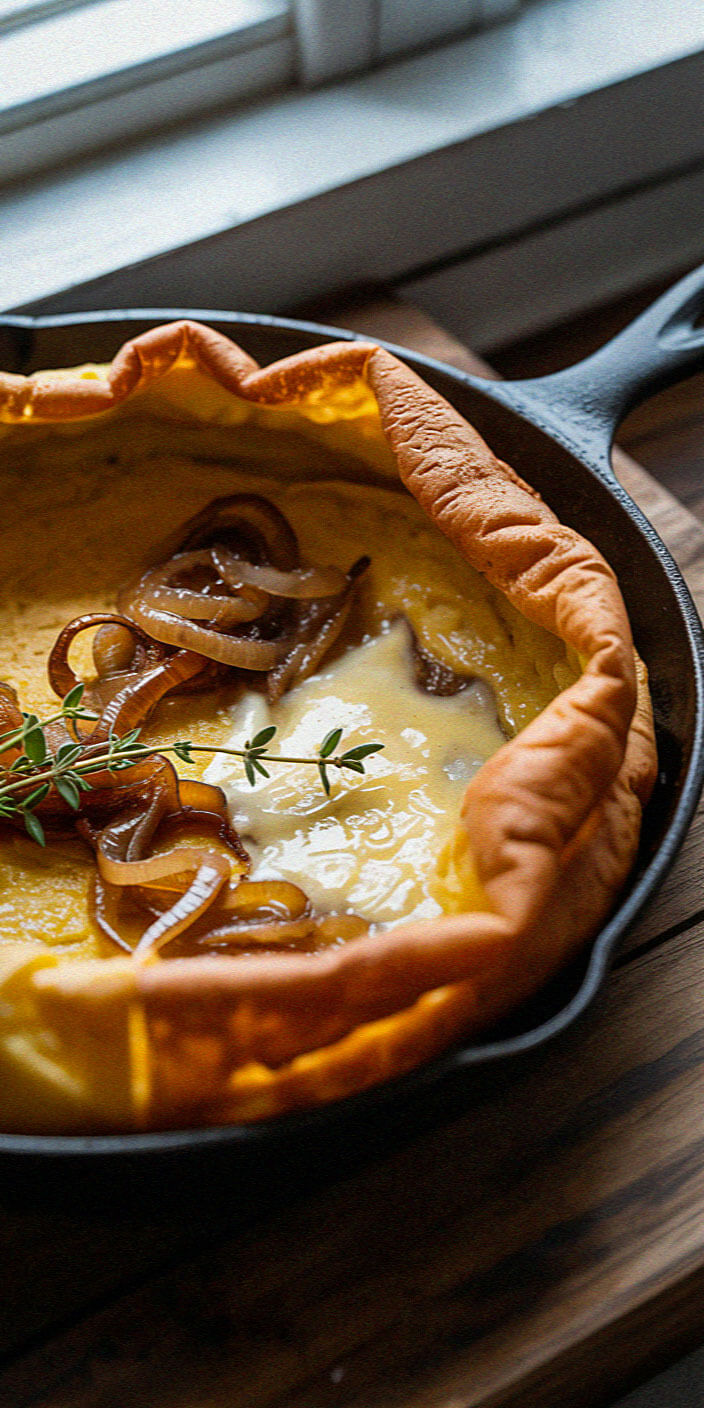
That dramatic puff is what makes Dutch babies so special, and it all comes down to heat and timing. Always preheat the oven to 425°F and preheat your skillet while you prepare the batter. The skillet needs to be sizzling hot before you add the batter.
When you carefully remove the hot skillet from the oven, add a tablespoon of butter to the skillet and swirl to coat the bottom and sides.
Immediately pour the batter into the hot skillet, then quickly return the skillet to the oven. This ensures even cooking and helps the edges rise.
As it bakes, resist the urge to open the oven door. The steam trapped inside is what makes it puff. Once golden brown and beautifully risen, remove from the oven and admire your masterpiece, it will deflate slightly (that’s normal).
Choosing the right skillet (yes, it matters)
A good skillet makes or breaks your Dutch baby. A 10-inch cast iron skillet is the gold standard because it heats evenly and holds its temperature. You can also use a cast-iron pan or an oven-safe nonstick skillet if you prefer lighter cookware.
Make sure to coat the bottom and sides with butter or cooking spray to prevent the pancake from sticking.
If you’re using a cast-iron skillet, preheat your skillet for at least five minutes to ensure it’s evenly hot. A well-seasoned surface also helps achieve those crispy edges without any sticking.
Once the Dutch baby from the oven cools slightly, it will release easily, ready to be cut into wedges and served.
Adding Gruyère cheese and toppings that melt beautifully
The flavor of Gruyère cheese is rich, nutty, and slightly sweet, perfect for pairing with caramelized onions.
Sprinkle a generous handful of grated Gruyère cheese over the pancake batter just before it goes into the oven, and then add the remaining Gruyère once it comes out. The residual heat will melt the cheese into a silky, melty layer.
For added texture, you can include other toppings like roasted cherry tomatoes, goat cheese crumbles, or a few slices of prosciutto.
Once you remove the Dutch baby from the oven, these toppings blend into the hot, puffed surface, creating layers of flavor and color.
If you want a brunch-worthy presentation, garnish with fresh thyme leaves and a sprinkle of salt and pepper. A drizzle of melted butter on top never hurts either.
How to preheat and bake your Dutch baby to golden perfection
To make the pancake perfectly, start by preheating your skillet in the oven while you prepare the batter. Preheat your skillet for 5–7 minutes so it’s piping hot when you add the batter.
Carefully remove the hot skillet, add butter to the skillet, and let it melt fully. Immediately pour the batter into the hot skillet and return it to the oven. Bake for 18–20 minutes until puffed and golden brown.
When done, carefully remove the hot skillet from the oven. The edges should be crispy and deeply golden while the center stays soft.
Let it rest for a minute before adding toppings so the cheese doesn’t slide off. Then, layer on the caramelized onions, the remaining Gruyere, and your favorite savory toppings.
Best savory toppings to finish your onion Dutch baby
The beauty of this dish is how customizable it is. You can go classic with caramelized onion and Gruyère, or get creative with other savory toppings. Try adding:
A fried egg on top for a brunch-ready finish
- Roasted cherry tomatoes for brightness
- Goat cheese for tang
- Prosciutto for a salty bite
- A few fresh thyme sprigs for aroma
You can even turn it into a meal by serving it with a simple green salad or a bowl of soup, like French onion soup, it’s a match made in heaven.
The flavors echo each other beautifully, and together they make an elegant lunch or dinner that feels effortless.
How to serve (and store) your savory creation
Once your savory Dutch baby is baked, remove from the oven and let it cool for a minute or two before cutting.
The puff will deflate slightly, but that’s part of its rustic charm. Cut into wedges and serve immediately while the cheese is still melty and the edges crispy.
If you have leftovers, set aside to cool completely, then refrigerate in an airtight container. To reheat, pop it into the oven or air fryer until warmed through, it will crisp up again beautifully. You can also enjoy it cold, like a slice of savory tart.
Serve it as breakfast and brunch, or elevate it into dinner with a fresh salad and a glass of white wine. It’s comfort food that fits any time of day.
This website contains affiliate links. As an Amazon affiliate, I earn from qualifying purchases (What’s This?).