This website contains affiliate links. As an Amazon affiliate, I earn from qualifying purchases (What’s This?).
When you see your cat climbing the sofa or sitting on the bookshelf, you know that cats really have a thing for high places and that they are born climbers.
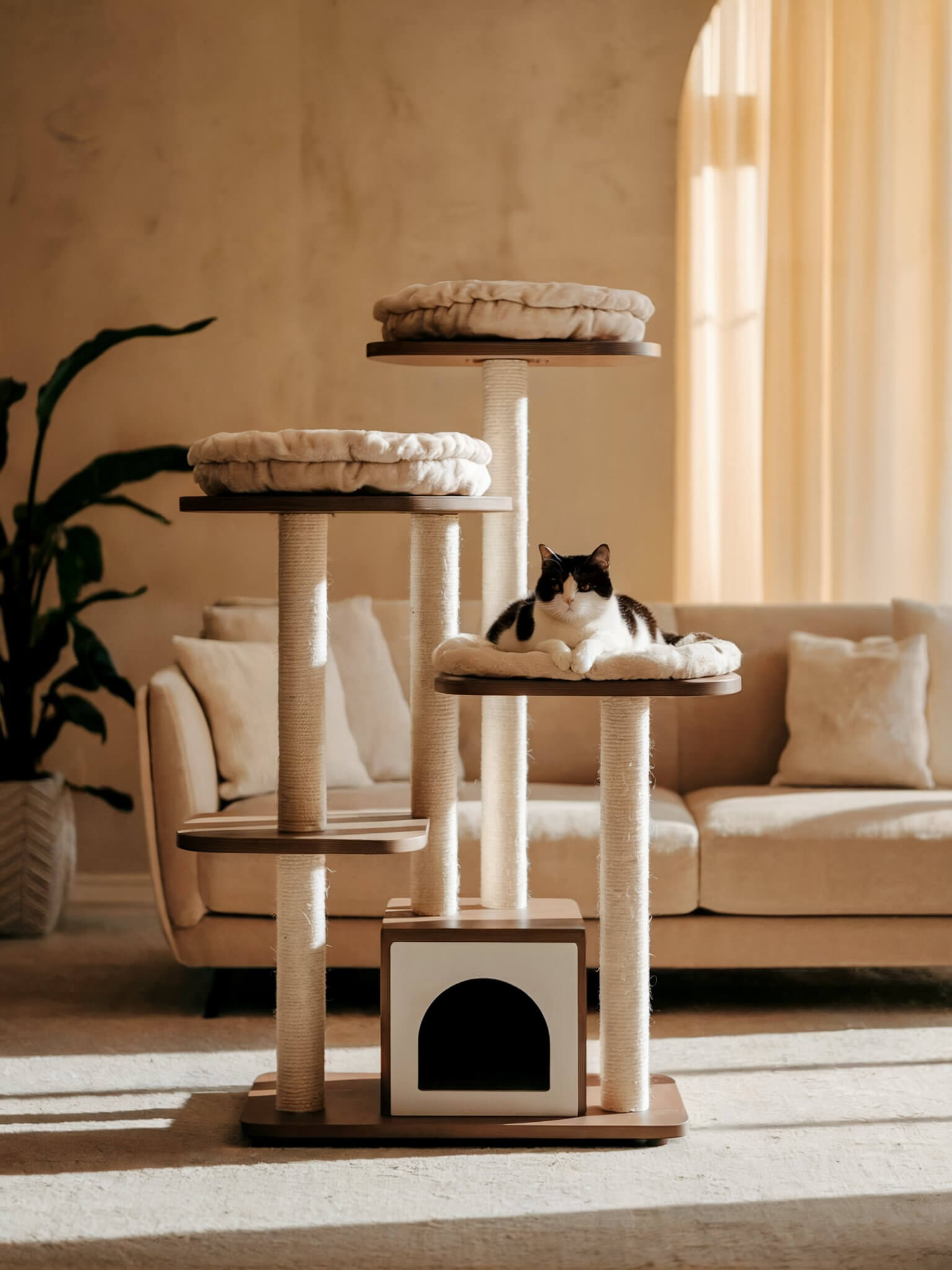
It’s not just another piece of furniture taking up space in your living room; it’s an area your cat can climb, scratch, and play.
You get what you pay for. A quality cat tree is safe for your cat and offers a wealth of enjoyable textures to play on. A cat tree is both an entertainment center and a home away from home for your cats.

Whether you’re a first-time cat buyer or seasoned cat owner upgrading to the next level, you’ll find straightforward advice, markers for public attention to detail, and prior knowledge tips to help you buy with confidence.
Why Do Cat Trees Matter for Your Feline?

Cat trees are essential for cats’ physical fitness and mental health. In the open air, cats climb trees to look at their areas, flee threats and establish dominance.
Even though your indoor cat friend cannot go outside, the cat tower can provide a safe outlet for her natural behaviors. Untamed cats are still wild at heart.
Without a compromise like this, you may find your cat scaling curtains, scratching furniture, or acting out in general.
A well-located cat tree gives your pet something she can call her own: easily allows access downstairs from upstairs and offers multiple floors for playing on.
This allows it complete contact with the outside world but assures no outside creatures (or persons) will get at him. Being the cat’s main headquarters saves your home from many upsetting behaviors!

Cat trees come in all shapes and sizes, but their essential function is identical: they provide your cat with territory.
When you select a cat tree, you are not purchasing cat furniture, but rather creating an environment for your feline friend that promotes exercise, reduces stress, and provides a safe retreat.

For any group of cats with more than one single home, the cat tree can serve as a peacekeeper by offering independent perches and hiding places. Believe me, the right cat tower it’s always a good idea.
What Should You Look for When Shopping for a Cat Tree?
Shopping for a cat tree can be daunting with so many options available today. From budget models in pet stores to high-end cat trees that put modern art installations to shame, there are some that are inconceivably different.
This product is available at every turn. In fact, the secret is just knowing what’s important.
First, investigate the construction. A good cat tree should be strong yet light and able to withstand any punishment.
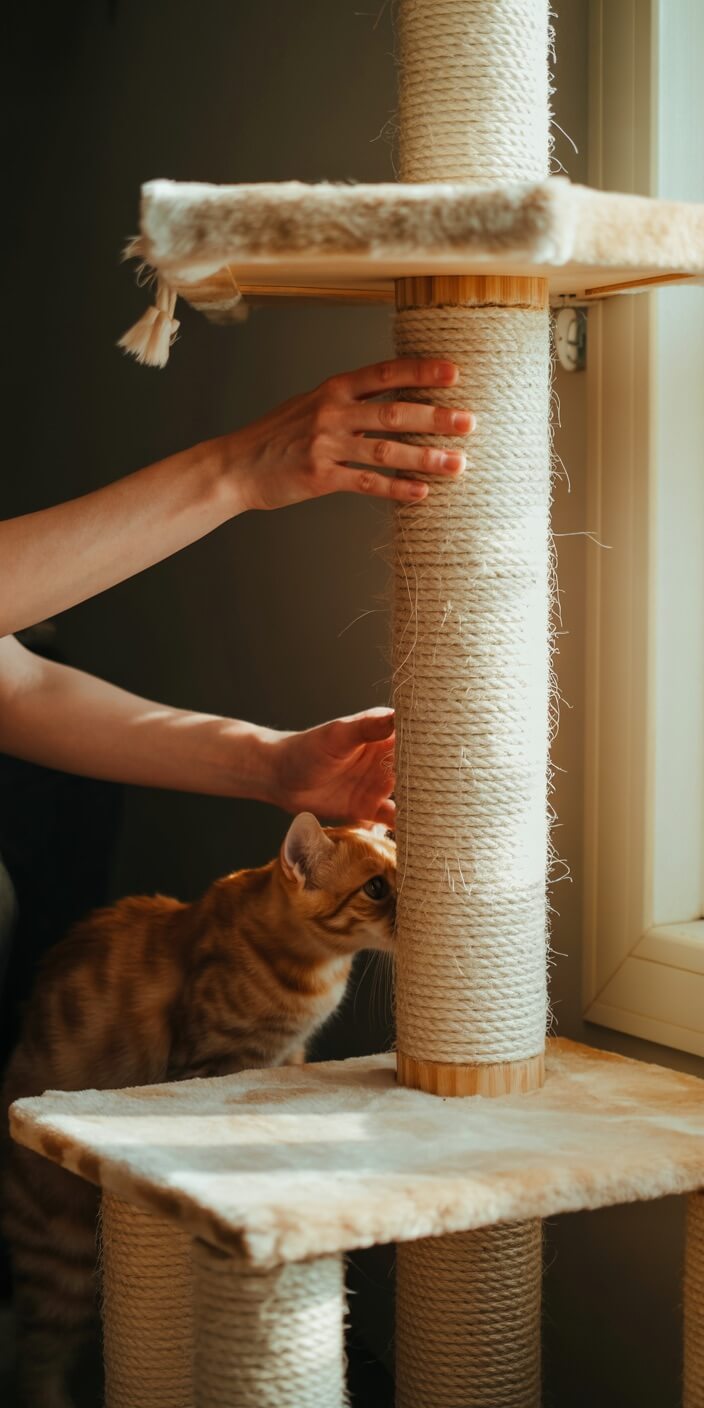
It will have a solid base, posts thick enough to support your feline companion, and be made from materials such as plywood and pressed wood that are hardy enough to withstand repeated cat attacks.
Look for towers covered in wool to satisfy the cat’s scratching needs, and shelves wrapped in soft but tough fabric.
A tree with a platform on top, promising hours of enjoyment or sleep (or both), is an important addition to any home simply because it is really what cats like, and hasn’t developed any bad habits!
Durability of such a piece cannot be overestimated, of course; should the tower wobble or tilt at all, not only will one’s pet become frustrated by this in short order, but also there’s some chance that butterfingers like myself may harm themselves trying to set things right again.

Next is size and height. Big cats need big platforms high up on structures, as they are much longer; old cats may like a lower set so they can climb easily into bed with you.
You could have a very impressive-looking cat tower that reaches the ceiling, for example, but if your pet is afraid of heights and won’t get near it, then all that work’s gone to waste.

Take note, before buying a cat tree, measure both. Finally, look at the features. Does the cat tree offer hidey-holes, distinct food dishes, a multi-level design, rattle-ball fedora toys or ramps?
Some cat trees are made for specific needs, one might provide a new cat with ability to get away from it all (though this is false enough to be frightening), while a more active youngster will likely want platforms on which he can hop around and things to keep himself busy.
The ideal cat tree matches your cat’s personality while considering durability and practicality.
How Do You Choose the Right Cat Tree for Your Home?
First of all, it’s important to note that choosing the best cat tree starts with understanding your living space and your cat’s habits.
For instance, a luxurious, large cat tree may conflict totally with space demands if you live in an apartment.
So a smaller version could still be ideal, seeing as it would look right at home and contribute a touch of luxury or seeming fashion wherever in your home one happens to place this furniture.
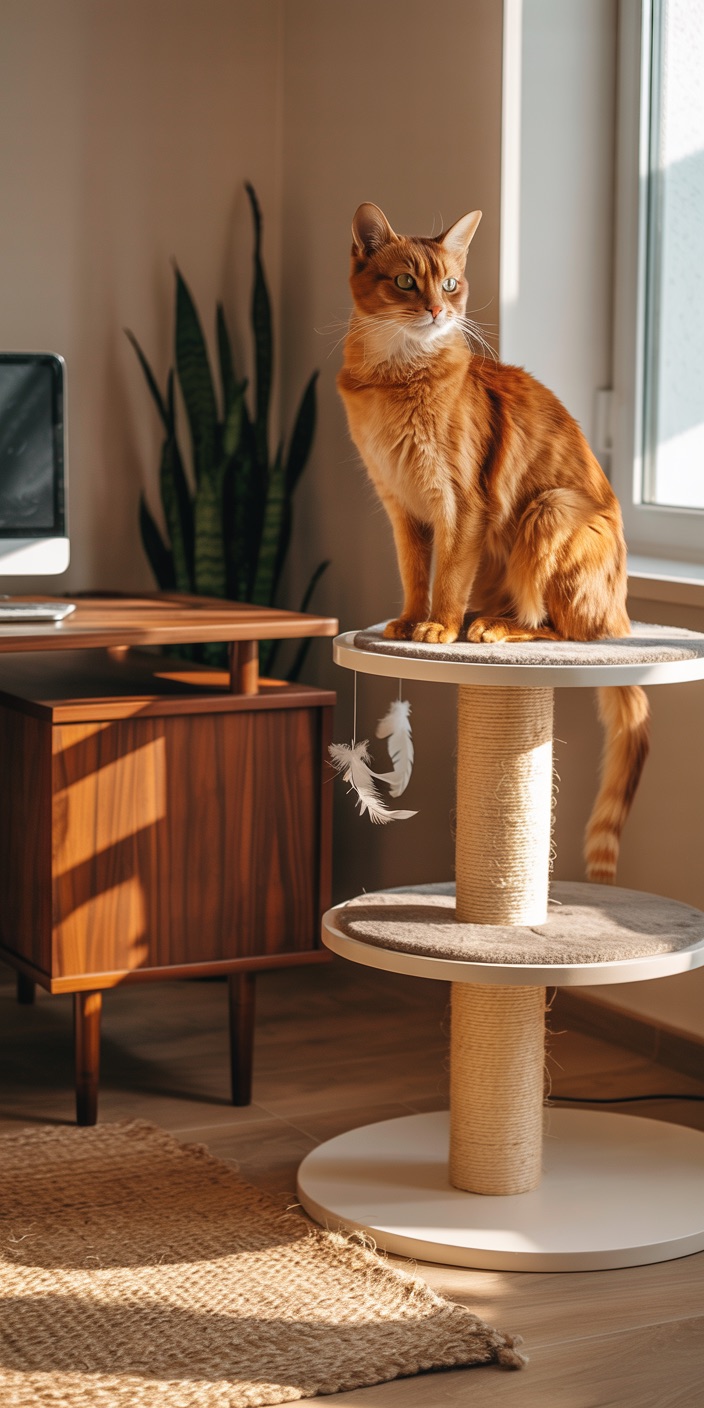
Modern cat trees tend to blend into their surroundings. They are generally made with neutral colors and fine craftberries.
With their clean lines and elegant design, they add a decorative element that even the most discerning fashion critics would find appealing.
The cat tree for a big home certainly leaves you free to choose it in whatever way you fancy. With several levels, toys dangling from many different locations, and a number of poles to scratch at, these are things that other homes may not have room for.
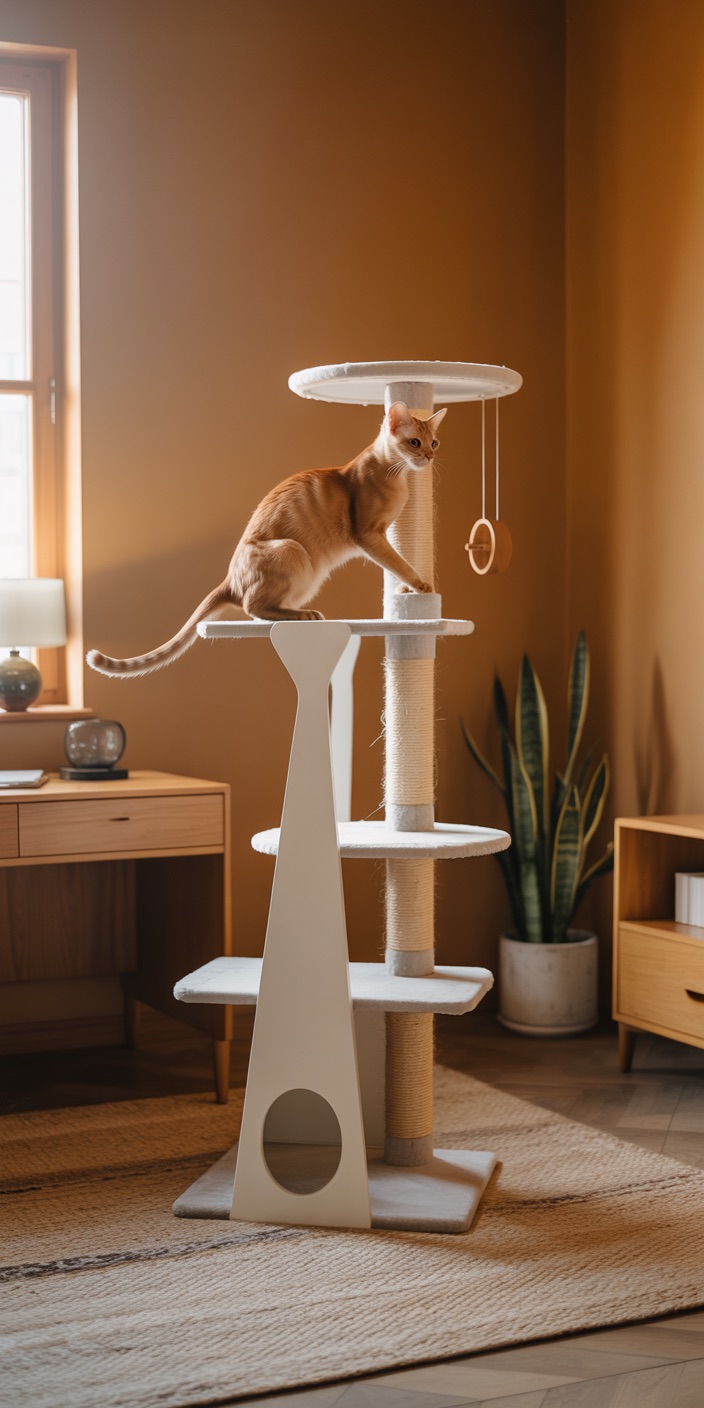
It depends on where you are going to place the cat tree. For example, if you place it in a room where people often come and go, like the living room, then everyone will feel like they are part of the action
At a window, I’ve found that cats love to be near a cat tree. Not only is the perfect of a stare at what’s outside, but it’s also hotter and provides ample entertainment right in your home.
You might also want to consider family dynamics. A cat tree with more than one perch at different levels – that can help disperse disputes over the best volume.

A big cat requires a wider and thicker platform that doesn’t sag under its weight, while smaller cats can enjoy a high platform with many levels.
Observe your cat’s activity level and preferences. Will your cat hide a favorite toy (or itself) or prefer to perch high above the room, looking down as you walk around, and cleaning out a comfortable spot for itself at the same time?
When you match your cat’s behavior to the right cat tree, it’s hard for them not to use it constantly.
What Are the Different Types of Cat Trees Available?
Nobody thinks of cat trees in even a fraction so crystal clear as this statement. Knowing what’s out there lets you zero in on what you really want to try.

The classic cat tower is what most people picture; multiple levels provide this vertical cat palace, which looks like a cross between a continental mountain range and giant martinis from every shakeout (that traces how many times there are scratching posts).
Then, at the top, there’s usually a hammock or two thrown in for good measure, too!

These are versatile, readily available, and great for most cats. Then there are wall-mounted cat trees that take up less floor space and give a climbing wall effect.
These work well in small living spaces; you can adjust them to fit your cat’s climbing style.
Luxury cat trees use better materials, are designed more elegantly, and feature curved ramps, luxurious bedding, and zippered plush covers that contrast with reinforced sisal scratching surfaces.
For cat owners and others seeking higher-quality furnishings for their homes, one alternative is to buy from designers who are also seeking nice furniture, because they know their own tastes.

Budget cat trees, on the other end. They don’t last as long but are good for owners unsure whether a first kitten will take to a cat tree.
However, some cat trees are made specifically for large cats. These spotlights have bigger shelves and thicker frameworks to support their weight. Others are built with older or disabled felines in mind.
Instead of heights, these climbing frames feature lower platforms and gentle slopes up to food or resting places, making them perfect for arthritic cats.
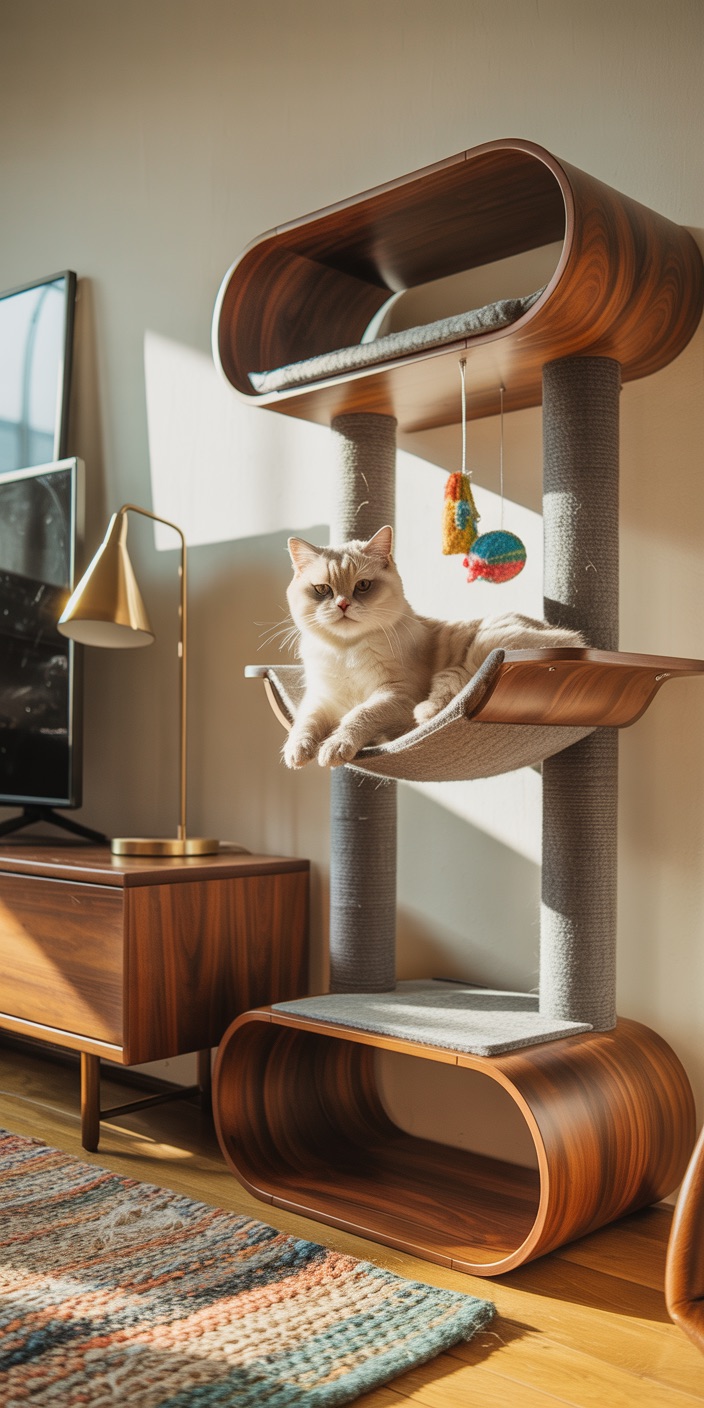
Banks definitely wouldn’t fare well here, since all those sharp ups and downs would make at least some of them touch the ground!
Cat trees use different materials too. Some are carpeted, others have natural wood finishes, and many feature a combination of fabrics, sisal, and fake fur.
How Do You Know If a Cat Tree Is High Quality?
It’s a matter of quality when it comes to a cat tree because an unstable structure may stand for only a few months then wobble and collapse.
First, check the base. A quality cat tree has a sturdy base and is wide enough to remain stable even when your cat leaps to the top perch.

The posts should be thick and tightly wrapped in sisal rope, or covered with durable fabric. And a bowed wrap may unravel far too quickly once your cat starts scratching.
So you’re looking at various platforms and hideaways. Are they big enough for your cat to stretch out in? If a platform is too small, your cat must assume an unnatural posture when using it, which is not conducive to its intended use.
The trusses between the levels should be secure, with no visible cracks or loose joints at any point along their length.

Some cheaper models use thin particleboard that sags or tears when the going gets tough, but a cat tree built to last is usually made from hardwood or a composite board, with strong fittings welded to it.
Materials also show signs of quality. A comfortable, downy fabric to rest on shows that the cat tree was intended for living, while rough, cheap carpeting will grate the flesh of your cat’s pads like sandpaper.
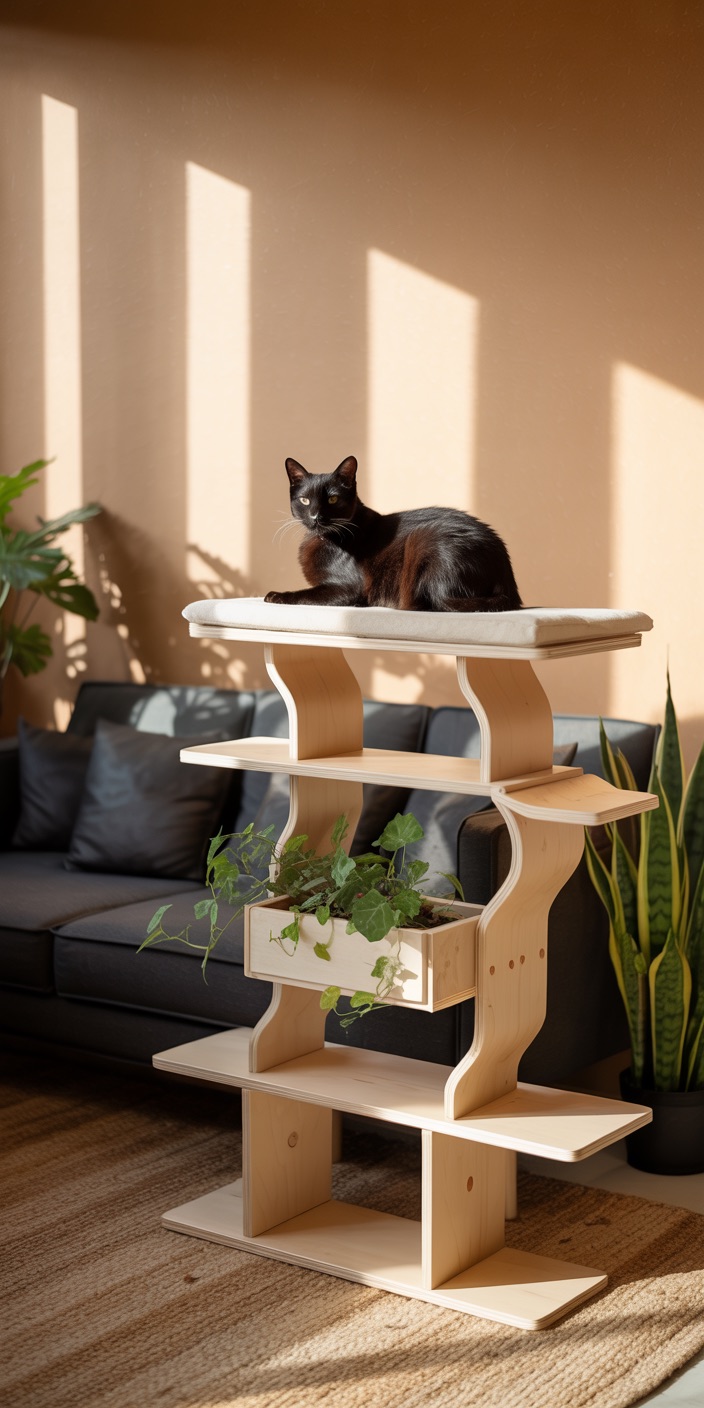
The sisal rope must be tightly wound and thick. If the material tying it all together is frayed at edges or thin before you even take it home, then that is a warning sign.
A regular cat tree won’t feel right when you shake it gently, with taut connections and no rattling or movement at all.
And yes, good cat furniture can sometimes cost a bit more than its cheaper counterparts. All the same, this is likely to be the only one you’ll ever need in your lifetime, and your cat’s safety is also important.
What Size Cat Tree Does Your Cat Actually Need?
This is a very simple question with an equally simple answer: You need to consider not only how big your cat is, but also where and with whom she will be playing (or lounging).
Size is one of the most common blunders when purchasing cat furniture. A little scrutiny will tell you that a large kitty condo in a small house makes for one frustrated owner, while a minuscule tree-house will leave your furry friend squeezed and twitchy.

Start by measuring your cat. Large cats like Maine Coons and Ragdolls need wider platforms that are at least 16 inches across, and sturdy construction that can bear their weight and keep them at floor level in case of any accidents, for example, when they are wrestling with each other or playing at their rough-drafting post.
A petite cat can handle platforms of smaller size, yet still demands an inch or two to spare for stretching from claw to claw.

But it is indeed space she wants most of all. Height is another factor. Cats love to climb, so the higher the cat tree, the more room it offers them. However, a tall structure may frighten an older or disabled cat.
In such cases, one of moderate height with easy-to-reach levels may be best. Also, think about how many cats will use one cat tree.
Cats are territorial animals, and forcing them to share a single perch often results in confrontations.
A larger cat tree with multiple levels and several scratching posts can easily accommodate a multi-cat household.

People don’t just have their own spaces; they also have different kinds of spaces. Their distinct preferences should be taken into account when buying things for them, even those in a shared relationship.
Seasoned pet owners know this all too well, because they often live with quite a few (3-6) cats at once. Measure your available floor space too.
You want the cat tree to fit without dominating the room or blocking doorways. A cat tree fits best when it adds to your space rather than closing it in, so give some thought to where you will place this important item.
Where Should You Place Your Cat Tree for Maximum Use?
A cat tree won’t be used much if it is tucked away in dark corners where your cat never goes. Cats are social, they want to be near their people. Because of this, place a cat tree in areas where you tend to be at most of the time.
Keep it open; don’t cover up windows. This is one thing I’ve noticed about the places where cats like to live. Windows provide great property for a cat tree.

A cat tree near a window offers endless entertainment for your cat as they watch birds, insects, and people going about their business outside.
Just make sure the cat tree is stable and won’t tip when your cat is excited and launches themselves at the window.
Locations to avoid: Don’t put a cat tower in rooms that are seldom visited by your cats. For example, if the cat tree has been hidden in an upstairs guest bedroom, where it looks neat, but your cat will just ignore it.

Also consider the temperature and noise level of its location. Cats like peace and quiet, so don’t place a nifty post next to loud appliances or in drafty hallways.
Try to seek out one that makes idiosyncratic use of your dwelling. Properly located, a cat tree becomes an accepted fixture rather than another neglected piece of furniture.
What Features Make a Cat Tree Truly Functional?
Besides being tall enough, the best cat tree features lifting platforms that let cats enjoy the landscape around them.
Your cat needs plenty of scratching surfaces in a variety of shapes and sizes so you aren’t left having to scratch up your own house.
Cats should have areas they can scratch to help keep their claws, which are actually kind of like our fingernails for them, in good shape, so they do not get caught on furniture or curtains.

Several scratching surfaces are better than one when it comes to a cat tree equipped with two or three sisal-wrapped posts.
The more scratching posts your cat has available to it, the less likely she is to paw at your curtains or sofa.
Easy climbing, multiple levels, and platforms are all built upvotes. These features allow for maximum freedom to explore and play contentedly.
Some cat trees come with enclosed nest holes or hammocks at one or two levels, where the cat can sleep alone if it wants; they may also foster nesting instincts in female cats.

A child’s small folding tent can substitute for these features with a cheap and available ease: pitch it by the highest post of your tree so kitty has some privacy while lying down but not too far from people living in the house that operate on daytime schedules.
Some cat branches are designed to hang toys from. Over time, these become excessively worn or shredded as the cat bats them around. On the other hand, hanging toys are a good solution for playful cats.
Some tree designs include ramps of some sort and steps up to the higher platforms. These make life easier for kittens, or cats convalescing from an injury; they offer a gentler way up to that level than leaping directly.
The really high-class cat trees even feature curved ramps, or gentle slopes that are scratching posts in themselves.
One good example of being efficient at providing exercise, rest, play, and attack needs all together is a cat tree. Observe how your cat behaves and find a way that supports its habits.
How Can You Encourage Your Cat to Use Their New Cat Tree?
You’ve brought home a gorgeous new cat tree, but so far, your cat has given it the cold shoulder. A familiar scenario. But don’t worry, this is common, and there are ways to make a cat tree irresistible.
First, set your cat time. Cats are the nervous type of animal, and a big new piece of cat furniture can is outstandingly frightening at first.
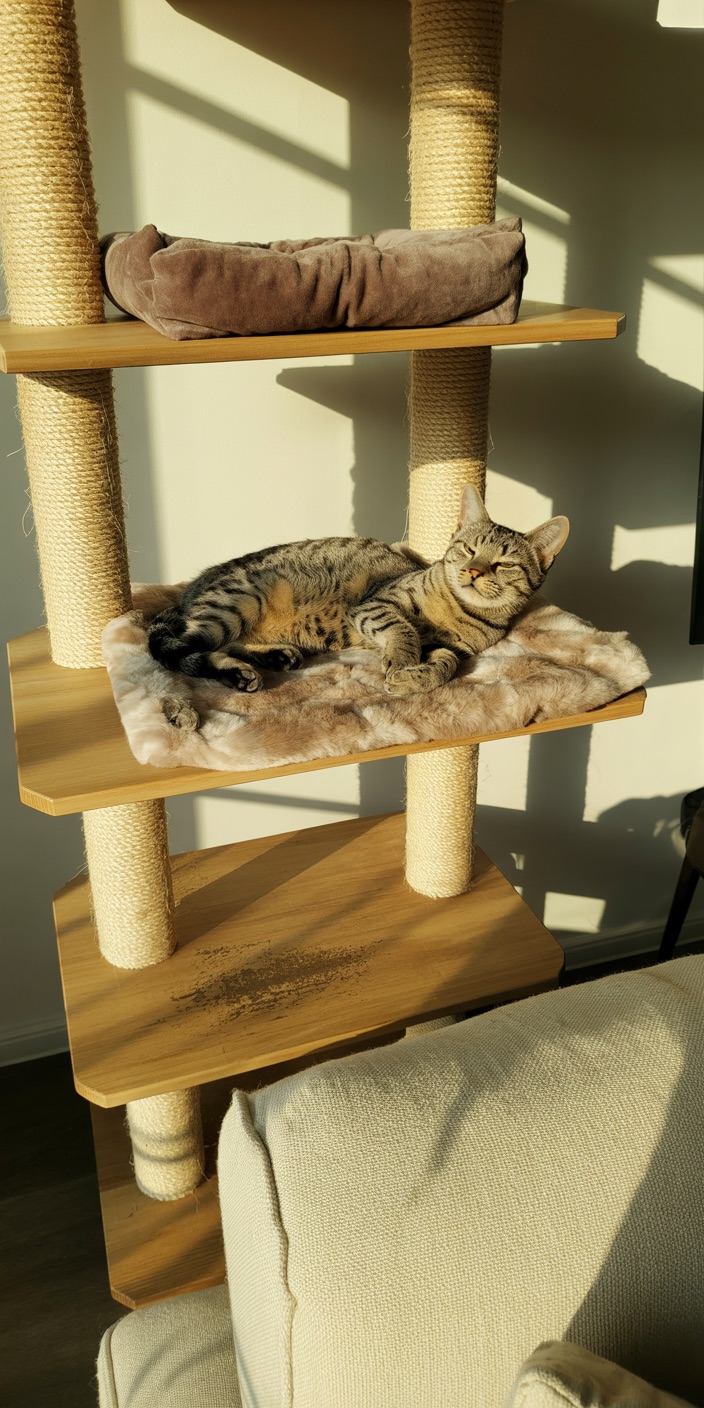
Place the cat tower in a spot your cat already frequents, then let them check it out slowly at their own pace. Scent is especially important to cats.
Wipe a soft cloth on your cat’s face to get his scent, then rub it all over the cat tree. This makes it not so unfamiliar-smelling and easier for the cat to accept.
You can also sprinkle some catnip on the platforms and scratch posts to make them more interesting.
Treats are a big help, too. Put some of your cat’s favorite morsels on different layers in the tree to encourage exploration.
After your cat’s experiences with the cat tree have been all good, it will probably be used regularly. Play is good motivation as well. Wave a feather wand or shine a laser pen over your cat’s cat tower.

This way he will have to understand that the cat tree is a fun place to play and that it is also safe for him to leap on.
You may find that after one cat starts using the tree, the rest will weigh in. Cats learn from each other, and sometimes a little peer pressure can work to your advantage.
Don’t force your cat to get into the tree. Let him discover it on his own terms. Sooner or later, you’ll find him taking a nap, all peaceful and quiet, while scratching away happily from the top perch.
Anyway, you won’t be able to discern the true wisdom of this old saying until you catch your cat lounging up on your cat tree.
What Are Common Mistakes When Buying Cat Furniture?
Even with the best intentions, you can easily make mistakes when buying cat furniture. One of the biggest mistakes is to buy based on appearance rather than function.
It’s nice that a modern cat tree fits your room, but you can bet your cat won’t use it if the thing turns out to be good for nothing.
So always check construction quality and stability first. Only fall in love with a design once these basics have been established.
Another mistake is getting a cat tree that’s too small. Your cat will be done growing before you know it, and she’ll have outgrown the kitten-sized tower by then.
The smart buy is a tree with room to grow, or one whose posts can be easily replaced with longer ones.
Always keep future needs in mind when you buy. Ignoring your cat’s personality is another trap. A shy cat might feel exposed on the open platforms of a tower and would rather have something with enclosed spaces.
An active, confident cat would be bored by a small, basic tower. Watch your cat’s behavior. Do they like to be in high places or do they prefer to stay low?
Are they the playful type, or cool and laid-back? Match up the cat tree with these kinds of preferences. Also, the importance of assembly should not be overlooked.
Some cat trees are delivered in kits and come with instructions that are hard to understand. Read reviews to see if assembly is simple or if you will need extra patience and tools.
There’s another mistake worth avoiding-financial skimping. A cheap cat tree might look like the bargain of a lifetime, but if it falls down in six months, you’ve got to buy another one anyway.
If you’ve money to spare, invest instead in a good piece to begin with. Where cat trees are concerned, three times more for the start goes ten times further than that same amount at a time, and it will also last your cat longer as well.
We can think of buying a cat tree as being a long-term offset against the cat’s happiness in itself.
How Do You Maintain and Clean Your Cat Tree?
The centerpiece of a home trap, a cat tree becomes a gathering place for fur, dandruff and dirt. A weekly maintenance schedule will keep it fresh and extend its life.
It’s a simple start, and important: vacuum your cat tree regularly. Use an upholstery attachment to remove loose fur from platforms, cubbies and scratching posts.
This little effort will prevent ‘purr pads’ from building up, and the whole cat tree looks neater in consequence.
For heavy cleaning, wipe fabric surfaces with a pet-safe cleaner, or mix mild soap with water and use that. Don’t use caustic chemicals that could hurt your cat’s skin or damage its respiratory system.
Keep Sisal rubbing posts will tend to fray from your cat’s scratching, though this is normal wear and a sign that your cat tree is actually being used.
However, if the sisal is completely unraveled or the rubbing posts start looking scrappy, you can occasionally replace the rope yourself or contact the manufacturer for spare parts.
Regularly check the cat tree’s stability. Tighten any loose screws, nuts, or bolts and inspect the base for excessive wear. A shaky post is dangerous, perhaps immediately, and catching any potential issues early prevents accidents.
If your cat urinates on the tree, clean it off right away to avoid odour and permanent staining. Enzyme-based cleaners are most effective at removing the smell of cat urine.
For persistent odors, you might need to replace sections that come into contact with fabric, or consider buying a new cat tree if the damage is too extensive.
A quality cat tree, with care, can last for many years. However, if your feline friend enjoys such a fantastic, clean space in which to live, it does good things for the local ecology as well.
Regular maintenance means you will notice any wear and tear before it becomes a problem, keeping both yourself and miaow-mate safe from harm while protecting your investment.
This website contains affiliate links. As an Amazon affiliate, I earn from qualifying purchases (What’s This?).