This website contains affiliate links. As an Amazon affiliate, I earn from qualifying purchases (What’s This?).
Want to achieve that creamy polenta topped with slow simmered eggplant ragù? You can do that now.
The richness of eggplant, the earthiness of lentils and chickpeas, and the savory depth of tomato and red wine create a dish that feels like it’s been simmering in an Italian countryside kitchen all afternoon.
Except, it’s vegan, hearty, and perfect for a cozy weeknight dinner.
In this recipe, you’ll go through how to make this comforting ragout from scratch, how to get that thick and creamy texture just right, and how to build layers of umami flavor without a single ounce of meat or cheese.
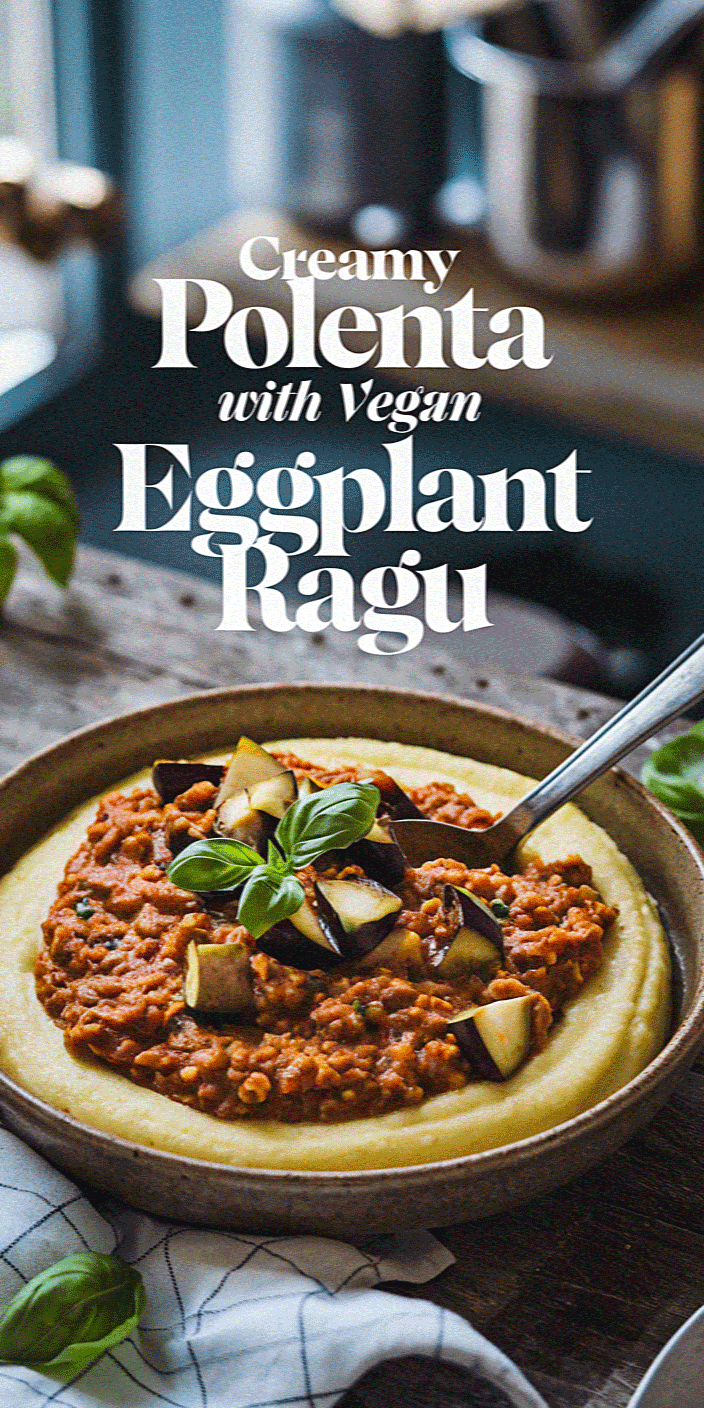
This recipe is worth reading (and cooking) because it’s the kind of dish that makes plant-based eating feel indulgent. It’s rustic, packed with flavor, and tastes like something you’d find in a candlelit trattoria, only it’s made in one large skillet at home.
What Makes This Eggplant Ragù So Special?
The secret to a great eggplant ragu lies in texture and layering. Eggplant behaves like a sponge; it soaks up flavor beautifully, but it also needs a little patience. When you add the eggplant to a hot skillet over medium heat, it begins to soften, caramelize, and take on a silky bite. Combine that with tomato puree, a splash of red wine, and herbs like rosemary and fresh basil, and you get a sauce that’s deep, complex, and perfectly balanced.
It’s also one of those recipes that rewards slowing down. As it simmers, the eggplant and tomato sauce thickens naturally, turning into a ragout that clings beautifully to the creamy polenta underneath. A drizzle of vegan butter at the end brings everything together.
How Do You Make Creamy Polenta That’s Perfect Every Time?
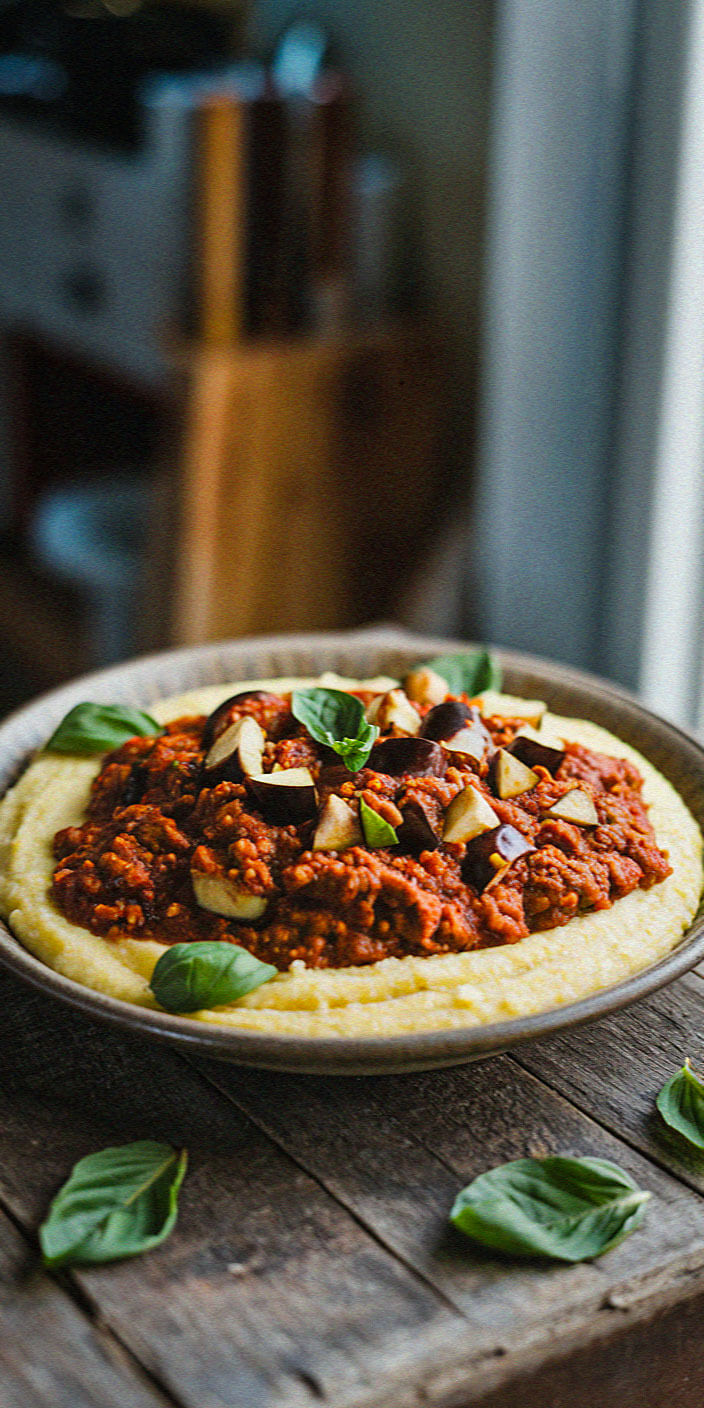
Polenta can be intimidating if you’ve never made it, but it’s surprisingly simple. Bring water to a boil in a sturdy saucepan and slowly whisk in the cornmeal so it doesn’t clump.
Let it simmer gently, stirring occasionally until it starts to thicken. You’ll know it’s ready when it feels thick and creamy and pulls slightly away from the sides of the pan.
To finish, stir in the butter (or vegan butter) and a spoonful of vegan parmesan for that irresistible cheesy polenta flavor. Divide the polenta among bowls and keep it warm; it’s the perfect canvas for the ragù to shine.
If you prefer a touch of indulgence, a splash of plant-based milk can add richness. Don’t forget to season with salt and pepper at the end to balance the flavor.
What Ingredients Go Into a Vegan Eggplant Ragù?
(Serves 4)
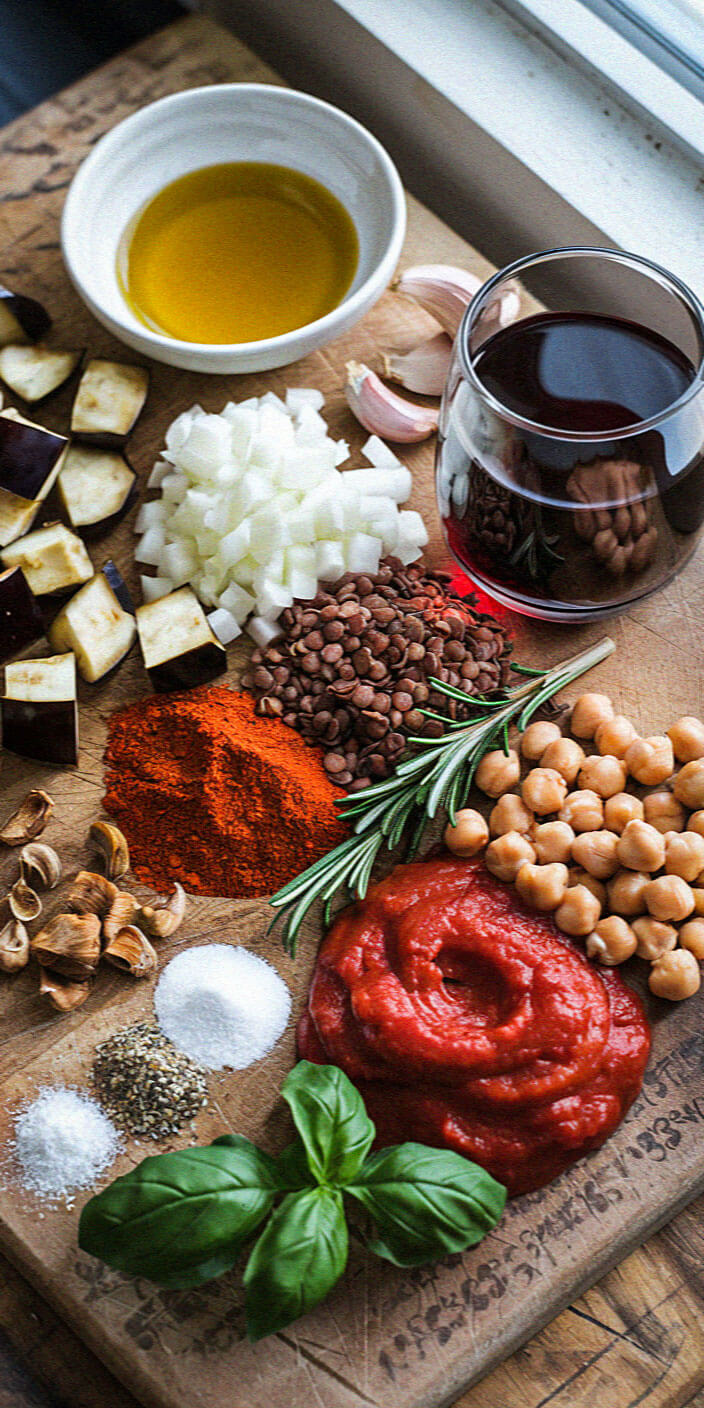
For the Eggplant Ragù:
- 2 medium eggplants, diced into small cubes
- 2 tablespoons olive oil
- 1 large onion, finely chopped
- 3 cloves garlic, minced
- 1 teaspoon smoked paprika
- 1 teaspoon dried rosemary (or 1 sprig fresh)
- 1 cup cooked lentils (brown or green)
- 1 cup cooked chickpeas
- 1 cup tomato puree
- 2 tablespoons tomato paste
- ½ cup red wine
- 2 tablespoons balsamic vinegar
- ½ teaspoon salt and pepper (to taste)
- 1 teaspoon sugar (optional, to balance acidity)
- ½ cup water or pasta water, as needed to thin the sauce
- ¼ cup fresh basil, chopped
For the Creamy Polenta:
- 4 cups water (or 3 cups water + 1 cup unsweetened plant milk)
- 1 cup yellow cornmeal (polenta)
- 2 tablespoons vegan butter
- 2 tablespoons vegan parmesan (optional)
- ½ teaspoon salt
- Freshly cracked black pepper, to taste
Instructions
1. Prepare the Eggplant Ragù
Heat a large skillet over medium heat and drizzle in olive oil. Add the onion and cook until translucent, about 5 minutes. Add the garlic and cook for another minute until fragrant. Sprinkle in the smoked paprika and rosemary to release their aroma.
Add the eggplant and cook until softened and golden, about 10 minutes. Don’t rush this step; it helps the eggplant caramelize and develop that rich, meaty texture.
Stir in the tomato puree, tomato paste, and red wine. Let it simmer gently for 5 minutes, then add the lentils, chickpeas, balsamic vinegar, salt and pepper, and sugar if needed.
Add a splash of water or pasta water to loosen the sauce. Stir occasionally and let it simmer for 25 minutes, until thick and glossy. If the sauce gets too thick, add another splash of water to reach your desired consistency. Stir in fresh basil before serving.
2. Cook the Creamy Polenta
Bring water to a boil in a medium saucepan. Slowly whisk in the cornmeal, stirring constantly to prevent lumps. Reduce the heat and simmer for 25 minutes, whisking occasionally, until thick and creamy.
Once the polenta is cooked, stir in vegan butter and vegan parmesan. Season with salt and pepper to taste. If it thickens too much, add a splash of warm water or plant milk to loosen it.
3. Assemble the Dish
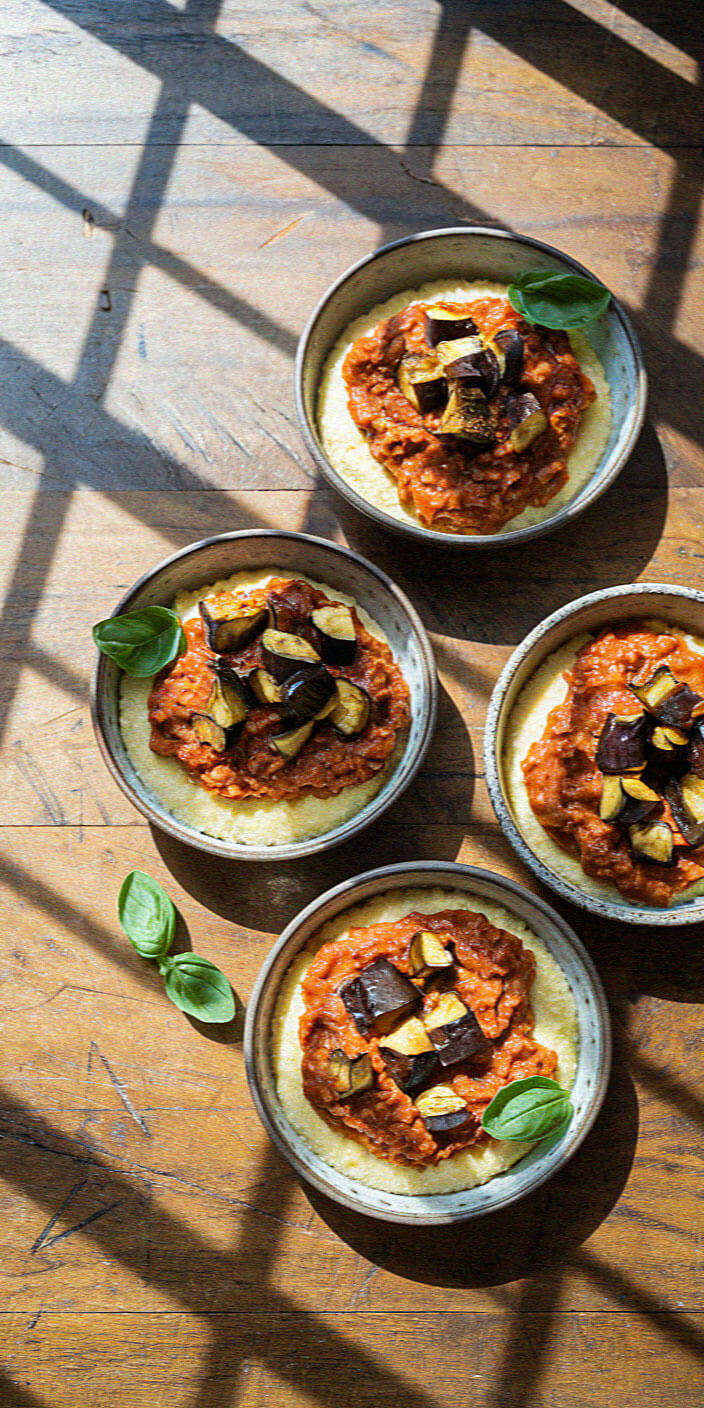
Spoon the creamy polenta into shallow bowls. Top with generous scoops of the eggplant ragù. Garnish with fresh basil, a drizzle of olive oil, or an extra sprinkle of vegan parmesan.
4. Serve and Enjoy
Serve immediately while everything is warm and silky. It’s perfect with a glass of red wine and crusty bread to mop up the sauce.
Recipe Notes & Tips
Make it ahead: The ragu tastes even better the next day, so you can prepare it in advance and refrigerate for up to 5 days.
Texture control: For extra creaminess, blend half of the ragù before mixing it back in.
Flavor boosters: Add a pinch of smoked paprika or a few drops of balsamic vinegar at the end to balance acidity.
Serving idea: For a fancy touch, top with roasted eggplant slices or a sprinkle of toasted pine nuts.
Why Does Eggplant Work So Well in a Ragù?
Eggplant is meaty without being heavy. When cooked correctly, it becomes tender and silky, adding body to the sauce without needing meat.
Its mild flavor makes it the perfect companion for tomato puree and red wine, which together create a rich base that tastes like it’s been simmering all day.
Unlike mushrooms or tofu, eggplant adds both texture and volume. The diced eggplant breaks down slowly, giving your ragù that satisfying, thick consistency you expect from traditional Italian ragu sauce.
The best part? It’s completely vegan, yet deeply savory thanks to the umami notes from tomato, garlic, and a hint of smoked paprika.
How Long Should You Simmer the Sauce?
After adding all your ingredients to the skillet, let the mixture simmer for at least 25 minutes. This step lets the tomato and eggplant meld into one cohesive sauce. Stir occasionally and, if the mixture looks too thick, add a splash of water or even a bit of pasta water to loosen it.
This slow simmering helps thicken the sauce naturally, concentrating the flavors and turning the eggplant and tomato base into a luxurious ragout. Cook for another 5 minutes if you want it richer and deeper.
You’ll know it’s done when the sauce looks glossy and clings to your spoon.
What’s the Best Way to Season and Balance Flavors?
Italian-style sauces are all about balance; acid, sweetness, and depth. The sauce and sugar in tomatoes can sometimes make a dish overly sweet, which is where the balsamic vinegar and smoked paprika step in. They add tang and smokiness to ground the sweetness, while salt and pepper keep everything in harmony.
If you want to go a step further, stir in the tomato sauce with a dash of red wine and a few leaves of fresh basil just before serving. The basil adds brightness and freshness, cutting through the richness of the eggplant ragu.
Can You Make This Recipe Ahead or Freeze It?
Absolutely. This is one of those sauces you’ll want to keep as a sauce on hand for easy weeknight dinners. It tastes even better the next day as the flavors develop overnight.
Store it in an airtight container in the fridge for up to five days, or freeze it for up to three months.
When reheating, add a splash of water to bring it back to life and let it simmer until hot. You can serve it over creamy polenta, rigatoni, or even toasted bread. It’s versatile, hearty, and never boring.
What Are Some Variations to Try?
If you’re in the mood to experiment, try adding sautéed mushrooms for a mushroom bolognese twist, or fold in roasted red peppers for a hint of sweetness. You can also swap the lentils for white beans if that’s what you have in your pantry.
Want a slightly smoky flavor? Add a pinch more smoked paprika and finish with a drizzle of good olive oil. To elevate it even more, top with the roasted eggplant slices before serving; it adds a beautiful rustic touch that looks as good as it tastes.
How to Serve It for the Perfect Presentation?
Presentation makes this dish feel restaurant-worthy. Divide the polenta into shallow bowls, smoothing it out gently with the back of a spoon. Ladle the eggplant ragù generously over the top, making sure each serving gets plenty of sauce and vegetables.
Garnish with torn basil leaves, a sprinkle of vegan parmesan, and a drizzle of olive oil. The result? A bowl that’s cozy, elegant, and perfect for any dinner gathering or quiet night in.
If you’re entertaining, pair it with a glass of red wine and a side of crusty bread to soak up every last bit of sauce.
Why This Recipe Belongs in Your Cozy Weeknight Rotation
This vegan recipe checks all the boxes for comfort, simplicity, and flavor. It’s a warm hug in a bowl, creamy polenta served under a deeply flavored ragu that feels indulgent but remains plant-based. It’s perfect for a cozy weeknight when you want something hearty but wholesome.
You can easily double the batch to feed a crowd or store leftovers for quick lunches. It’s proof that vegan comfort food can be as rich and satisfying as any traditional meat-based meal.
What Are Some Tips for Getting It Just Right?
- Always sauté the onion and garlic first to build flavor before adding the vegetables.
- Let the sauce simmer patiently; don’t rush this step, as it’s where the depth develops.
- Use good-quality tomato puree and fresh basil for authentic Italian flavor.
- Don’t skip the balsamic vinegar; it balances the sauce beautifully.
- For a creamy polenta base, whisk constantly as you pour the cornmeal into boiling water.
- Add a splash of vegan butter at the end to make the polenta irresistibly rich.
- For an extra layer of indulgence, serve it topped with roasted eggplant or fresh herbs.
- The dish pairs beautifully with red wine or sparkling water with lemon.
This website contains affiliate links. As an Amazon affiliate, I earn from qualifying purchases (What’s This?).