This website contains affiliate links. As an Amazon affiliate, I earn from qualifying purchases (What’s This?).
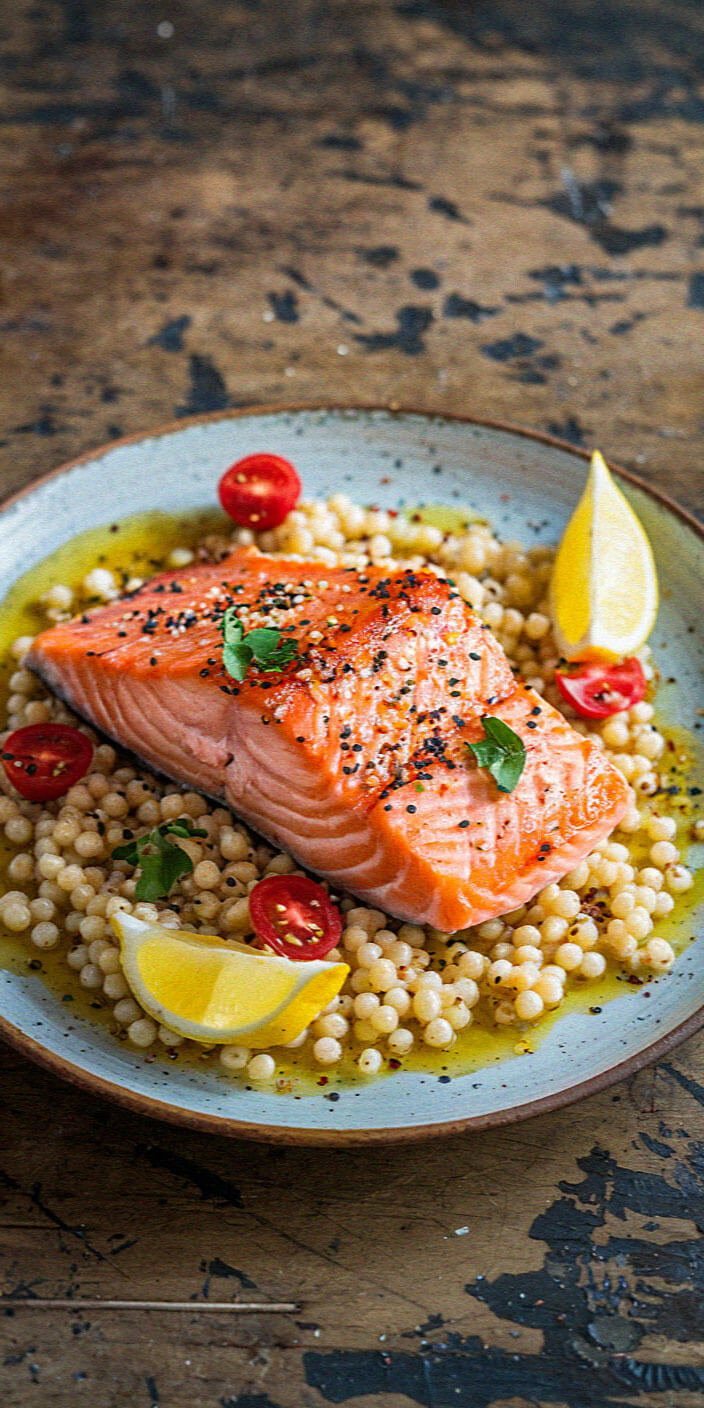
This salmon with Israeli couscous recipe is everything I love in a weeknight meal: warm, bright, and satisfyingly elegant without being complicated.
Perfectly seared salmon rests on a bed of herby pearl couscous, kissed with lemon, fresh herbs, and a touch of buttery richness.

Why Pair Salmon with Couscous?
Few ingredients complement salmon like couscous does. The tender, nutty grains of pearl couscous (also known as Israeli couscous) create a delicate base that soaks up all the pan juices and buttery drippings from the seared salmon.
When you add a squeeze of lemon juice and a sprinkle of parsley, everything comes together in perfect harmony. It’s a balance of protein, texture, and brightness that feels restaurant-worthy, yet surprisingly easy to pull off at home.
Whether you’re cooking for guests or just craving a comforting one-pan dish, this recipe is one to bookmark.
Ingredients You Need For This Seared Salmon

For the Salmon:
- 4 salmon fillets (skin on or off, depending on preference)
- 1 tablespoon olive oil
- 1 teaspoon garlic powder
- ½ teaspoon salt and pepper, or to taste
- 1 teaspoon lemon zest
- 1 tablespoon butter
- For the Couscous:
- 1 cup pearl couscous (Israeli couscous)
- 1 tablespoon olive oil
- 2 cups chicken or vegetable broth
- 1 garlic clove, minced (or ½ teaspoon garlic powder)
- 1 tablespoon butter
- 2 teaspoons lemon juice
- 1 tablespoon fresh parsley, chopped
- Optional: red pepper flakes, fresh mint, or a sprinkle of sesame seeds for garnish
Instructions

- Sear the Salmon
Pat the salmon fillets dry with paper towels. This helps you get that golden crust. Season both sides with salt and pepper, garlic powder, and a touch of lemon zest.
Heat olive oil in a large skillet over medium-high heat. Once the oil shimmers, carefully place the salmon fillets in the pan, skin side down if using skin-on fish. Let them sear without moving for 3 to 4 minutes until the edges turn opaque and a crisp crust forms.
Flip gently, reduce the heat to medium, and cook for another 2 to 3 minutes, depending on the thickness. Add butter and let it melt, spooning the butter over the fillets. Remove from the skillet and set aside while you prepare the couscous. - Toast the Pearl Couscous
In the same skillet over medium heat, drizzle in a little more olive oil if needed. Add the pearl couscous and toast it for 2 minutes, stirring until it turns lightly golden. This deepens the flavor and gives that signature nutty note that complements the salmon beautifully. - Simmer the Couscous
Pour in the broth, add the butter, and stir to combine. Bring to a simmer and let the couscous cook for 3 to 4 minutes uncovered, then reduce the heat to low and continue until the liquid is absorbed and the couscous is tender. Stir occasionally to keep it fluffy. - Bring It All Together
Once the couscous is ready, stir in lemon juice, parsley, and a pinch of red pepper flakes or fresh mint if you’d like a touch of color. Taste and adjust seasoning with salt and pepper.
Nestle the salmon fillets back into the pan and let them sit for a couple of minutes over low heat to warm through. The buttery drippings from the salmon mingle with the couscous, creating the most delicious, herby sauce. - Serve and Enjoy
Spoon the couscous onto plates and top with the seared salmon. Drizzle a little of the pan butter over each piece and finish with a sprinkle of parsley and an extra squeeze of lemon juice.
Tips for the Best Seared Salmon
- Dry the fillets well. Moisture prevents proper browning.
- Hot pan first. Don’t add the fish until the oil shimmers.
- Don’t move it. Let the crust form before flipping.
- Finish with butter. It adds richness and helps glaze the fish.
- Use Israeli couscous. Its pearl texture absorbs flavor beautifully and gives a more refined bite than regular couscous.
What Makes Israeli Couscous Different?
Unlike regular couscous, Israeli couscous is larger and made with semolina flour, giving it a slightly chewy, pearl-like texture. It’s often called pearl couscous for that reason.
When toasted lightly in a skillet over medium heat, it develops a nutty flavor that pairs beautifully with rich fish like sockeye salmon.
You can prepare the couscous ahead or cook it right in the same one-pan setup, my favorite approach for easy cleanup and flavor layering.
How Do You Get Perfectly Seared Salmon?
The secret to pan-seared salmon is simple: patience and a hot pan. Always start with dry salmon fillets, skin side down, in a lightly oiled cast-iron or iron skillet.
Heat to medium-high and let the fillet sizzle for about 3 to 4 minutes without moving it. That’s how you achieve that crisp golden crust.
Then, reduce the heat to medium and flip to finish the cooking for another 2 to 3 minutes, depending on the thickness. When you cook until the salmon flakes easily, it’s ready.
Season simply with a pinch of salt, garlic powder, and black pepper. Resist the urge to overcook; the key to a juicy salmon dish is pulling it off the heat right before it’s completely done. It will finish cooking as it rests.
Why Use a One-Pan Skillet for This Recipe?
A one-pan meal like this salmon with Israeli couscous is as practical as it is flavorful. The same skillet that you use to sear the salmon fillets becomes the base for your couscous, capturing every bit of flavor from the bottom of the pan.
After removing the fish, you can add the couscous directly into the pan to stir to combine with the aromatic drippings and any residual lemon zest.
Once you add the butter and aromatics, you’ll see the couscous soak up the salmon essence, making every bite rich and satisfying. It’s a technique I use often for weeknight dinners because it’s fast, elegant, and there’s only one pan to clean afterward.
How to Cook the Couscous Perfectly
To cook the couscous, start by toasting it in a large skillet over medium heat with a drizzle of olive oil.
When it turns lightly golden, add the butter and pour in chicken or vegetable broth. Then, simmer gently, stirring occasionally, until the liquid is absorbed and the couscous is tender.
For a bit of brightness, mix in lemon juice, a dash of garlic powder, and finely chopped parsley. You can also toss in some fresh mint or red pepper flakes for color and contrast.
Once your herby pearl couscous is ready, nestle the salmon fillets back into the pan and stir to combine everything before serving.
What’s the Best Way to Add Flavor to Salmon and Couscous?
When you’re building flavor, think layers. Start by seasoning your salmon fillets generously with salt and pepper, then sear them in olive oil until they’re golden.
In the same skillet, toast your couscous and add the butter, that’s where the magic happens. The butter and salmon juices mingle, creating a deeply flavorful base that makes this dish shine.
Add a touch of lemon zest or lemon juice to brighten the flavors. You can also incorporate garlic powder or minced garlic for extra depth. The beauty of this one-pan method is that every ingredient enhances the next.
Can You Customize This Recipe?
Absolutely. You can swap the couscous for quinoa if you prefer a lighter, gluten-free option. Or try adding sautéed vegetables like red pepper, spinach, or cherry tomatoes.
For a Mediterranean twist, stir in fresh herbs like parsley and mint, or sprinkle with sesame seeds before serving for a subtle nutty crunch.
If you ever have leftover salmon, flake it and mix it into the couscous for a light lunch the next day. Just reheat it gently in a skillet over medium heat to keep the texture moist.
How to Serve Pan-Seared Salmon with Couscous
This dish doesn’t need much embellishment. Serve your pan-seared salmon right from the skillet, letting everyone scoop their own portion of couscous and fish.
A drizzle of lemon juice and a sprinkle of parsley right before serving elevate the presentation.
For a complete meal, pair it with roasted asparagus, a crisp green salad, or a chilled glass of white wine. The bright, citrusy flavor of the lemon perfectly complements the buttery richness of the salmon.
What’s the Ideal Cooking Time for Salmon?
The cooking time depends on the thickness of your fillet. In general, cook for 3 to 4 minutes on the first side, then flip and continue to cook for 3 more minutes. The goal is to cook until the salmon is opaque and flakes easily.
If you’re working with thicker cuts or sockeye salmon, you may need to reduce the heat slightly after the initial high heat sear to prevent overcooking. Once the salmon is cooked, transfer it to a plate while you finish the couscous in the same skillet.
Why This Recipe Works Every Time
The magic of this dish lies in its balance. The seared salmon delivers crisp texture and rich flavor, while the couscous offers tender chew and nutty depth.
Together, they form a harmonious bite that’s satisfying but never heavy. It’s also incredibly forgiving; if you follow the timing cues and reduce the heat when necessary, you’ll end up with a restaurant-quality meal every time.
This approach isn’t just about ingredients, it’s about rhythm. Sear the salmon, toast the couscous, then let everything simmer together until the liquid is absorbed and fragrant.
Once you nestle the salmon back into the pan, those last few minutes on low heat tie everything together beautifully.
Recipes to Try Next
If you love this one-pan salmon with Israeli couscous, there are other recipes to try that build on similar techniques.
Pan-seared shrimp with orzo, lemon chicken with rice, or Mediterranean cod with olives all follow the same flavorful pattern: sear, simmer, combine. Once you master this rhythm, your weeknight dinners will never be the same.
And if you’re looking for a lighter alternative, try pan fried salmon over a bed of quinoa tossed with lemon juice and parsley. It’s just as delicious and a great way to use up leftover salmon.
This website contains affiliate links. As an Amazon affiliate, I earn from qualifying purchases (What’s This?).