This website contains affiliate links. As an Amazon affiliate, I earn from qualifying purchases (What’s This?).
A peninsula can quietly may ultimately be responsible for how your whole kitchen functions.
In a small galley kitchen, it adds some substance to the room’s purpose and worktop space, without the weight of a big island.
If you learn something from the layout, flow, seating, and storage in small spaces presented below, that has succeeded both practically and aesthetically, then our time together will have been worthwhile.
We are talking about kitchens that work well on bustling mornings, are echoingly comfortable as night falls, and still look neatly presentable no matter what the rest of the house may be like.
Why a peninsula makes sense in a small kitchen
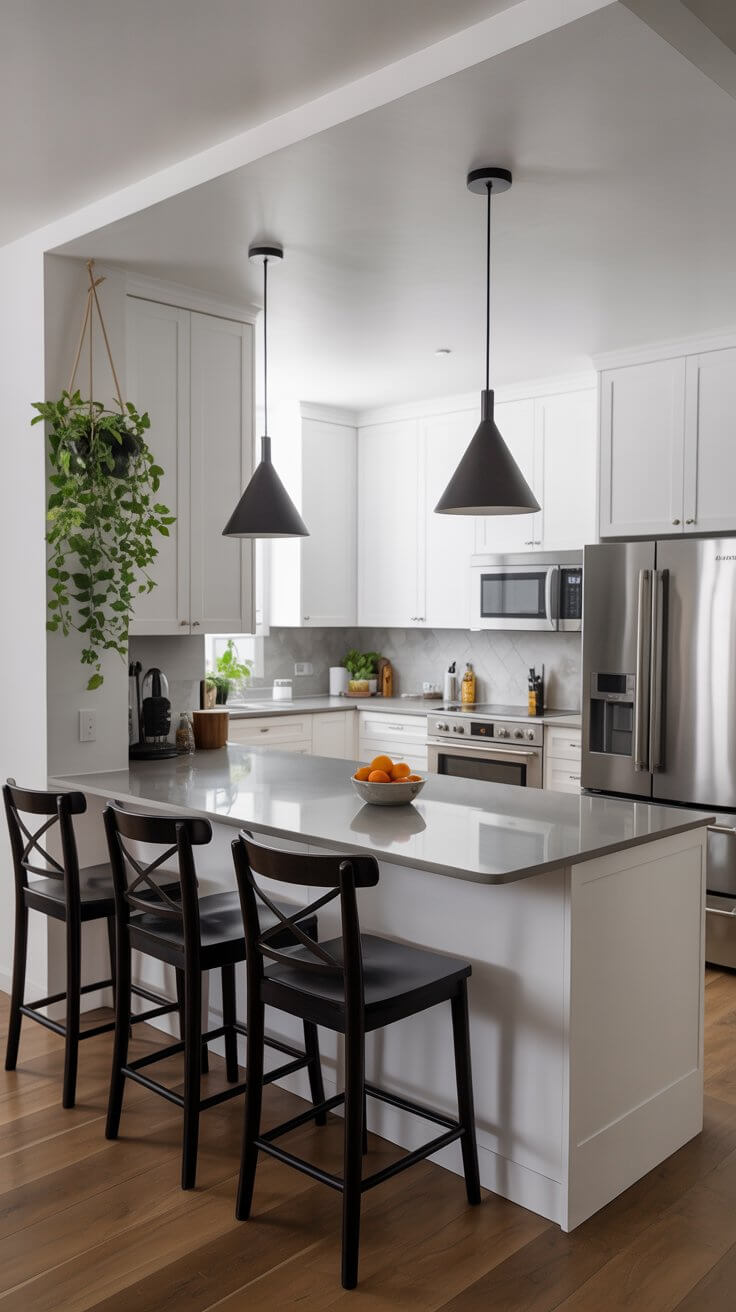
Every choice must be weighed in a small kitchen. Because it connects the kitchen with the rest of the house without shutting it off and, in many cases leaves an opening for natural light to penetrate into the living space, a peninsula is often what is missing.
Unlike a kitchen island, a peninsula is attached to a wall or run of cabinets, making it easier to integrate into an existing kitchen layout.
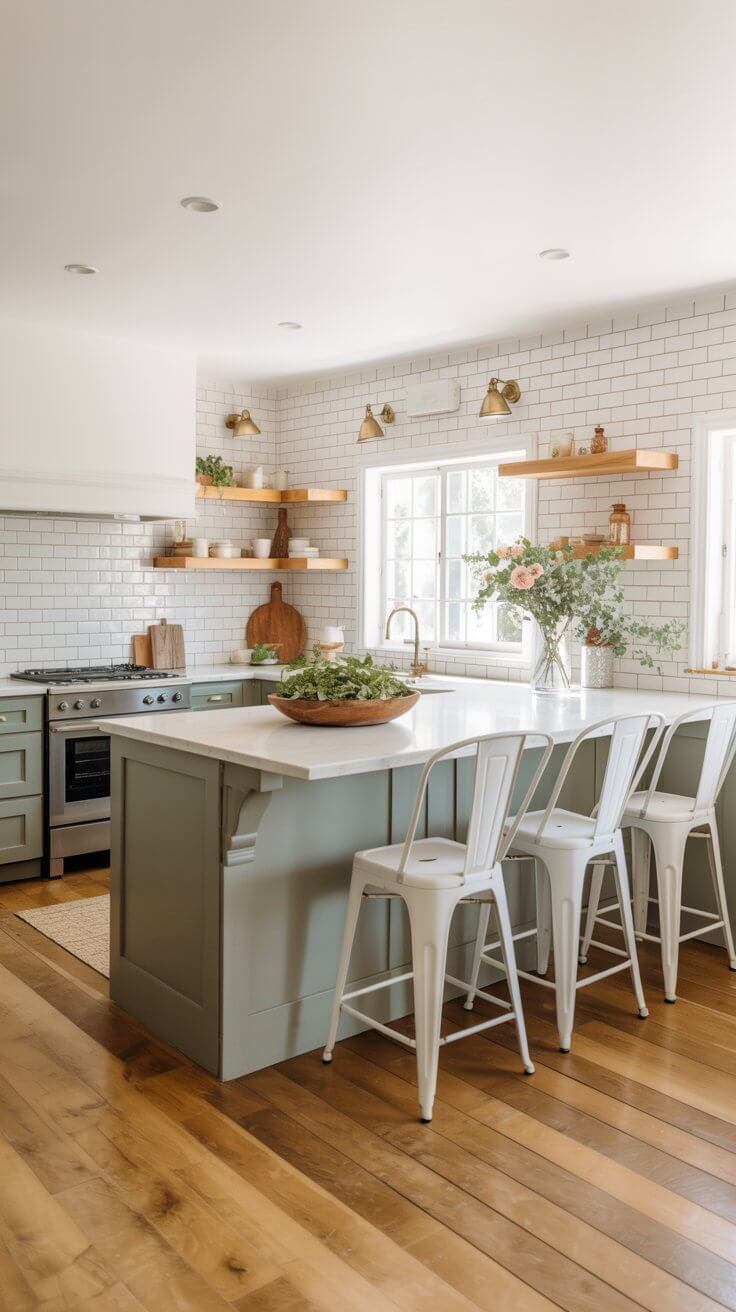
This is particularly useful when the space in question is compact or oddly shaped. A peninsula gives order. It helps specify areas for cooking, prep, and the living area while keeping the doors between them open.
In many small spaces, this kind of soft separation also creates the illusion of a bigger kitchen, not a smaller one; therefore, it should feel natural to work between these two zones.
The fact that a kitchen’s layout is designed with the purpose to make it, we’ve all seen kitchens where this wasn’t taken into account, and ended up with senselessly placed storage or work surfaces.
How does a kitchen peninsula differ from a kitchen island
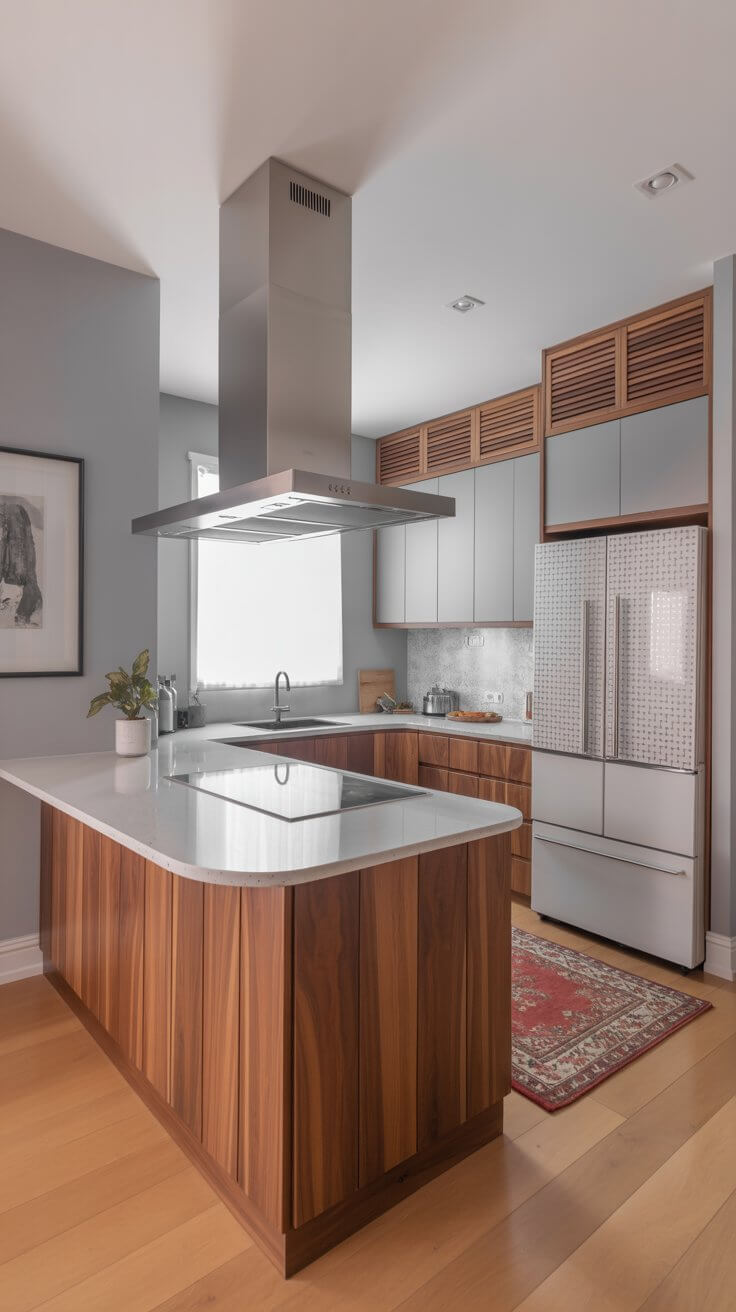
This question can come up frequently when you are wrestling with a kitchen remodel. In other words, a kitchen island sits by itself and must have clearance on all four sides.
A kitchen peninsula is connected at just one end, usually to lower cabinets or a wall. That one difference changes everything when space is scarce.
In a small kitchen, a peninsula provides most of the advantages of an island without requiring the same floor area.
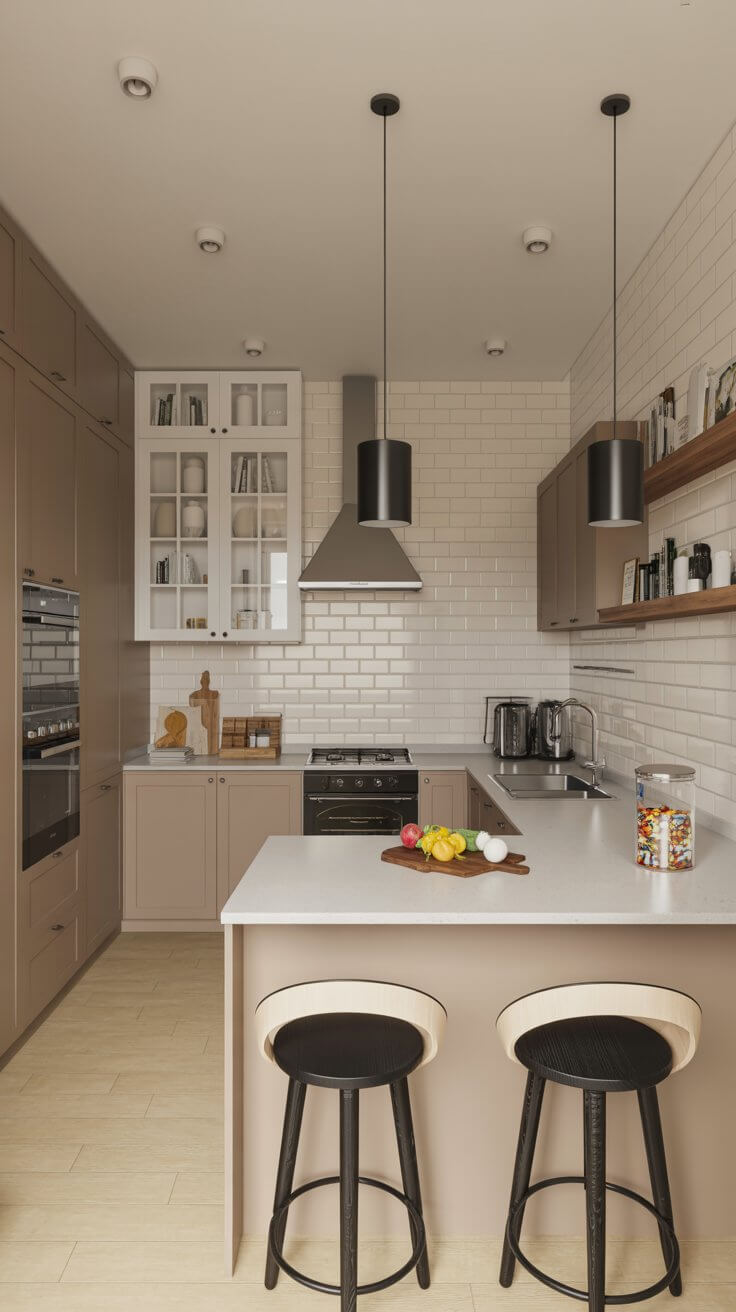
You still get extra counter space, some room for casual dining, and occasionally additional seats, but the layout remains earthy.
When a kitchen island just isn’t practical due to space constraints, a peninsula is often a better solution.
Peninsula kitchen layouts that work in galley kitchens
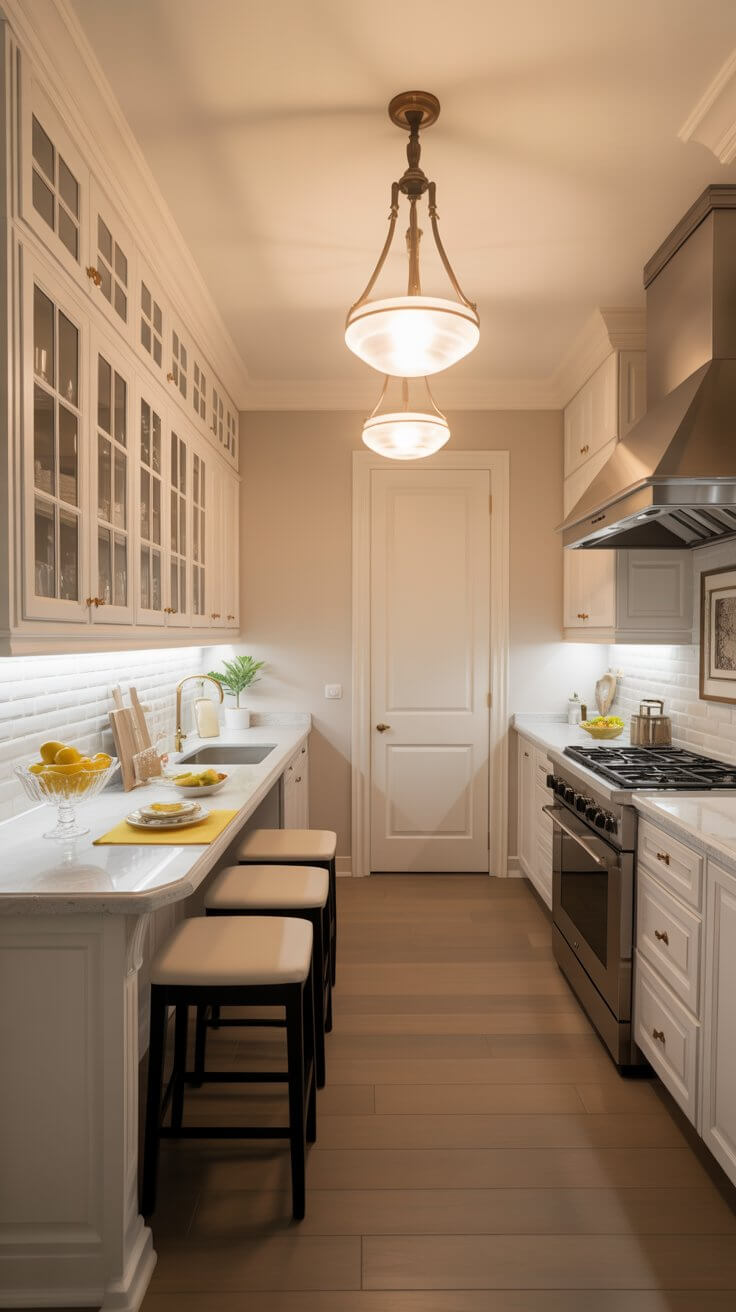
There is already one of the largest advantages of a galley kitchen. It is efficient. Everything is within arm’s reach.
That’s why professional kitchens often use this layout. In a small crowded kitchen setting a galley can feel both bounded and unattached except to the needs of necessity.
That is where a peninsula comes in, completely changing one’s experience.
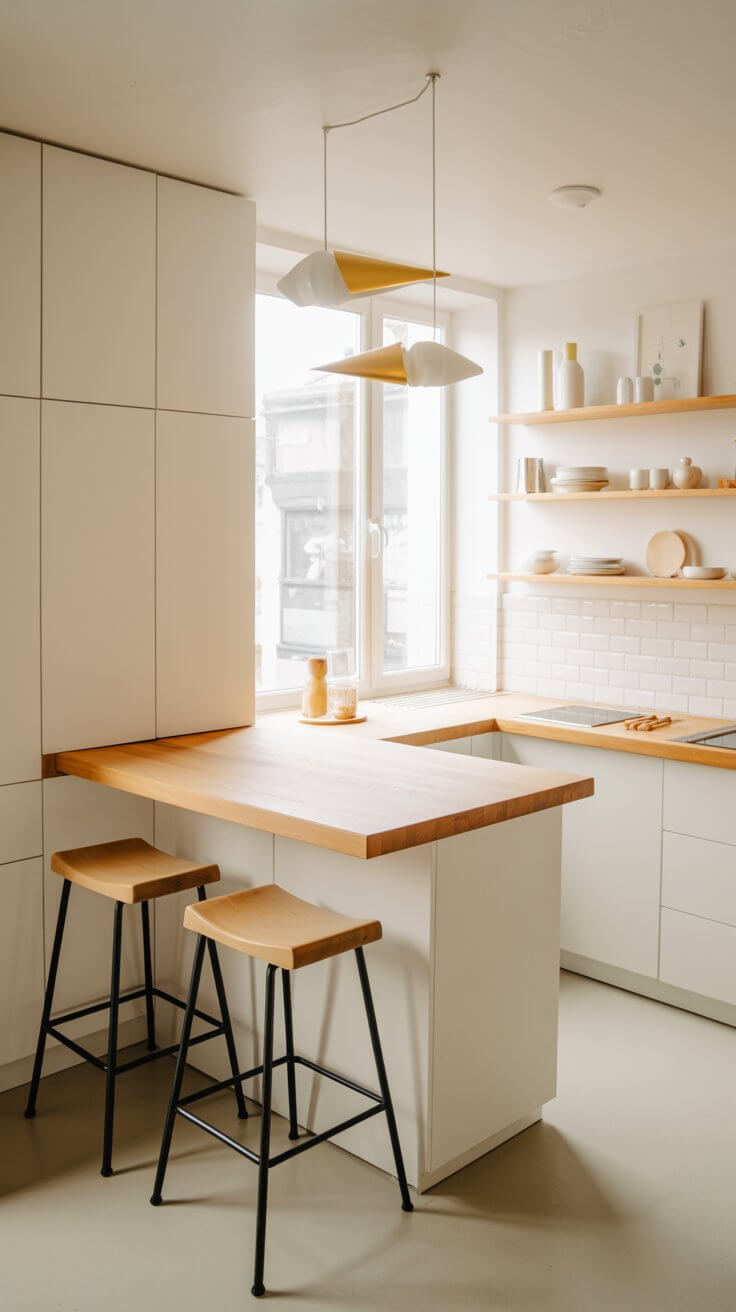
Adding a peninsula to a galley kitchen breaks the straight line of sight. The kitchen doesn’t just stop abruptly, as before, the peninsula creates a visual interruption.
You can read into kitchens with an intention: The room now feels designed, not just leftover. The peninsula replaces a dead-end wall in many small-kitchen layouts, creating what would normally be wasted counter space.
One of the most practical ideas for a peninsula in a galley kitchen is to place it at the open end, facing the living or dining area.
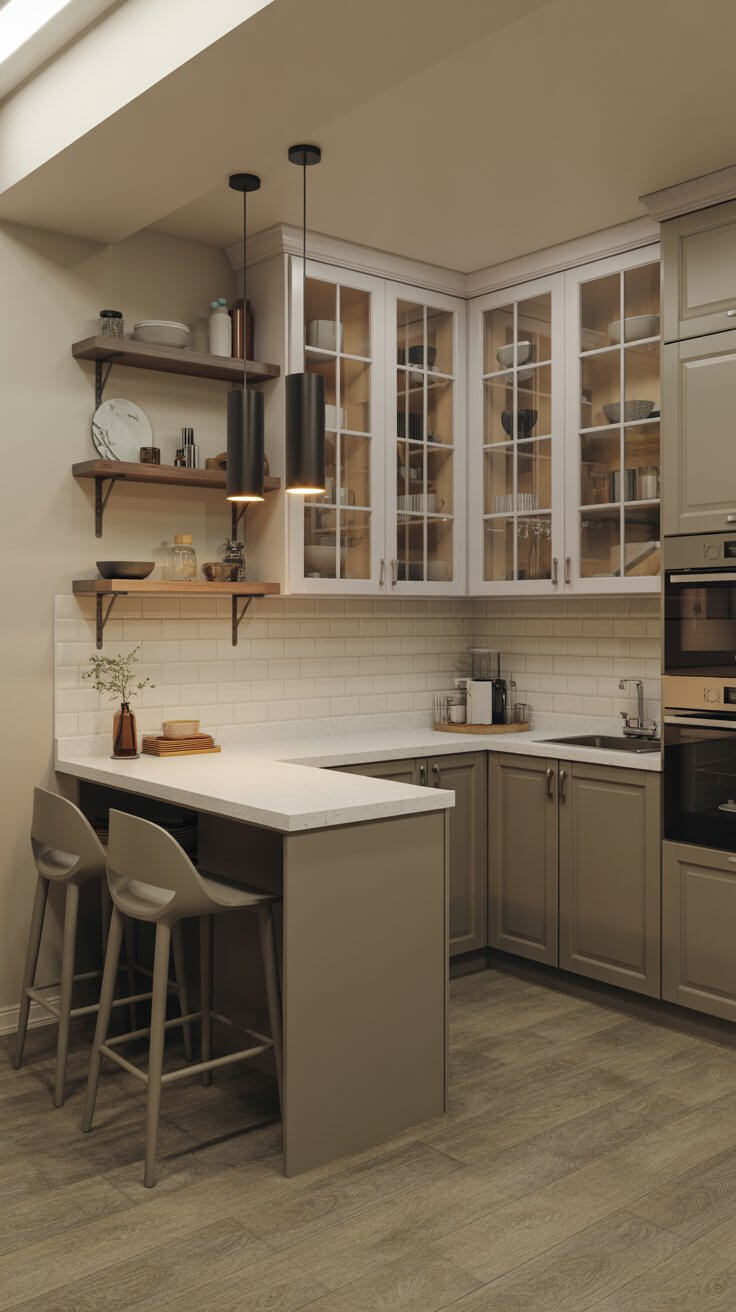
This turns what would otherwise be a cul-de-sac into a thoroughfare. As a light divider, the peninsula can show where the kitchen ends and the living space begins.
It provides separation without isolation, an especially important factor in an open layout.
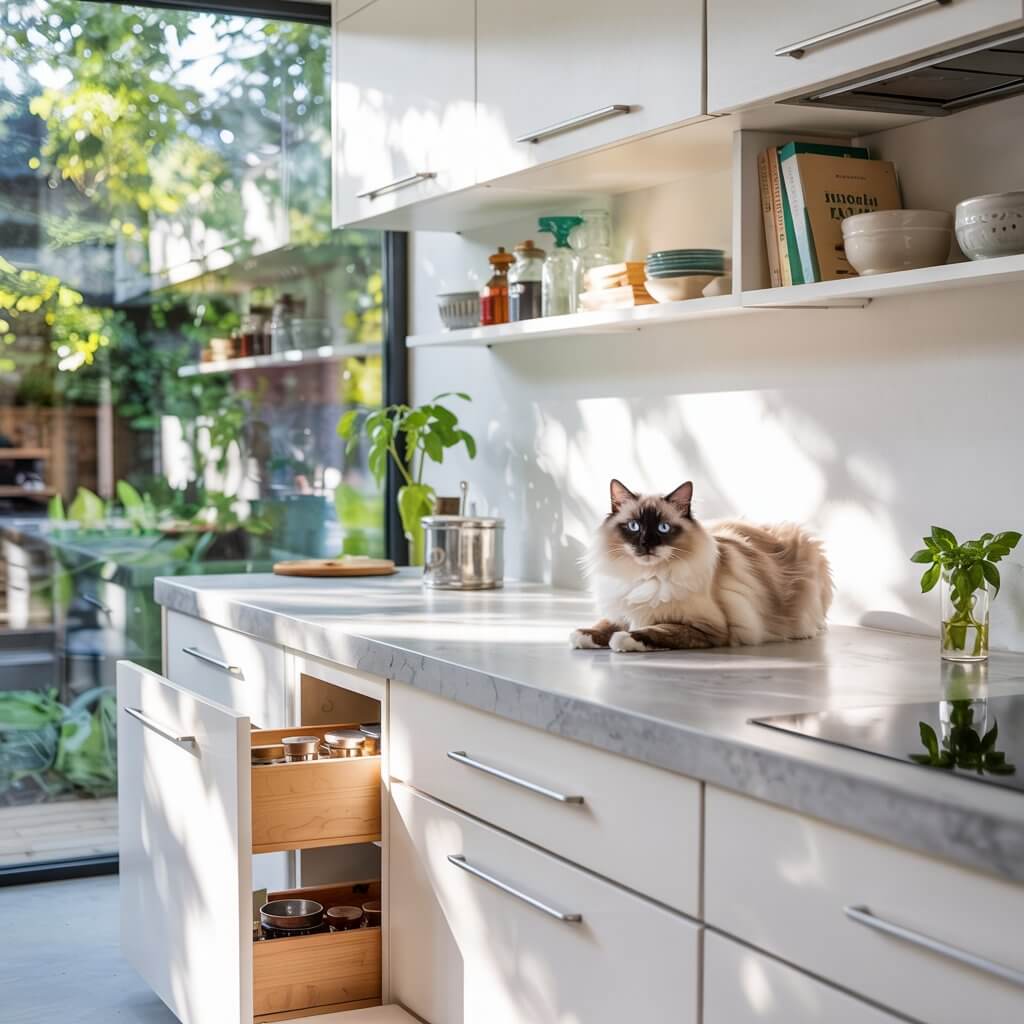
Storage is another reason a peninsula works so well here. Galley kitchens often rely heavily on high cabinets, which can make the space feel enclosed. Lower cabinets under the peninsula counteract it.
They provide storage without cluttering your walls, which can be a real game-changer in a small kitchen, where every extra cabinet counts.
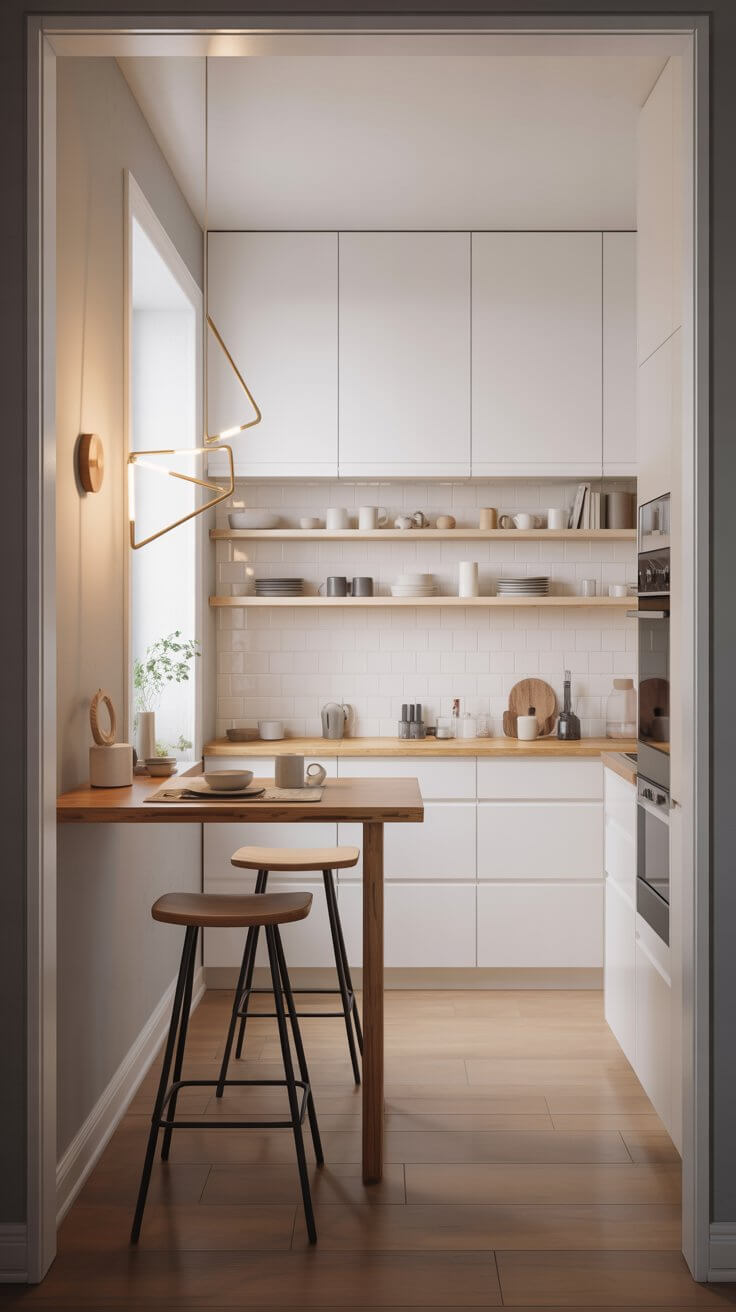
Seating in a galley should be minimal. One stool under a peninsula counter is often all that is needed. This gives you a place to eat informally or have guests over while cooking, without getting in the way.
The secret is to keep the path through the kitchen clear so it remains usable even during busy times.
In a galley layout, the peninsula introduces flexibility. It provides additional counter space for food preparation and gives the kitchen a pause point, somewhere to stop and relax.
When used correctly together, it changes the feel of the kitchen. It stops now from being just a corridor and turns it into a living place.
Can a peninsula work in an L-shaped kitchen
The penalty joint area, which is one of the easiest layouts to convert into a penalized room, is a common feature in modern kitchen design because it can be adapted to so many different ideas.
Then there are those corners made by L-shaped arrangements, which are all crying out for a peninsula.
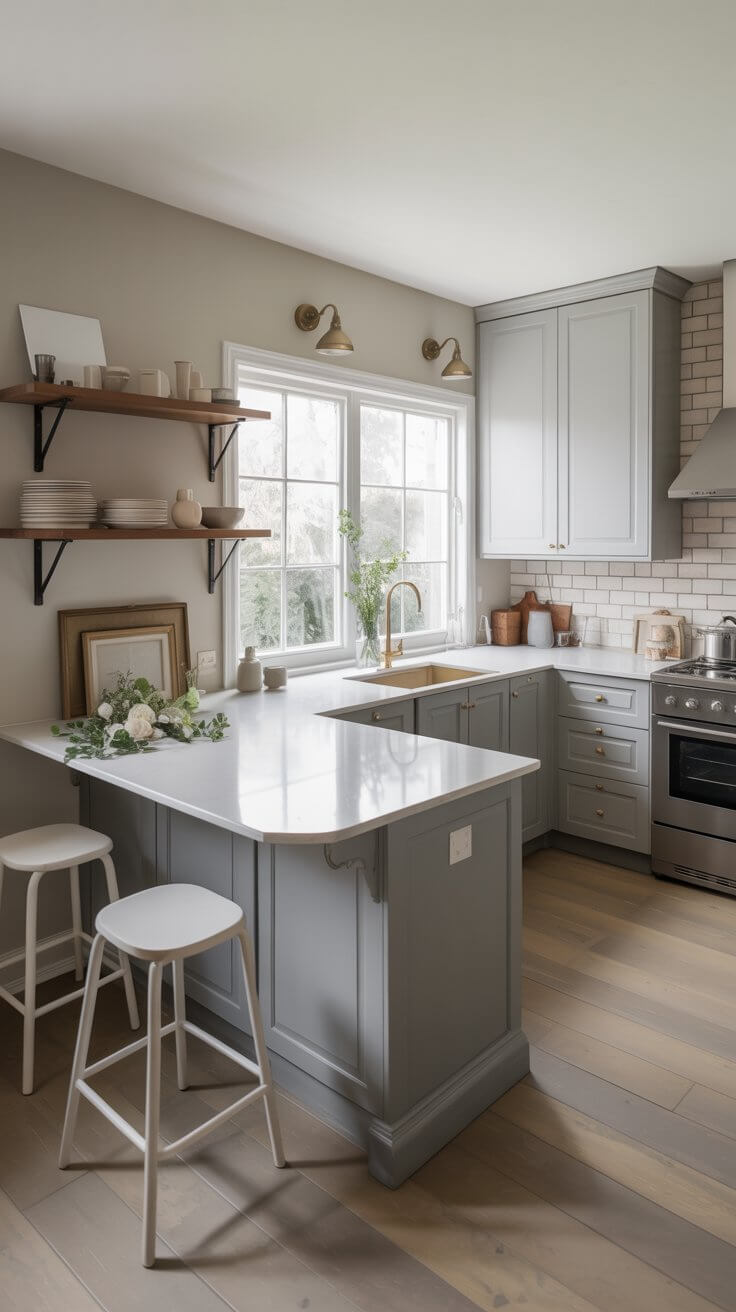
So you don’t just leave that end open or slot in another kitchen island, but make use of what little space there is to extend a peninsula, which immediately feels at one with the interstitial void.
In a small kitchen, this layout provides some order while keeping things open. The peninsula often extends from the shorter leg of the L, maximizing efficiency in your main work triangle and providing extra counter space where it’s needed most.
At the peninsula, you would do all your prep, serving, and casual dining at the same time, as this area on one side will not interfere with any cooking zones.
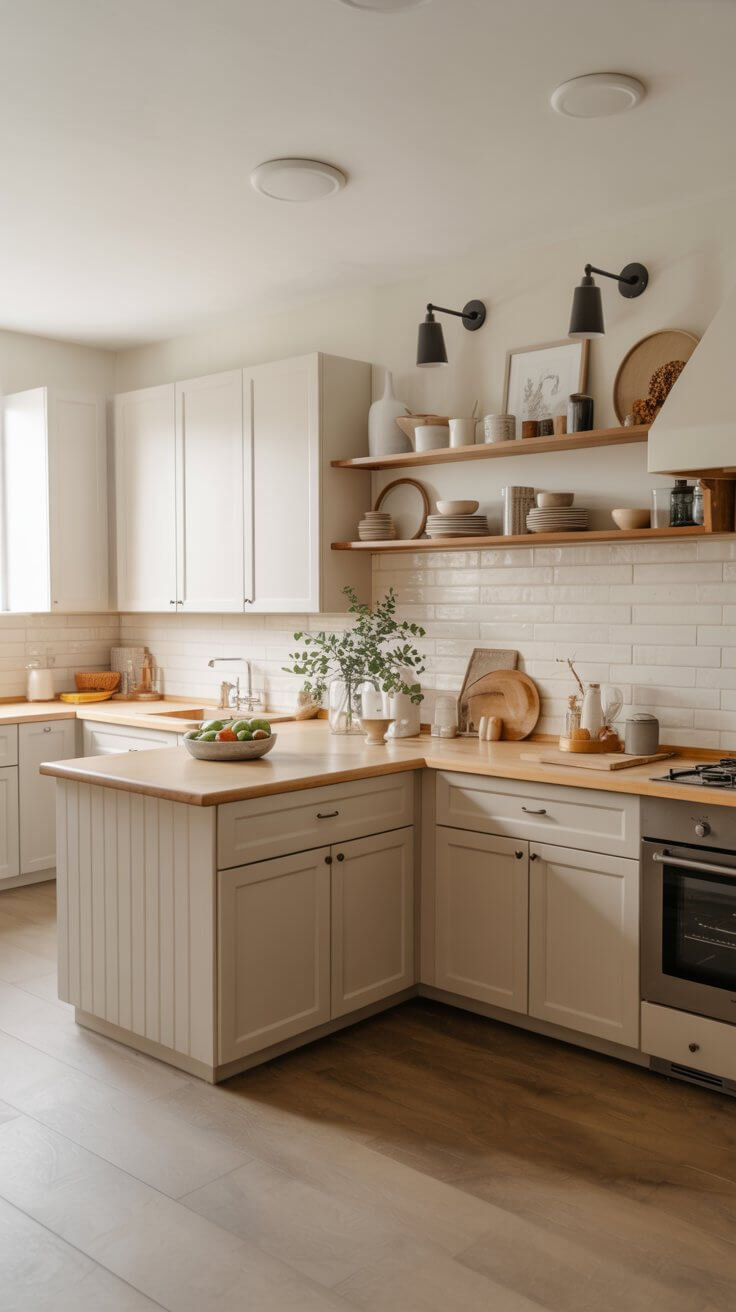
This can be particularly helpful when a kitchen is used by more than one person at once.
The biggest advantage of an L-shaped kitchen with a peninsula may be just how well it helps to define movement.
A peninsula effectively separates this central room from whichever living spaces drop away on two sides.
The result: instead of walking right through one way or another in here, movement naturally bends around that peninsula. It makes the kitchen feel quieter and more considered, even in small spaces.
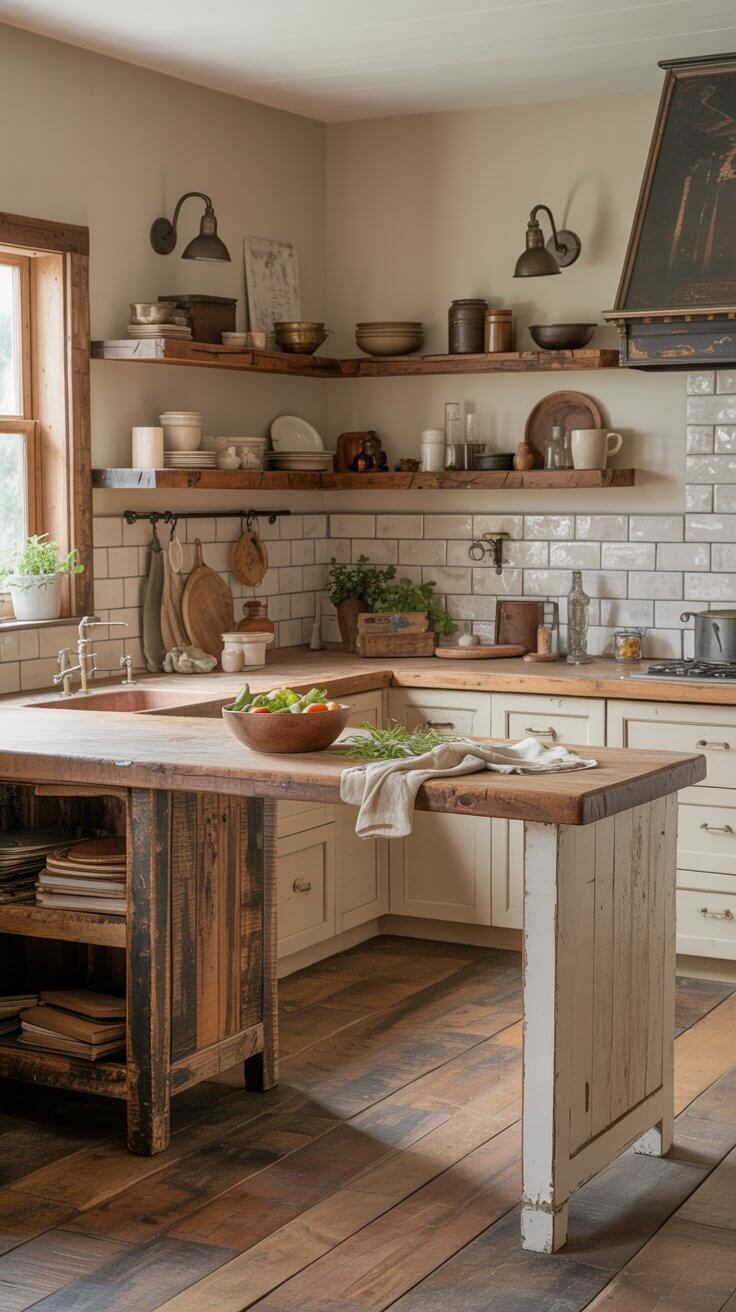
You also get a marked increase in storage when using this layout. The area under the lower cabinets along your peninsula provides valuable storage for items that might not fit elsewhere in the house.
Should you need to, this allows you to slightly reduce the height of upper cabinets to lighten the kitchen and lend it an airier feel.
In a lot of small kitchen designs, this level of balance makes a very big difference to how the space feels day after day.
Seating works beautifully in this layout as long as you keep it simple. One or two stools along the outer edge of the peninsula are the ideal size for casual dining or chatting without turning the kitchen into a traffic jam.
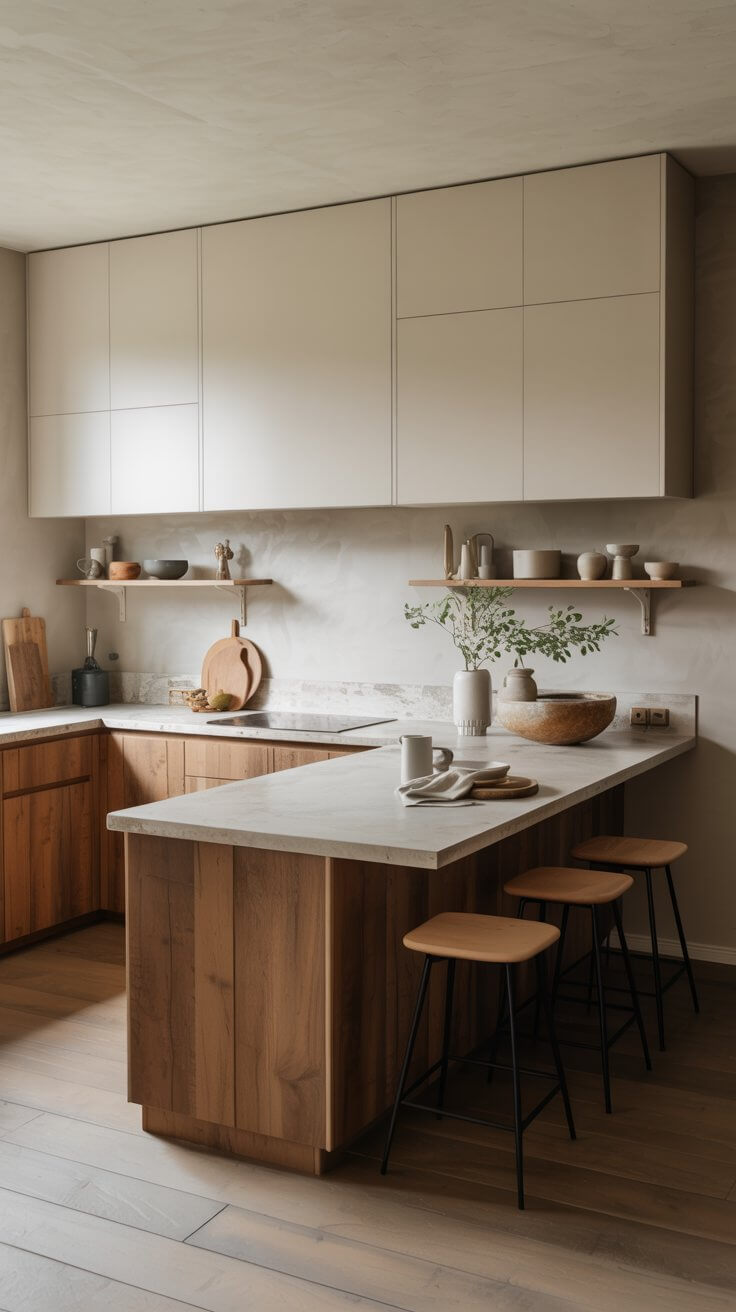
Because the peninsula is connected, it feels solid and grounded, which makes sitting there more comfortable and also allows for a bit more room between neighbors or family members.
From an aesthetic standpoint, a peninsula in an L-shaped kitchen also helps to anchor the entire design. It adds structure, brings symmetry, and gives the kitchen a sense of purpose.
This arrangement, when done thoughtfully, just clicks and seems both functional and decorative in our daily lives without feeling out of place anywhere, it’s so well put together visually.
Using a peninsula in a U-shaped kitchen layout
A U-shaped kitchen naturally enhances efficiency through convenience, but adding a peninsula creates a considerably more sociable space.
In a U-shaped layout, the peninsula frequently replaces one row of cabinets, and this bar opens the kitchen to the rest of the home. It often blurs division lines between different living areas.
This works particularly well in designs with an open link between the kitchen and the living room. The peninsula adds more counter space and can even double as a breakfast bar or table.
In an efficient layout, it places everything within reach while still feeling spacious.
How to size a kitchen peninsula correctly
The size of a kitchen peninsula can be different, based on your space and how you plan to use it. In a small kitchen, depth matters more than length. You want enough countertop to work on, but without overwhelming the space.
When you plan to incorporate seating, as a rule of thumb, the peninsula should provide free walkways and comfortable seating. The size of a kitchen peninsula should first and foremost support function.
A peninsula that’s just a little bit smaller but works well will always feel better than a larger one that disrupts the flow.
Peninsula seating ideas that do not overwhelm the space
But this would have to be carefully managed in small kitchens. To provide extra seating and minimize disturbance, a lone bar stool or two slender bar stools are your best choice.
Rather than a full dining table replacement, the intent is casual dining. A bar stool without a back. Yet another way to lighten the look of the stools would be to use backless designs, which work best here.
This allows the kitchen peninsula to remain light and versatile. life. It makes sense to integrate seating arrangements that do more than simply appear good for photo shoots.
Cabinet and storage choices for peninsula kitchens
The peninsula is ideal for storing things since it has a massive storage space underneath. Underneath the peninsula, in the lower cabinets, you can store everything from pots and pans to pantry items, with no wasted space.
This is particularly important if you have a small kitchen with a large sink on top, occupied by upper cabinets, as in our example picture above, and where there are only stovetops and microwaves elsewhere.
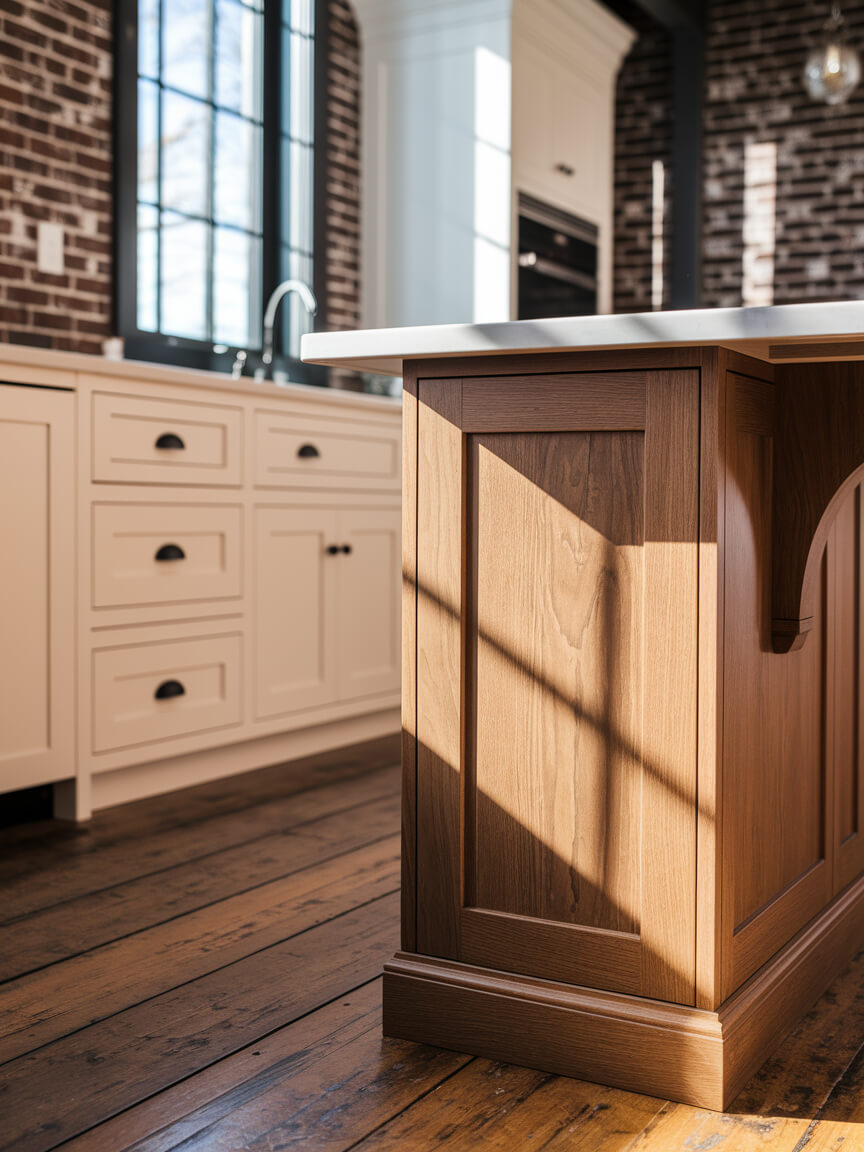
You can mix styles as well. Flat-panel cabinets provide a modern design feel; shaker or wood cabinets add warmth.
White cabinets keep the kitchen looking fresh and light, while a white counter-top peninsula looks just perfect in a neutral kitchen design. Cabinets provide a sense of order and make the peninsula feel like it belongs in the kitchen.
Countertop options that elevate a peninsula design
The peninsula work surface is an important kitchen focal point. Your choice of materials will affect the overall look. Your design will determine whether quartz, stone, or wood worktops will be most effective.
Not so today. Even small kitchens can sport a waterfall edge on their peninsula. It not only provides a visual anchor for the peninsula, but also helps give it definite form and presence.
Countertops must harmonize with the kitchen cabinet and the needs of food preparation, serving, and dining in the space.
How a peninsula helps define zones in open layouts
A kitchen peninsula can make zones look distinct. In an open floor plan, the peninsula separates the kitchen from the living area without using walls. It creates a comfortable transition.
This is the higher-level peninsula offering beyond function. It determines how the kitchen space flows into the living room. It distinguishes areas in an open layout yet still allows conversation and connection.
Thus, it is little wonder that peninsular design is so fashionable in modern kitchens and open layouts.
When a peninsula is better than an island
An island offers many good things, but a peninsula is often better in limited space. Peninsulas also give extra counter room, storage, and seating while fitting into tighter floor plans.
It is easier to integrate a peninsula into an existing kitchen because you can attach it to a wall.
In a compact kitchen, a peninsula may be the only choice that feels comfortable. It provides you with flexibility without asking for trade-offs elsewhere in your plan.
That’s why it’s also an extremely popular choice for people who are working on small kitchen remodels.
Styling a peninsula so it feels intentional and stylish
A peninsula is part of the design, not an afterthought. Simple style decisions can largely affect a home’s townscape.
Open shelves on the wall side, a few minimal kitchen accessories, and consistent surfaces make a good combination. Add a touch of warmth with wood, texture, or just a little contrast.
Keep the surface mostly clear so the peninsula can be used throughout the day. Functional and stylish don’t mean overly decorative. It means being thoughtful.
Making a small kitchen peninsula work long term
Any plan to execute the best kitchen peninsula ideas must first consider how the space will be used in the long term. What kind of daily activities take place in this area?
How frequently will guests appear, or will work crews pass through during their breaks from ongoing renovation jobs that are nearing completion?
While a projecting counter can be furnished in line with trends, fixed peninsulas like yours do not look outdated next year, provided they are properly maintained and decorated, a good idea if they match the style of your home.
Great design ideas provide flexibility that responds to changing needs.
When you are planning a new kitchen or renovating an old one, adding a peninsula will change the way your kitchen works. It brings in space for preparing dinner and for eating food casually off the table as well.
Final thoughts on peninsula kitchen ideas to inspire
A peninsula will add shape, flexibility, and purpose to your small kitchen. It facilitates flow, allowing more work surfaces without clutter or barriers.
In an open-concept space such as a home or apartment, this room divider can also double as a dining area! The centre of the kitchen; the systematic elemental design becomes its soul.
This website contains affiliate links. As an Amazon affiliate, I earn from qualifying purchases (What’s This?).